
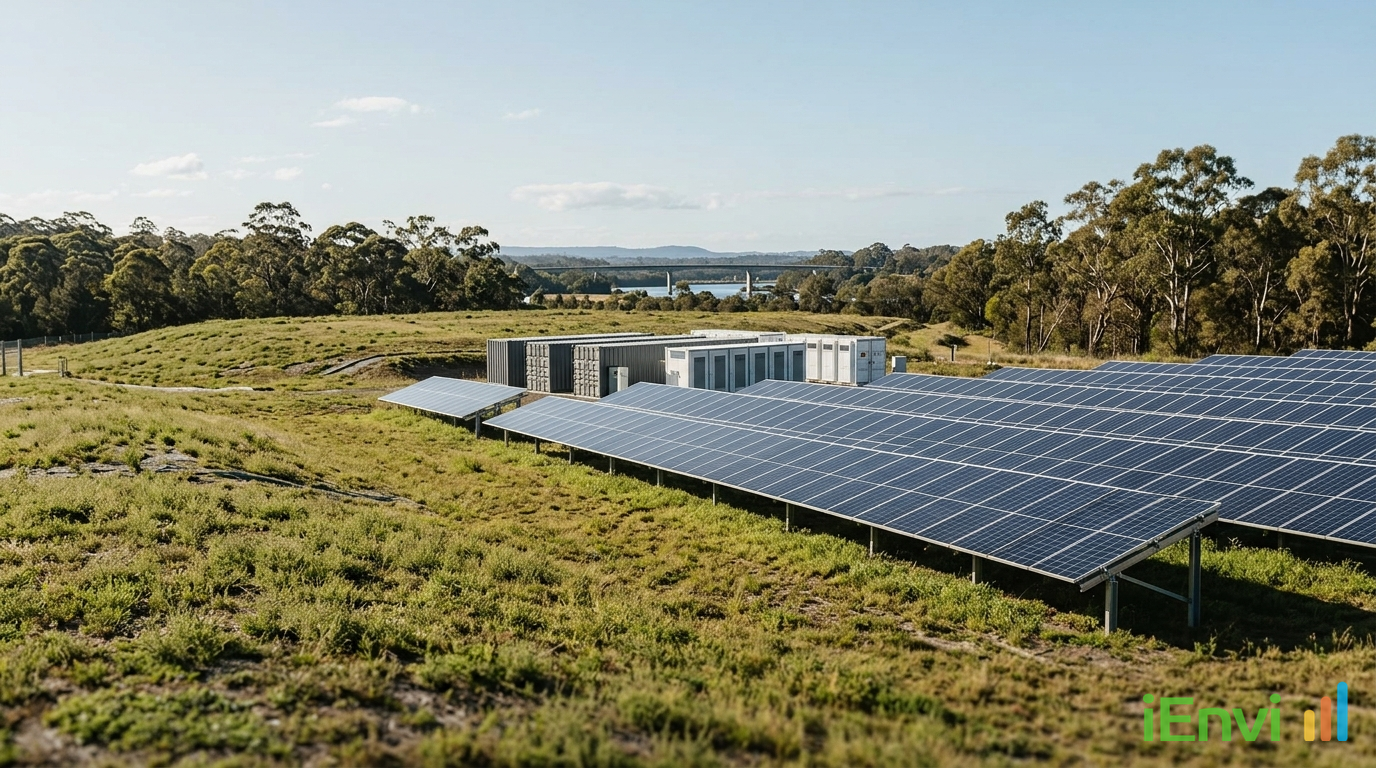
Shoalhaven Council Endorses Solar Hub on Capped Landfill
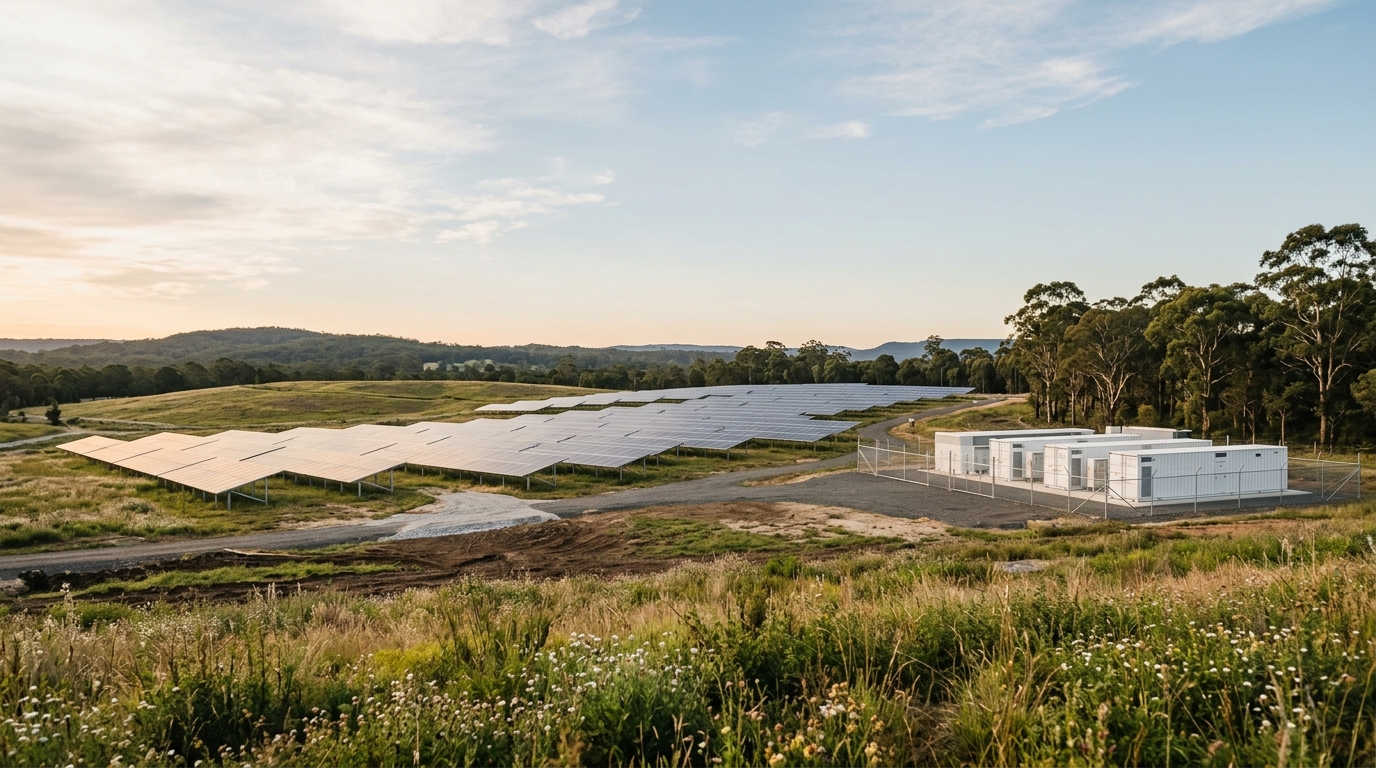
Shoalhaven City Council has endorsed a draft Plan of Management to convert a remediated 11.36-hectare former municipal landfill in North Nowra, on the New South Wales South Coast, into a community renewable energy hub. The proposal centres on a solar PV array and battery energy storage system (BESS) to be constructed on land that was used for municipal waste disposal from the 1950s until 1979 and remediated in 2014 with a permanent 2-metre clay cap. Council endorsed the draft plan and is now consulting with NSW Crown Lands and the NSW Environment Protection Authority (NSW EPA) before issuing long-term commercial leases to clean energy developers.
This matters because closed landfills represent a large and growing category of constrained land across Australian local government areas. Post-closure sites typically carry ongoing monitoring, capping maintenance and statutory obligations for decades after waste receipt ends, with limited options for productive re-use given restrictions on structural loading, excavation and land use zoning. The North Nowra project is a practical demonstration of how a capped landfill classified as Crown Land for community and electricity generation purposes can be converted from a long-term liability into a revenue-generating clean energy asset without disturbing the containment system that protects groundwater and surrounding land uses.
For environmental consultants, hydrogeologists, planners and local government asset managers, the case is instructive because it shows the statutory sequencing required. Council has not simply approved a solar farm; it has aligned Crown land classification, community land planning obligations and site contamination management before any lease is issued. That sequencing is the template other councils holding closed landfill assets will likely need to follow.
Site Constraints and Statutory Planning Pathway
The North Nowra site covers 11.36 hectares and operated as a municipal landfill for approximately three decades, from the 1950s to 1979. Remediation works completed in 2014 installed a permanent clay cap 2 metres thick across the site to isolate historical waste from the surface environment and limit infiltration, gas migration and direct contact pathways. This capping approach is consistent with containment-based remediation strategies commonly applied to legacy landfills where full waste removal is not economically or environmentally justified.
Because the site is classified as Crown Land for community and electricity generation purposes, it is explicitly constrained from standard commercial or residential redevelopment. This classification is significant: it removes ambiguity about permissible end uses and directs council toward infrastructure that does not require intensive footings, deep excavation or significant structural loading, all of which would risk breaching the clay cap. Solar PV arrays using non-penetrative or shallow ballasted mounting systems, paired with battery storage housed on surface pads, are consistent with this constraint.
Governance for the site sits across several NSW statutory instruments. The Crown Land Management Act 2016 (NSW) governs the classification and use of the land itself, while the Local Government Act 1993 (NSW) requires a Plan of Management for community land before any lease or licence can be granted. The Protection of the Environment Operations Act 1997 (NSW), specifically the scheduled activities and closed landfill provisions, continues to apply to the site’s post-closure environmental obligations, which is why council is consulting directly with the NSW EPA rather than treating the 2014 remediation as a closed matter. The Environmental Planning and Assessment Act 1979 (NSW) will govern any development consent pathway for the solar and battery infrastructure itself.
Council’s current position is that the draft Plan of Management has been endorsed but not finalised. Consultation with Crown Lands and the NSW EPA is ongoing, and long-term commercial leases to clean energy developers will only be issued once that Plan of Management is settled. This means the project is at a pre-tender, pre-development-consent stage, with technical due diligence and post-closure compliance review occurring in parallel with statutory planning.
NEPM 2013 and NSW EPA closed landfill guidelines for brownfield solar
The regulatory framework relevant to this project sits squarely within existing NSW contaminated land and closed landfill practice rather than any new legislation. The National Environment Protection (Assessment of Site Contamination) Measure 2013, as amended, provides the assessment framework contaminated land consultants would apply if any further site characterisation were required to support the solar and BESS proposal, including confirming that the existing capping system still meets its design intent under a changed surface load and land use.
The NSW EPA’s Environmental Guidelines: Solid Waste Landfills (2016) is the operative technical guidance for post-closure landfill management in this state, covering capping performance, leachate and landfill gas control, and surface water drainage. Any solar array design on a capped landfill in NSW needs to demonstrate it will not compromise these controls, particularly gas venting infrastructure and monitoring well access, which must remain functional and accessible after construction. This is a common oversight in brownfield renewable projects nationally: developers sometimes treat the cap as inert ground rather than an active engineered containment system requiring ongoing performance verification.
The broader relevance for Australian practice is that this is not an isolated case. Local governments across NSW, Queensland, Victoria and South Australia are holding an increasing number of closed landfill sites reaching the end of their statutory post-closure monitoring periods, often 20 to 30 years after waste receipt ends. As these sites move through their post-closure obligations, councils face growing pressure to identify productive re-uses that generate revenue without compromising containment systems. The North Nowra model, where Crown land classification, community land planning and contamination management are resolved before any lease is offered to market, gives practitioners a workable precedent for sequencing those obligations. Consultants advising councils on similar assets should expect the Plan of Management stage, and early engagement with the relevant EPA, to become the standard entry point for brownfield solar and battery projects on capped landfill in Australia.
References and related sources
- Primary source: www.shoalhaven.nsw.gov.au
- https://www.shoalhaven.nsw.gov.au/Council/News/Proposal-to-convert-former-landfi
- NSW EPA
How iEnvi can help
iEnvi provides specialist consulting services relevant to this topic. Our team includes CEnvP Site Contamination Specialists with experience across contaminated land, groundwater, remediation, ecology, and regulatory compliance.
- iEnvi remediation services
- iEnvi contaminated land investigation services
- iEnvi expert services and independent review services
This is an iEnvi Machete news summary. Prepared by iEnvi to summarise the source article for contaminated land, groundwater, remediation, approvals and site risk professionals.
Published: 10 Aug 2026
Need advice on this topic? Speak to an iEnvi expert at info@ienvi.com.au or 1300 043 684, or contact us online.
Need advice on this issue? iEnvi provides practical, senior-led environmental consulting across contaminated land, remediation, ecology and environmental risk.
Team credentials Contaminated land services Remediation services Groundwater services Talk to iEnvi