
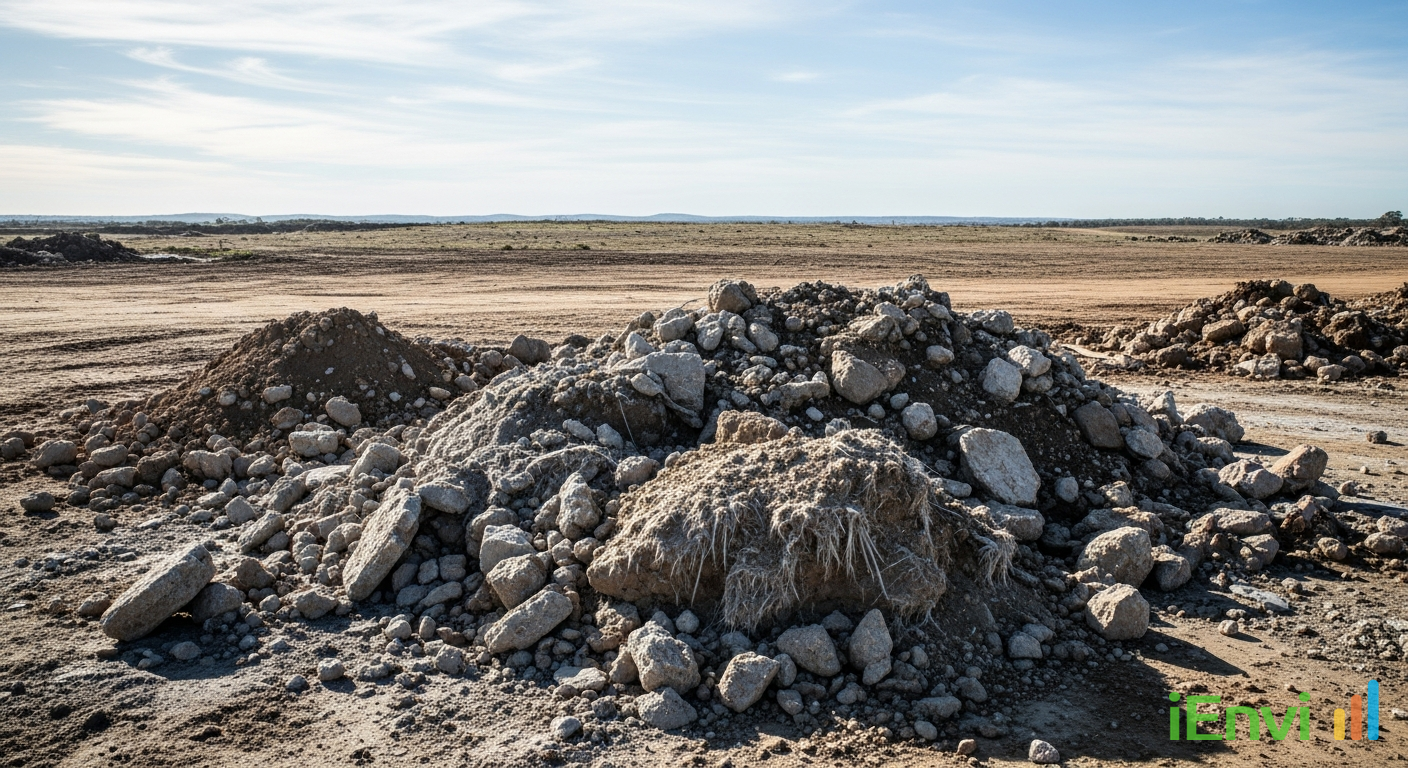
Asbestos-Contaminated Waste Dumping in South-West Sydney
The Liverpool Local Court has ordered Sydney earthmover Andrew Lloyd Hughes and his company, ANT CIVIL Pty Ltd, to pay $335,043 in penalties and costs after pleading guilty to three land pollution offences under the Protection of the Environment Operations Act 1997 (NSW). The judgment, handed down in July 2017, follows a years-long investigation by the NSW Environment Protection Authority (EPA) and two local councils into the deliberate dumping of 2,830 tonnes of asbestos-contaminated material on rural properties at Thirlmere and Rossmore in Sydney’s south-west during 2020. The offences were prosecuted under Section 142A of the POEO Act, which addresses land pollution, with Tier 2 offence provisions applied to the unlawful disposal of asbestos waste.
The method used in this case is not novel, but it is persistently effective at exploiting unsuspecting landowners. Hughes and ANT CIVIL advertised free clean topsoil, shale, clay, and sandstone for delivery to rural properties, a so-called “free fill” arrangement that appears to benefit both parties. In practice, the material delivered was heavily contaminated with asbestos waste, concrete, bricks, plastic, and other construction debris. Text message evidence obtained during the investigation proved that Hughes personally directed contractors to deposit contaminated loads directly into a dam on one of the affected properties. Judge Shafiq condemned the defendants’ complete disregard for the regulatory system and imposed a mandatory clean-up order requiring both sites to be remediated within 30 days of judgment.
For environmental professionals, developers, councils, and legal practitioners, this case is significant for several reasons. It confirms that the NSW EPA and local councils are actively co-operating on digital forensics and cross-agency investigation to prosecute illegal dumping at scale. It also places fresh emphasis on the liability exposure faced by landowners who accept unverified fill, regardless of their intent. With three further prosecutions reportedly pending in the Land and Environment Court of NSW for similar alleged dumping at Wheeny Creek, Windsor Downs, and Bilpin, this matter signals an ongoing and escalating enforcement posture from the NSW EPA on unlawful asbestos waste disposal.
Key details of the ANT CIVIL prosecution and penalty breakdown
The total penalty of $335,043 encompasses both fines and costs awarded against Andrew Lloyd Hughes and ANT CIVIL Pty Ltd across three separate land pollution offences. The prosecution was brought under Section 142A of the Protection of the Environment Operations Act 1997 (NSW), which makes it an offence to pollute land, with Tier 2 offence provisions applying to the unlawful disposal of asbestos waste. Tier 2 offences under the POEO Act carry maximum penalties of up to $250,000 for a corporation and $120,000 for an individual for a first offence, with daily default penalties applying for ongoing contraventions. The court’s combined penalty and costs order reflects the seriousness with which Judge Shafiq viewed the deliberate, systematic nature of the offending.
The volume of contaminated material deposited across the two sites was substantial. A combined 2,830 tonnes of soil was dumped at properties in Thirlmere and Rossmore, both rural localities in Sydney’s south-west. This is not incidental or opportunistic disposal. At that volume, the logistics involved multiple truck movements across an extended period, which underlines why text message evidence was so important to the prosecution. The messages demonstrated that Hughes was not merely negligent but was actively directing the placement of contaminated loads, including instructing contractors to tip material into a dam. Directing contaminated fill into a water body introduces potential risks under additional provisions of the POEO Act relating to water pollution, though the charges as reported focused on land pollution.
The contaminated material included asbestos waste alongside concrete, bricks, plastic, and mixed construction debris. The presence of asbestos in fill is assessed in Australia against the framework established under Schedule B1 of the National Environment Protection (Assessment of Site Contamination) Measure 2013 (NEPM 2013), which provides guideline investigation levels for asbestos in soil. Under that framework, the presence of bonded or friable asbestos-containing material (ACM) in soil triggers a tiered assessment process, beginning with visual inspection and progressing to laboratory analysis. The NSW EPA Waste Classification Guidelines (2014), issued under the Protection of the Environment Operations (Waste) Regulation 2014, further define how asbestos-contaminated soil must be classified before it can be legally transported or disposed of. None of these requirements were followed by the defendants.
The 30-day remediation order imposed by the court is operationally demanding. Remediating asbestos-contaminated sites of this scale within that timeframe requires immediate engagement of licensed asbestos assessors and removalists, systematic waste classification of all deposited material, safe excavation and packaging of ACM under SafeWork NSW and EPA-compliant procedures, transport by licensed waste contractors with appropriate waste transport certificates, lawful disposal at a facility licensed to receive asbestos waste, and post-remediation validation sampling and reporting to demonstrate the sites meet applicable health-based investigation levels under NEPM 2013. Coordinating all of this within 30 days on rural properties that received nearly 2,830 tonnes of mixed contaminated fill is a significant logistical undertaking, particularly given that the extent of subsurface distribution of asbestos fibres may not be immediately apparent from surface inspection alone.
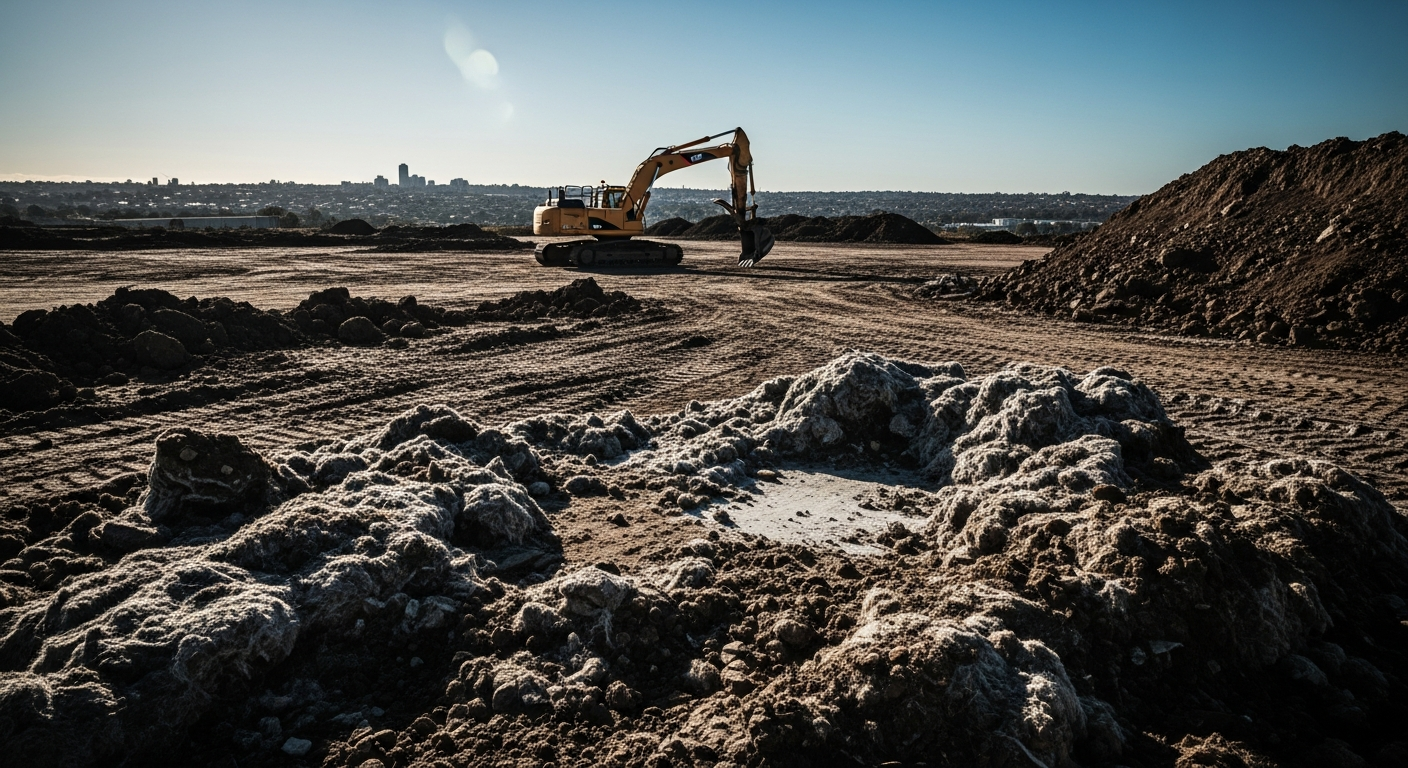
Australian context: free fill liability, asbestos regulation, and landowner exposure
The ANT CIVIL prosecution sits within a broader pattern of illegal fill dumping that has drawn sustained regulatory attention across New South Wales. The free fill model exploits a straightforward information asymmetry: landowners seeking topsoil or fill for rural property improvement have limited practical means to verify the quality of material offered at no cost, while operators with contaminated spoil face substantial licensed disposal costs that free fill arrangements allow them to avoid entirely. The financial incentive for the dumper is significant. Licensed disposal of asbestos-contaminated soil at a facility approved to receive such waste carries a material cost per tonne, and that cost scales directly with volume. At 2,830 tonnes, the avoided disposal liability in this case would have been substantial.
For landowners, the legal exposure created by accepting contaminated fill is not straightforward. Under the POEO Act, a landowner who permits polluting material to be deposited on their land may face liability depending on the circumstances, even where they had no knowledge of the contamination at the time of delivery. The Contaminated Land Management Act 1997 (NSW) creates a separate layer of obligation, with the EPA empowered to issue remediation orders to owners or occupiers of contaminated land regardless of who caused the contamination. This means a landowner who accepted what they believed to be clean fill in good faith may nonetheless be required to fund remediation if the responsible party cannot be made to comply or is unable to pay.
The regulatory framework governing asbestos in soil in New South Wales draws on several instruments simultaneously. The NEPM 2013 Schedule B1 health investigation levels for asbestos provide the primary risk-based benchmarks for site assessment. The NSW EPA Waste Classification Guidelines establish how asbestos-contaminated material must be characterised and what licence category is required for its transport and disposal. The Work Health and Safety Regulation 2017 (NSW), administered by SafeWork NSW, governs the conditions under which licensed asbestos removalists must operate, including requirements for air monitoring, personal protective equipment, and clearance inspections. The Asbestos Safety and Eradication Agency (ASEA) maintains a national strategic framework, though enforcement responsibility in New South Wales sits with the EPA and SafeWork NSW at the operational level.
The pending prosecutions at Wheeny Creek, Windsor Downs, and Bilpin indicate that the ANT CIVIL matter is not an isolated enforcement action. These locations span the Hawkesbury region and the lower Blue Mountains foothills, areas where rural residential and hobby farm land use creates ongoing demand for fill material and where site access for large vehicles is generally less scrutinised than in urban or peri-urban settings. The geographic spread of the alleged offending, if proven, points to a systematic operation rather than opportunistic disposal, which has implications for how the EPA and councils approach surveillance and early intervention in similar cases going forward.
References and related sources
- Primary source: www.epa.nsw.gov.au
- nsw.gov.au
- https://www.epa.nsw.gov.au/news/media-releases/2026/epamedia260717-sydney-man-an
- NSW EPA
How iEnvi can help
iEnvi provides specialist consulting services relevant to this topic. Our team includes CEnvP Site Contamination Specialists with experience across contaminated land, groundwater, remediation, ecology, and regulatory compliance.
- iEnvi remediation services
- iEnvi asbestos services
- iEnvi contaminated land investigation services
- iEnvi expert services and independent review services
This is an iEnvi Machete news summary. Prepared by iEnvi to summarise the source article for contaminated land, groundwater, remediation, approvals and site risk professionals.
Published: 17 Jul 2026
Need advice on this topic? Speak to an iEnvi expert at info@ienvi.com.au or 1300 043 684, or contact us online.
Need advice on this issue? iEnvi provides practical, senior-led environmental consulting across contaminated land, remediation, ecology and environmental risk.
Team credentials Contaminated land services Remediation services Groundwater services Talk to iEnvi