
Tasmanian EPA Florfenicol Environmental Impact Assessment
The Tasmanian Environment Protection Authority released the findings of a large-scale environmental risk assessment on 21 May 2026, concluding that the use of the antibiotic florfenicol at southern Tasmanian salmon farms posed a low risk of causing unacceptable environmental harm. The assessment, which analysed 4,240 water and sediment samples collected across nine salmon farm leases between November 2025 and March 2026, represents one of the most data-intensive field investigations into antibiotic residues in Australian aquaculture environments to date. The findings carry direct weight for how regulators, consultants, and industry operators approach chemical risk assessment in sensitive coastal and marine settings.
The assessment was triggered following the Australian Pesticides and Veterinary Medicines Authority’s temporary suspension of an emergency use permit for florfenicol earlier in 2026. That suspension was driven by concerns over residue exposure to non-target species rather than evidence of widespread environmental contamination. The Tasmanian EPA’s response was methodical: rather than default to continued precautionary restriction, the regulator commissioned a high-resolution field study to generate an empirical evidence base capable of informing a proportionate regulatory outcome. The result is a case study in how targeted, large-scale monitoring data can interrupt a precautionary regulatory cycle and return decision-making to a risk-based footing.
For environmental professionals working in aquaculture regulation, coastal water quality management, or marine ecotoxicology, the assessment is significant on several levels. It establishes interim guideline values for florfenicol in Australian marine waters, differentiates thresholds by ecosystem type, and demonstrates that fewer than 12 per cent of samples collected during active treatment periods contained any measurable residues of florfenicol or its primary degradation product, florfenicol amine. These findings do not resolve the APVMA permit suspension, which relates to a separate residue risk pathway, but they substantially reframe the environmental risk conversation.
Key details of the Tasmanian EPA florfenicol risk assessment
The sampling programme covered nine salmon farm leases in southern Tasmania, with water and sediment samples collected over a five-month window from November 2025 through March 2026. The total dataset of 4,240 samples is notable for its spatial and temporal resolution. Sampling was conducted across lease boundaries and into adjacent receiving waters, enabling the EPA to characterise both near-field and far-field residue profiles. The study targeted both the parent compound florfenicol and its principal breakdown product, florfenicol amine, which is the form most likely to persist in sediments following treatment events.
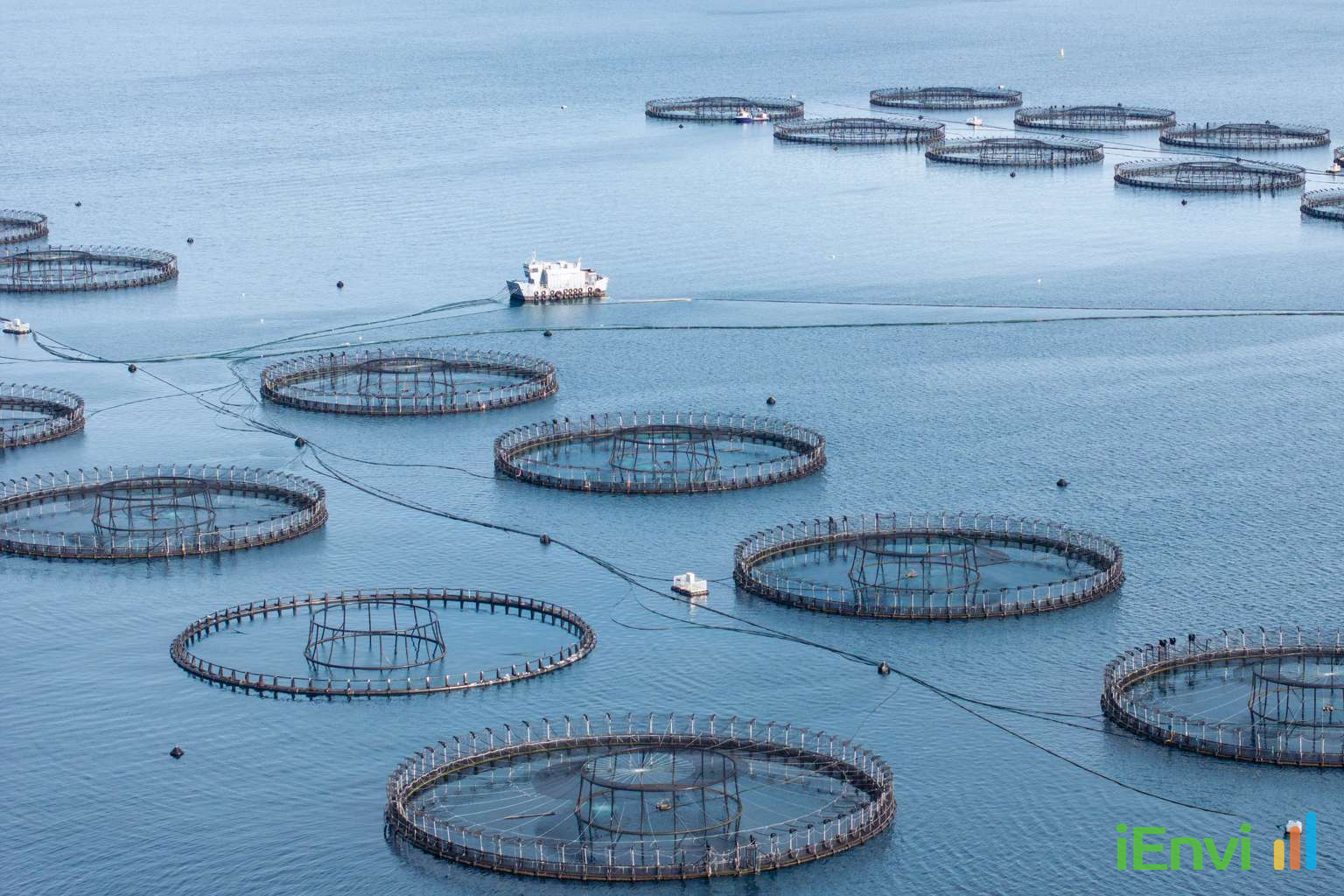
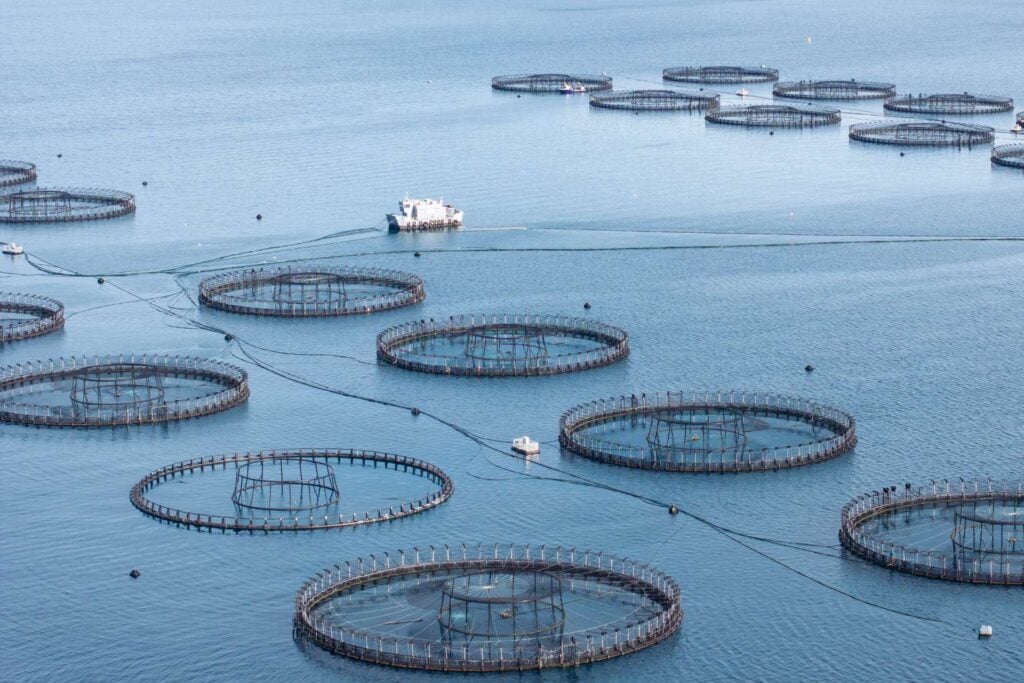
The central quantitative finding is that fewer than 12 per cent of all samples returned any measurable concentration of either compound. More critically, no single sample exceeded the interim guideline values the EPA established as part of the assessment framework. The EPA set a threshold of 7 micrograms per litre (µg/L) for pristine marine ecosystems and 50 µg/L for modified ecosystems, with the D’Entrecasteaux Channel specifically referenced as an example of the latter category. The D’Entrecasteaux Channel is the primary farming area for Tasmanian Atlantic salmon and is characterised by reduced water exchange relative to open coastal environments, elevated organic sediment loads from feed and faecal inputs, and a baseline ecological condition that differs materially from undisturbed reef or seagrass systems. The application of a higher threshold for this environment reflects an acknowledgement of existing modification rather than a relaxation of ecological protection standards.
The differentiation between 7 µg/L and 50 µg/L is technically grounded in ecotoxicological endpoint data. Interim guideline values of this type are typically derived from species sensitivity distributions or no-observed-effect concentrations for representative aquatic organisms. The 7 µg/L figure represents a conservative protective threshold for invertebrate and algal communities in high-quality receiving environments, while the 50 µg/L figure incorporates the reduced ecological sensitivity of already-impacted systems. Both values remained unexceeded throughout the monitoring period, which the EPA assessed as sufficient evidence to conclude that the antibiotic treatment programme did not pose a risk of unacceptable environmental harm under Tasmanian environmental protection legislation.
Florfenicol is a broad-spectrum synthetic antibiotic used in aquaculture to treat bacterial diseases, including tenacibaculosis and piscirickettsiosis, in farmed Atlantic salmon. It is administered in medicated feed pellets delivered directly to fish in sea cages. The compound’s environmental fate is controlled largely by photolysis in the water column and microbial degradation in sediments, with florfenicol amine being considerably more stable than the parent compound under anaerobic conditions. The APVMA’s emergency use permit had been granted to address disease outbreaks during periods when approved alternatives were insufficient or unavailable. The permit suspension related specifically to risks of residues in non-target marine species, a separate regulatory pathway to the environmental risk assessment conducted by the Tasmanian EPA. The two regulatory processes operate in parallel and address different dimensions of risk: the APVMA process concerns food safety and non-target species residues under veterinary medicines law, while the EPA assessment addresses receiving environment water and sediment quality under state environmental legislation.
Australian context: marine water quality frameworks and aquaculture regulation
References and related sources
- Primary source: pulsetasmania.com.au
- ANZG Water Quality Guidelines
How iEnvi can help
iEnvi provides specialist consulting services relevant to this topic. Our team includes CEnvP Site Contamination Specialists with experience across contaminated land, groundwater, remediation, ecology, and regulatory compliance.
- iEnvi contaminated land investigation services
- iEnvi remediation and validation services
- iEnvi expert services and independent review services
This is an iEnvi Machete news summary. Prepared by iEnvi to summarise the source article for contaminated land, groundwater, remediation, approvals and site risk professionals.
Published: 21 May 2026
Need advice on this topic? Speak to an iEnvi expert at info@ienvi.com.au or 1300 043 684, or contact us online.
Need advice on this issue? iEnvi provides practical, senior-led environmental consulting across contaminated land, remediation, ecology and environmental risk.
Team credentials Contaminated land services Remediation services Groundwater services Talk to iEnvi