
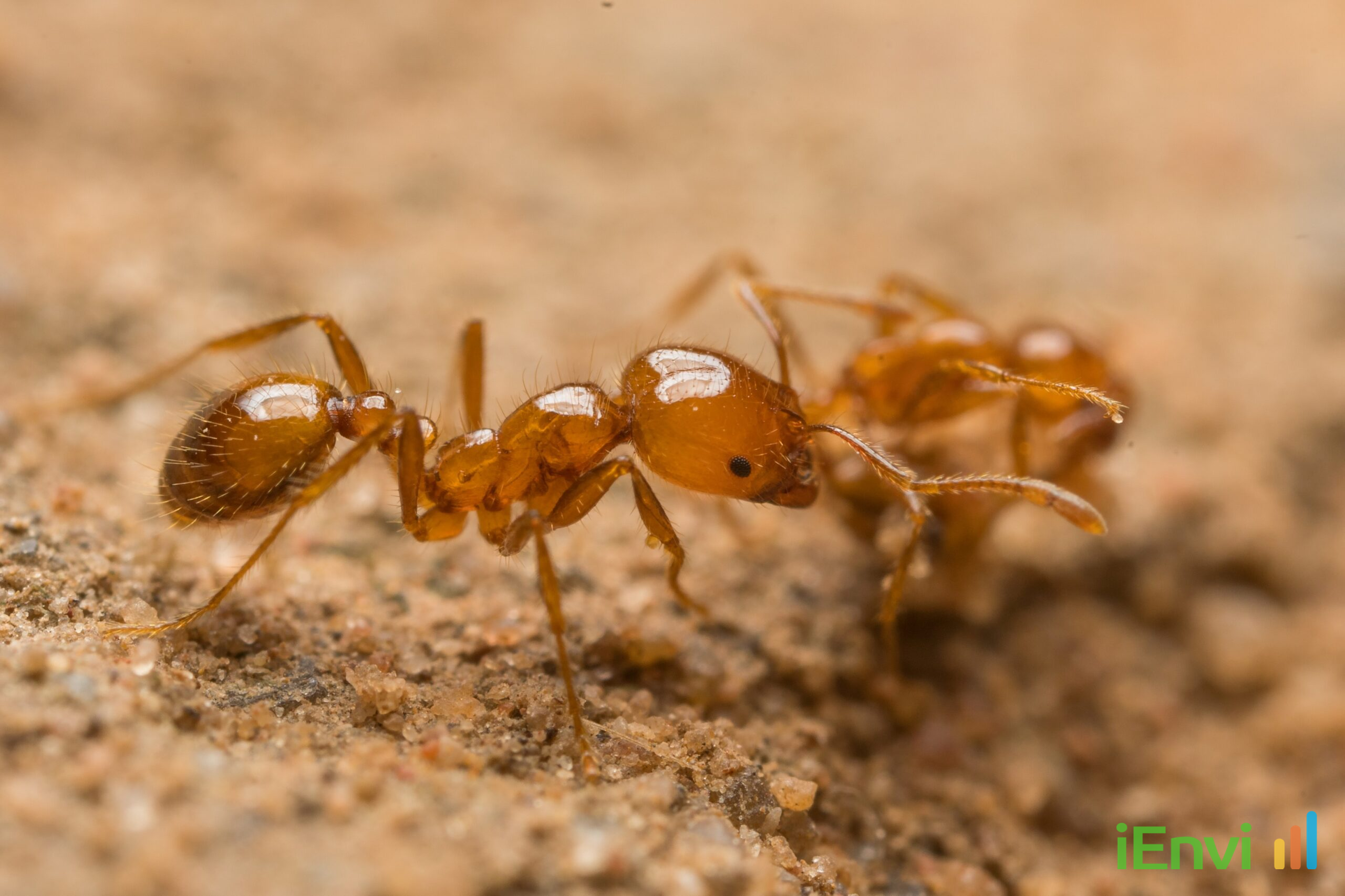
Successful Tropical Fire Ant Eradication on Melville Island
In a result that the global conservation science community has described as near-unprecedented, Melville Island in Australia’s Northern Territory has been declared free of the tropical fire ant (Solenopsis geminata) following a two-decade eradication campaign led by the Tiwi Rangers in collaboration with CSIRO, federal and territory government agencies, non-government organisations, and private enterprise. The announcement, confirmed in June 2026, marks the successful clearance of a highly aggressive and naturalised invasive insect across a 1,535-hectare project area. That outcome alone places this programme among the most significant invasive species eradications achieved anywhere in the world at landscape scale.
The tropical fire ant was first detected on Melville Island in the early 2000s. Within a relatively short period, the species dominated local habitats, outcompeting native fauna and posing a direct predation threat to vulnerable wildlife at ground level and in low-lying nesting sites. Eradicating a well-established, colony-forming insect across such a large and ecologically complex territory is considered by most invasion biologists to be extraordinarily difficult, and failures of similarly ambitious programmes elsewhere have reinforced that assessment. The Tiwi Rangers programme succeeded where many others have not, and the methodology underpinning that success carries genuine lessons for environmental practitioners managing biosecurity risk on development, infrastructure, and resource project sites across northern Australia and beyond.
For environmental professionals working in project delivery, regulatory compliance, and ecological risk assessment, this outcome is relevant on several levels. It validates a specific operational model for invasive species management that integrates Indigenous ranger capacity with advanced scientific monitoring. It also directly implicates obligations under the federal Environment Protection and Biodiversity Conservation Act 1999 (Cth), given that Melville Island supports nesting habitat for multiple listed threatened species whose protection from invasive pest predation is a core conservation management objective under that legislation.
Key details of the Tiwi Islands tropical fire ant eradication programme
The eradication programme covered 1,535 hectares (equivalent to approximately 3,790 acres) of Melville Island terrain, encompassing a mosaic of tropical woodland, coastal fringe, and riparian habitat. The tropical fire ant, Solenopsis geminata, is a distinct species from the red imported fire ant (Solenopsis invicta) that is currently the subject of a nationally coordinated eradication effort in south-east Queensland. Both species are highly aggressive, form large polygyne colonies, and have well-documented impacts on ground-nesting fauna, agricultural systems, and human health, but S. geminata is more broadly distributed across tropical regions and has been present in northern Australia for considerably longer.
The programme’s methodology evolved substantially over its two decades of operation. Early phases relied on broad-scale baiting across the affected area, a common initial response to invasive ant incursions. As the population was reduced and detectable nest density declined, the programme transitioned to a more precise approach: systematic nest location using trained detection teams and GIS-supported spatial tracking, followed by localised treatment of confirmed active nests using Amdro bait. Amdro contains the active ingredient hydramethylnon, an insecticide that acts as a metabolic inhibitor and is formulated as a granular bait attractive to foraging workers, who carry it back to the colony and queens. This shift from broadcast to targeted treatment is operationally significant because it reduced the volume of chemical applied, improved treatment efficacy at the colony level, and enabled a much tighter spatial record of treatment locations against detection records over time.
Eradication verification under Australian biosecurity frameworks requires zero detections of the target species over consecutive survey seasons, with survey effort and spatial coverage sufficient to provide statistical confidence that absence is real rather than a sampling artefact. This phase of the programme involved years of intensive post-treatment monitoring by the Tiwi Rangers, underpinned by detailed GIS data management. The spatial data layer built up over the programme’s life documented every detection point, every treatment event, and every subsequent negative survey result, creating an auditable record that allowed the eradication claim to be substantiated to the standard required by regulatory authorities. That level of spatial and temporal documentation is a requirement, not an optional enhancement, and it is worth emphasising that the monitoring burden in the verification phase is typically as resource-intensive as the treatment phase itself.
The conservation significance of the eradication is directly tied to the federal EPBC Act. Melville Island provides nesting habitat for four species of sea turtle: the green turtle (Chelonia mydas), the flatback turtle (Natator depressus), the olive ridley turtle (Lepidochelys olivacea), and the hawksbill turtle (Eretmochelys imbricata). The hawksbill is listed as Critically Endangered on the IUCN Red List and as a threatened species under the EPBC Act. Tropical fire ants are documented predators of turtle hatchlings and eggs at ground level, and their presence in nesting habitat constitutes a material threat to hatchling survival rates. The island also supports significant seabird nesting colonies. Eradicating the ant population from the 1,535-hectare project area directly reduces predation pressure on these species and strengthens the ecological integrity of nesting habitat across the project area.
References and related sources
- Primary source: news.mongabay.com
- portaltela.com
- https://news.mongabay.com/2026/06/tiwi-rangers-eradicate-invasive-tropical-fire-
- EPBC Act
How iEnvi can help
iEnvi provides specialist consulting services relevant to this topic. Our team includes CEnvP Site Contamination Specialists with experience across contaminated land, groundwater, remediation, ecology, and regulatory compliance.
- iEnvi contaminated land investigation services
- iEnvi remediation and validation services
- iEnvi expert services and independent review services
This is an iEnvi Machete news summary. Prepared by iEnvi to summarise the source article for contaminated land, groundwater, remediation, approvals and site risk professionals.
Published: 23 Jun 2026
Need advice on this topic? Speak to an iEnvi expert at info@ienvi.com.au or 1300 043 684, or contact us online.
Need advice on this issue? iEnvi provides practical, senior-led environmental consulting across contaminated land, remediation, ecology and environmental risk.
Team credentials Ecological risk assessment Contaminated land services Remediation services Talk to iEnvi