
Overview
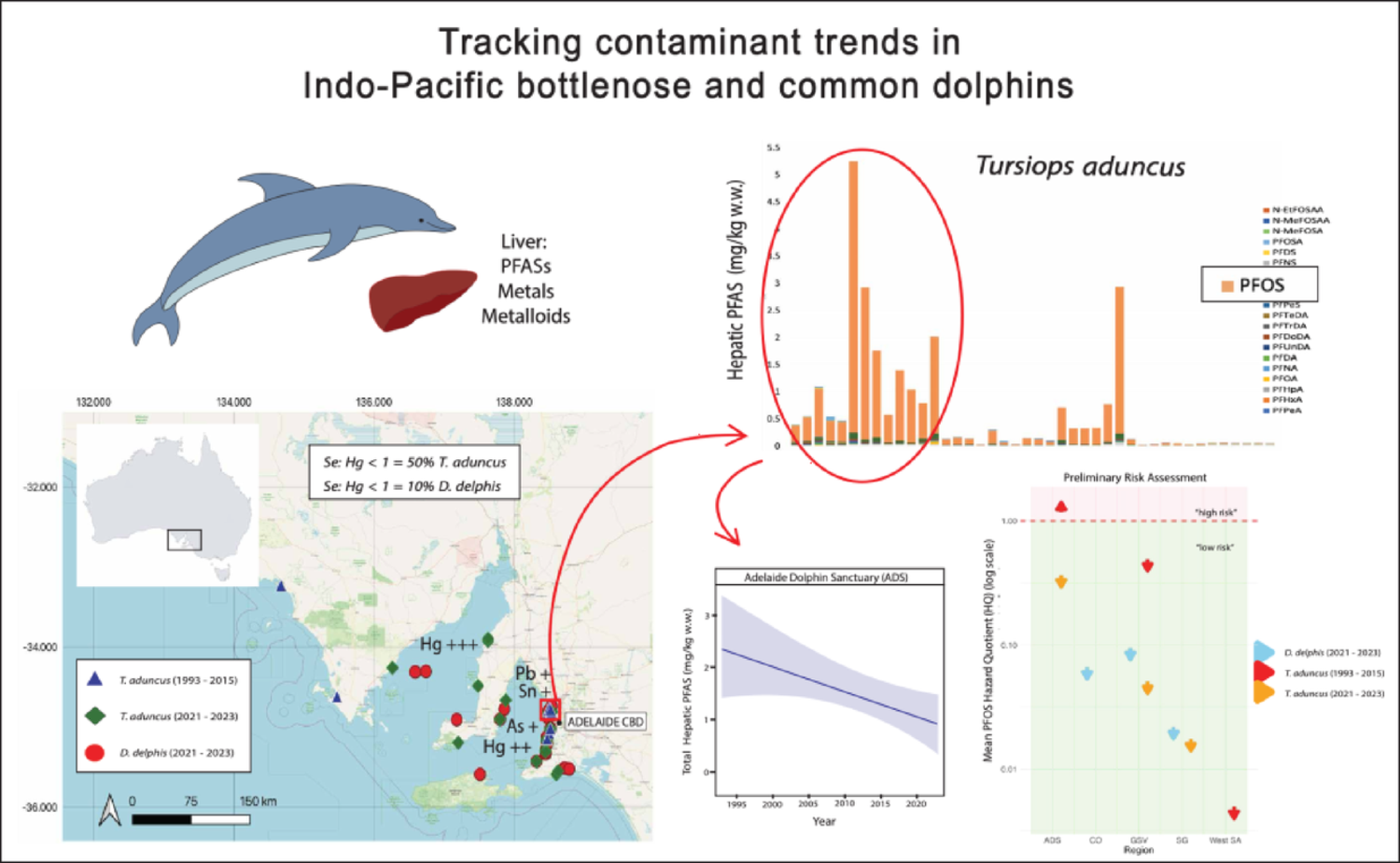
Peer-reviewed research from CSIRO and the South Australian EPA has tracked contaminant trends in Indo-Pacific bottlenose dolphins and common dolphins across three decades. Published in the Archives of Environmental Contamination and Toxicology, the study screened for 29 PFAS compounds and 18 metals in dolphins from the Adelaide Dolphin Sanctuary and Port River Estuary. The data reveals a clear downward trend in total PFAS concentrations, validating the effectiveness of Australia’s regulatory interventions against fluorinated compounds. However, legacy heavy metal contamination remains persistent and at levels that demand continued attention from ecological risk assessors and remediation practitioners.
Key details
The study analysed hepatic (liver) tissue samples from dolphins across two periods: 1993 to 2015 and 2021 to 2023. Researchers identified 21 different PFAS compounds, with PFOS dominating the contamination profile at approximately 80 per cent of the total PFAS load. The observed decline in PFAS concentrations correlates with the 2002 phase-out of PFOS and PFOA importation into Australia and the strict state-level bans on fluorinated firefighting foams that followed.
While the PFAS reduction represents a genuine policy success, the heavy metal data tells a different story. Mercury concentrations were recorded at levels up to 2,350 mg/kg dry weight in dolphin liver tissue. Lead, tin and other metals also remain persistent in these marine apex predators. These concentrations reflect the cumulative burden of decades of industrial discharge, stormwater runoff and legacy contamination entering the Port River Estuary and surrounding marine environments.
The study is significant because dolphins serve as sentinel species for estuarine and coastal ecosystem health. As apex predators with long lifespans, they bioaccumulate contaminants over time, providing an integrated measure of environmental quality that short-term water or sediment sampling cannot replicate.
Australian context
The Adelaide Dolphin Sanctuary, established under the Adelaide Dolphin Sanctuary Act 2005 (SA), is one of Australia’s most urbanised marine protected areas. The Port River Estuary receives stormwater and treated wastewater from Adelaide’s northern and western suburbs, along with industrial discharges from the adjacent industrial precinct. This combination of urban, industrial and ecological values makes it a complex environment for contamination management.
For ecological risk assessors working in Australian estuarine environments, this study provides a valuable long-term dataset. The ANZG (2018) Water Quality Guidelines for Fresh and Marine Waters provide the framework for assessing contaminant levels in aquatic environments. However, the dolphin data demonstrates that sediment and water column monitoring alone may not capture the full extent of bioaccumulative contamination.
The study has particular relevance for sites undergoing remediation in urbanised catchments. When we conduct environmental assessments in areas like the Port River Estuary, West Lakes, or similar urbanised estuarine systems across Australia, we must consider the existing background contaminant burden. Remediation action plans and groundwater management strategies must account for the additive toxicity of co-contaminants. Relying solely on declining PFOS trends will not satisfy regulator expectations if heavy metals and other persistent contaminants remain at elevated levels.
Practical implications
- Ecological risk assessors should incorporate long-term biota monitoring data into their conceptual site models for estuarine and coastal sites, rather than relying solely on water and sediment chemistry.
- Remediation practitioners managing sites in urbanised catchments must account for multiple contaminant classes. A remediation strategy that addresses PFAS but ignores co-occurring heavy metals may not achieve regulatory closure.
- The declining PFAS trend validates the effectiveness of import bans and use restrictions, supporting the case for continued regulatory action on emerging contaminants.
- Site assessors working near the Port River Estuary or other urbanised estuarine systems should reference this dataset when establishing background contaminant concentrations.
- Environmental managers responsible for marine protected areas should consider whether current monitoring programmes adequately capture bioaccumulative contaminant trends in sentinel species.
References and related sources
Original source: Archives of Environmental Contamination and Toxicology (SpringerLink)
Source published: 16 March 2026
Added to Enviro News: 16 March 2026
Read the primary source article at SpringerLink
How iEnvi can help
iEnvi provides comprehensive contaminated land assessment and ecological assessment services for sites in urbanised catchments and estuarine environments. Our team conducts ecological risk assessments, develops remediation strategies for complex multi-contaminant sites, and assists with regulatory engagement. We also provide remediation services addressing both PFAS and heavy metal contamination in soil, groundwater and sediment.
This is an iEnvi Machete news summary. Prepared by iEnvi to summarise the source article for contaminated land, groundwater, remediation, approvals and site risk professionals.
Need advice on this topic? Speak to an iEnvi expert at info@ienvi.com.au or 1300 043 684, or contact us online.
Need advice on this issue? iEnvi provides practical, senior-led environmental consulting across contaminated land, remediation, ecology and environmental risk.
Ecological risk assessment Contaminated land advice Remediation services Groundwater services Talk to iEnvi