
Summary
AI hardware is hitting a wall, but a local development is changing its trajectory.
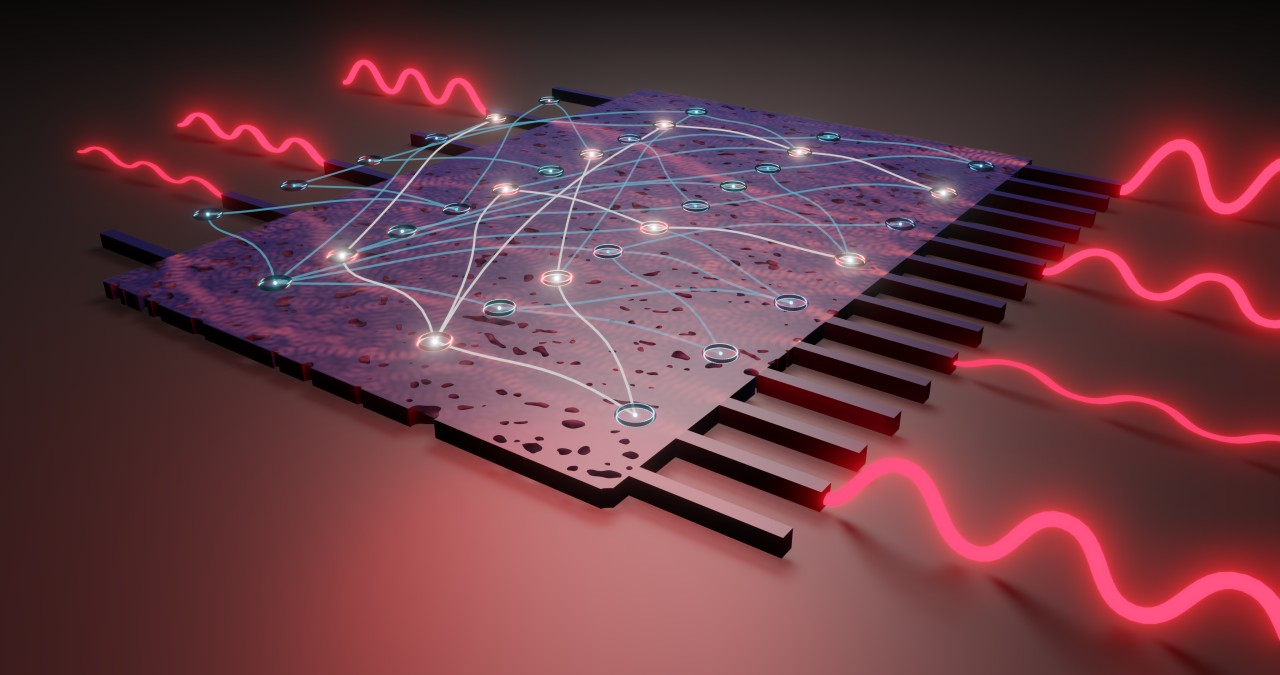
Researchers at the University of Sydney have prototyped a nano photonic chip that processes neural computations using light instead of electricity. By moving away from electron-based circuitry, this technology avoids the significant heat generation and energy consumption that currently constrain high-performance AI infrastructure.
This move towards photonic hardware is relevant for the future of scalable computing. It offers a pathway to sustainable AI that can handle intensive workloads without the large energy footprint of existing data centres.
Beyond data centres, the compact nature of this chip enables edge AI. We anticipate a future where complex real-time processing happens directly on devices with minimal power requirements.
How do you see the transition to photonic hardware impacting the adoption of AI in your sector?

Further detail
The technical implications of this development for professional services and infrastructure are significant. Traditional AI processors rely on metallic interconnects where electrical resistance leads to heat dissipation. This necessitates extensive cooling infrastructure and limits the density of neural networks.
A University of Sydney team has demonstrated a method to perform mathematical operations at the speed of light by embedding neural computation structures into nanoscale photonic hardware. Their prototype validated this by successfully classifying over 10,000 biomedical MRI scans with accuracy between 90 and 99 per cent.
For businesses, the primary bottleneck in scaling AI models is now hardware power density rather than software efficiency. If this technology moves to commercial scale, it will allow for the integration of high-performance machine learning models into hardware with a vastly reduced operational footprint. This represents a necessary step towards sustainable edge computing, reducing reliance on cloud-based processing for every task.
Background and context
HEADLINE: University of Sydney researchers achieve breakthrough with ultra-compact, light-speed photonic AI chip to slash computin
SOURCE URL: https://www.sydney.edu.au/news-opinion/news/2026/03/10/sydney-researchers-build-ultra-compact-ai-chip-operating-at-spee.html
LINKEDIN MAIN POST (already published, reflects approved facts):
AI hardware is hitting a wall, but a local development is changing its trajectory.
Researchers at the University of Sydney have prototyped a nano photonic chip that processes neural computations using light instead of electricity. By moving away from electron-based circuitry, this technology avoids the significant heat generation and energy consumption that currently constrain high-performance AI infrastructure.
This move towards photonic hardware is relevant for the future of scalable computing. It offers a pathway to sustainable AI that can handle intensive workloads without the large energy footprint of existing data centres.
References and related sources
- Primary source: www.sydney.edu.au
- https://www.sydney.edu.au/nano/about/facilities/sydney-nanoscience-hub.html\"
- https://profiles.sydney.edu.au/xiaoke.yi\"
- https://www.sydney.edu.au/engineering/schools/school-of-electrical-and-computer-
How iEnvi can help
iEnvi provides specialist consulting services relevant to this topic. Our team includes CEnvP Site Contamination Specialists with experience across contaminated land, groundwater, remediation, ecology, and regulatory compliance.
- iEnvi contaminated land investigation services
- iEnvi remediation and validation services
- iEnvi expert services and independent review services
This is an iEnvi Machete news summary. Prepared by iEnvi to summarise the source article for contaminated land, groundwater, remediation, approvals and site risk professionals.
Published: 17 Jun 2026
Need advice on this topic? Speak to an iEnvi expert at info@ienvi.com.au or 1300 043 684, or contact us online.
Need advice on this issue? iEnvi provides practical, senior-led environmental consulting across contaminated land, remediation, ecology and environmental risk.
Team credentials Contaminated land services Remediation services Groundwater services Talk to iEnvi