
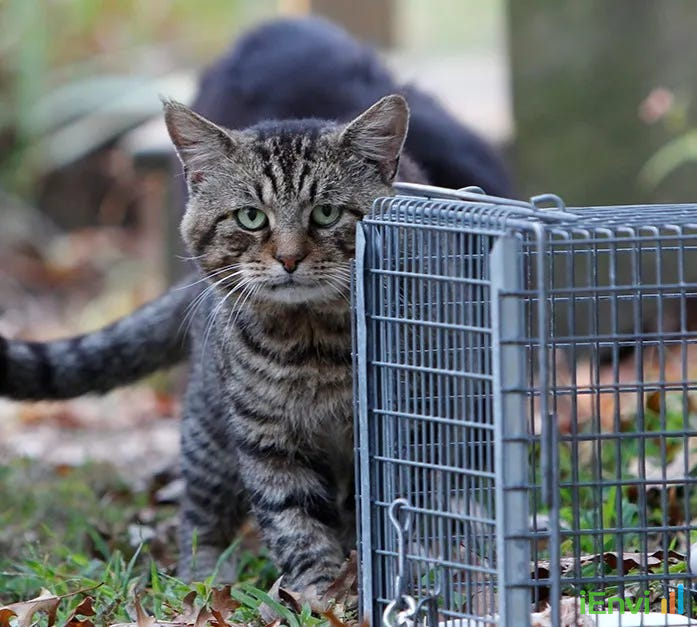
Overview: Human Hazards vs Cat Attacks in NSW Wildlife Rescues
A landmark eleven-year study published in July 2026 by researchers at the University of Queensland’s (UQ) School of Veterinary Science, in collaboration with the Australian Pet Welfare Foundation, has fundamentally challenged the dominant narrative around what is actually killing threatened wildlife in urban and semi-urban Australia. Led by Dr Kate Dutton-Regester and Emeritus Professor Jacquie Rand, the research analysed 52,475 wildlife rescue cases drawn from the NSW Wildlife Rehabilitation Data Dashboard, covering the period from 2013 to 2024 and spanning 158 species listed as threatened under either the Biodiversity Conservation Act 2016 (NSW) or the Environment Protection and Biodiversity Conservation Act 1999 (Cth) (EPBC Act). The findings are unambiguous: human-engineered hazards, not pet cats, are the dominant cause of threatened wildlife ending up in the hands of rehabilitators.
The study’s timing is significant for the environmental consulting sector. Biodiversity offsets, fauna management planning, and development approval conditions have for years defaulted to pet containment covenants and cat management as go-to mitigation tools for urban and peri-urban projects. This research, grounded in over a decade of empirical rehabilitation data, does not dismiss the value of cat containment but does demonstrate that the profession’s prioritisation of that measure over physical, engineered hazard controls is out of step with the actual injury and mortality burden recorded in the field.
For environmental consultants, ecologists, town planners, developers, and councils navigating fauna impact assessments across NSW, Queensland, Victoria, and South Australia, this dataset represents a material shift in the evidentiary base underpinning fauna management planning. Decisions made at the design stage of a development, specifically around fencing materials, netting specifications, and fauna crossing infrastructure, now carry a substantially higher burden of justification if they fail to account for entanglement risk.
Key details: what the UQ wildlife rescue data actually shows
The NSW Wildlife Rehabilitation Data Dashboard, administered by the NSW Department of Climate Change, Energy, the Environment and Water, provided the foundational dataset for this study. Across 52,475 rescue cases involving 158 threatened species recorded between 2013 and 2024, entanglement in backyard fruit tree netting, barbed wire fencing, garden fencing, and marine debris was identified as the single largest known cause of trauma. Entanglement accounted for nearly 12 per cent of all rescue cases, a figure that is approximately double the proportion caused by vehicle collisions. To put that in concrete terms, entanglement generated roughly twenty times the rescue burden of cat attacks across the same eleven-year period.
Cat attacks accounted for just 0.6 per cent of rescue cases, representing 311 cases in total across the full study window. Dog attacks, by contrast, were recorded at 1.8 per cent of cases, making them more than three times as common as cat-related trauma. These figures are critical for consultants and planners who have historically leaned on cat management provisions as a primary fauna impact mitigation measure in development approval conditions and voluntary planning agreements. The data does not suggest cat management is irrelevant, but it does place it firmly in a secondary tier relative to the entanglement hazard.
Perhaps the most strategically important finding for baseline ecological survey practice is that unidentified illnesses or injuries accounted for 20 per cent of all rescue cases. This is not a minor statistical residual. One in five threatened species rescues could not be attributed to a known cause, which points to a systemic gap in wildlife disease surveillance and diagnosis capacity across the rehabilitation network. The lead researchers explicitly flag this as an area where emerging wildlife diseases may be developing undetected beneath the radar of conventional ecological assessment. For projects on disturbed or brownfield sites, where stressed and displaced fauna populations are more susceptible to disease, this gap has direct implications for how baseline surveys are scoped and what monitoring protocols are considered adequate.
The 158 threatened species in the dataset are drawn from Schedule 1 of the Biodiversity Conservation Act 2016 (NSW) and the threatened species lists under the EPBC Act. This means the study population is not general urban wildlife but species for which there is an existing legal obligation to avoid, mitigate, or offset harm under both state and federal regulatory frameworks. Any rescue event for these species represents, at minimum, a reportable impact on a protected population.
Australian context: relevance to fauna management frameworks in NSW, QLD, VIC and SA
Australian environmental impact assessment frameworks require fauna management plans and construction environmental management plans to identify and mitigate significant impacts on threatened species. Under the Biodiversity Conservation Act 2016 (NSW), development consent conditions routinely include fauna management requirements, and the Biodiversity Offsets Scheme demands that residual impacts be credibly addressed through the offset mechanism. Where the UQ study changes the calculus is in what constitutes a credible and proportionate mitigation measure at the design stage. If entanglement is generating nearly twelve times the rescue burden of cat attacks, then a fauna management plan that devotes more attention to cat containment covenants than to fencing material specifications and netting mesh size is not reflecting best available evidence and may not withstand scrutiny from a consent authority or a reviewing ecologist.
At the federal level, the EPBC Act requires that significant impacts on listed threatened species and ecological communities be avoided or offset as a condition of approval. The UQ dataset introduces a direct evidential challenge to how those impacts are characterised and ranked in referral documentation and significant impact assessments. Where a proposed development includes infrastructure with entanglement potential — whether perimeter fencing, orchard or vineyard netting, or sediment and erosion control materials — the study provides grounds for consent authorities and federal delegates to require explicit entanglement risk assessments as a standard component of fauna impact documentation. Across Queensland, Victoria, and South Australia, where state-level threatened species frameworks operate alongside the EPBC Act, the same logic applies: fauna management plans that do not address entanglement risk proportionate to the evidence base are increasingly difficult to defend as adequate under either state or federal assessment pathways.
References and related sources
- Primary source: news.uq.edu.au
- echo.net.au
- nathanwinograd.org
- enviroessentials.com.au
- pjra.com.au
- NEPM Assessment of Site Contamination
- EPBC Act
How iEnvi can help
iEnvi provides specialist consulting services relevant to this topic. Our team includes CEnvP Site Contamination Specialists with experience across contaminated land, groundwater, remediation, ecology, and regulatory compliance.
- iEnvi contaminated land investigation services
- iEnvi remediation and validation services
- iEnvi expert services and independent review services
This is an iEnvi Machete news summary. Prepared by iEnvi to summarise the source article for contaminated land, groundwater, remediation, approvals and site risk professionals.
Published: 20 Jul 2026
Need advice on this topic? Speak to an iEnvi expert at info@ienvi.com.au or 1300 043 684, or contact us online.
Need advice on this issue? iEnvi provides practical, senior-led environmental consulting across contaminated land, remediation, ecology and environmental risk.
Team credentials Environmental management plans Contaminated land services Remediation services Talk to iEnvi