
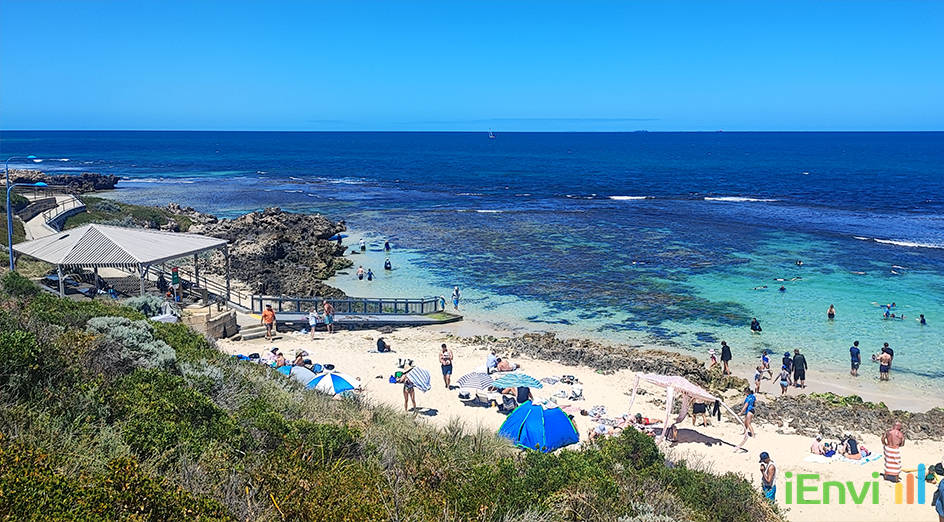
Overview of Australia’s National Ocean Accounts Framework
A national team of researchers and practitioners has delivered a landmark Ocean Accounting White Paper to the National Marine Science Committee, forming one of 21 expert papers that will collectively inform the next National Marine Science Strategy 2026 to 2036. The initiative, led in part by Dr Tai Loureiro from the University of Western Australia’s Oceans Institute and School of Biological Sciences, has culminated in a peer-reviewed article titled “An implementation roadmap for Australia’s Ocean Accounts,” published in the Australian Journal of Maritime and Ocean Affairs on 17 June 2026. This represents arguably the most structured effort Australia has made to unify its fragmented marine data systems into a coherent, nationally consistent accounting framework.
The significance of this work extends well beyond academic circles. For decades, Australia’s marine governance has operated through parallel but disconnected systems. Economic outputs from offshore petroleum, aquaculture, and commercial fisheries are recorded in one set of national accounts, while ecological health metrics, biodiversity indices, and reef condition data are held in entirely separate databases and managed by different agencies. Socio-cultural values, including Indigenous connections to Sea Country and the wellbeing of coastal communities, have rarely if ever been given equivalent standing alongside economic figures in formal decision-making processes. The Ocean Accounts framework proposes to resolve this structural problem by creating a standardised, integrated system that can express all three categories in comparable terms.
For marine environmental consultants, project proponents, offshore energy developers, coastal councils, and in-house environmental counsel advising on marine projects, this roadmap signals a material shift in the evidentiary baseline that will underpin future Environmental Impact Statements, marine park management plans, and regulatory approvals. Understanding the roadmap’s phased structure, its reliance on existing frameworks such as the Australian and New Zealand Guidelines for Fresh and Marine Water Quality 2018, and its explicit alignment with international obligations under the UN High Seas Treaty and Sustainable Development Goal 14 is essential to positioning projects correctly as the Strategy takes shape over the coming decade.
Key details of the Ocean Accounts implementation roadmap
The peer-reviewed article published in the Australian Journal of Maritime and Ocean Affairs on 17 June 2026 outlines a three-phase implementation roadmap. In the short term, the priority is to strengthen foundational data infrastructure, improve data quality, establish metadata standards, and enhance coordination between state and federal agencies. These are not trivial tasks. Australia’s marine jurisdiction covers approximately 8.15 million square kilometres of ocean territory, and data custodianship across that area is currently distributed across the Australian Institute of Marine Science, the Bureau of Meteorology, the CSIRO, state environment departments, and multiple university research programmes, with inconsistent standards between them. Establishing common metadata protocols is a prerequisite for any meaningful integration, and the roadmap correctly identifies this as the critical first step.
In the medium term, the roadmap targets the standardisation and integration of accounts across multiple jurisdictions. This is where the practical challenge becomes most apparent for practitioners. Australia has eight states and territories, each with distinct marine and coastal legislation, and the Commonwealth holds jurisdiction over waters beyond three nautical miles from the baseline. Aligning monitoring methodologies, reporting cadences, and valuation frameworks across that patchwork of governance will require sustained intergovernmental coordination. The roadmap does not prescribe a single mandatory valuation methodology at this stage, but the direction of travel is clearly toward a nationally consistent system comparable to what the United Nations System of Environmental-Economic Accounting for Ocean (SEEA Ocean) provides internationally.
In the long term, the goal is the routine production of comprehensive, national-scale Ocean Accounts. The roadmap explicitly prioritises the integration of Indigenous, traditional, and local knowledge within this system, with strict adherence to cultural protocols, governance frameworks, and data sovereignty principles. This is a meaningful commitment. Indigenous Sea Country governance already plays a formal role in several marine protected area co-management arrangements in Queensland, the Northern Territory, and Western Australia, and any national accounting system that excludes or subordinates these knowledge systems would produce an incomplete and arguably indefensible baseline for regulatory purposes. The roadmap’s treatment of Indigenous data sovereignty as a structural design requirement, rather than a consultation add-on, is technically and ethically significant.
The roadmap also aligns Australia’s domestic framework with two key international obligations. The UN High Seas Treaty, formally known as the Agreement under the United Nations Convention on the Law of the Sea on the Conservation and Sustainable Use of Marine Biological Diversity of Areas Beyond National Jurisdiction, requires state parties to conduct environmental impact assessments for activities in areas beyond national jurisdiction and to contribute to a global information-sharing mechanism. Separately, UN Sustainable Development Goal 14, Life Below Water, commits Australia to conserving and sustainably using ocean resources. A nationally consistent Ocean Accounts system would substantially improve Australia’s ability to report against both obligations with defensible, comparable data.

References and related sources
- Primary source: www.uwa.edu.au
- tandfonline.com
- studygram.me
- uwa.edu.au
- uwa.edu.au
How iEnvi can help
iEnvi provides specialist consulting services relevant to this topic. Our team includes CEnvP Site Contamination Specialists with experience across contaminated land, groundwater, remediation, ecology, and regulatory compliance.
- iEnvi ecology services
- iEnvi contaminated land investigation services
- iEnvi remediation and validation services
- iEnvi expert services and independent review services
This is an iEnvi Machete news summary. Prepared by iEnvi to summarise the source article for contaminated land, groundwater, remediation, approvals and site risk professionals.
Published: 21 Jun 2026
Need advice on this topic? Speak to an iEnvi expert at info@ienvi.com.au or 1300 043 684, or contact us online.
Need advice on this issue? iEnvi provides practical, senior-led environmental consulting across contaminated land, remediation, ecology and environmental risk.
Team credentials Contaminated land services Remediation services Groundwater services Talk to iEnvi