
Overview
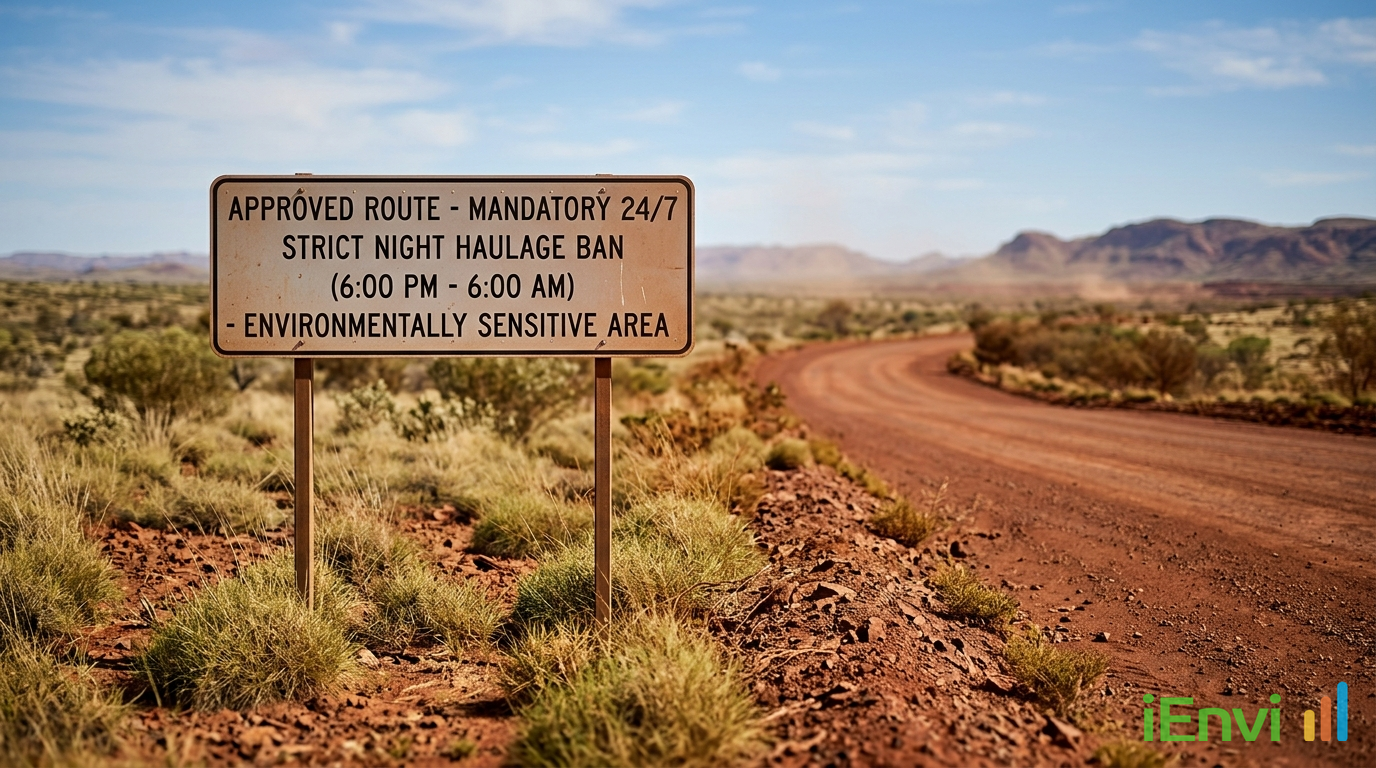
The Western Australian Environmental Protection Authority (EPA) released EPA Report 1806 on 8 April 2026, recommending conditional approval for Greatland Pty Ltd’s Telfer-Havieron Gold Mining Project in the Great Sandy Desert. The approval, assessed under Part IV of the Environmental Protection Act 1986 (WA), comes with a suite of operational constraints that go well beyond standard biodiversity offset requirements. Most notably, the EPA has mandated a complete prohibition on night-time haulage operations along the project’s 55-kilometre haul road, a direct measure to protect the night parrot, a species that is critically endangered under the Environment Protection and Biodiversity Conservation Act 1999 (Cth). The EPA’s recommendation is currently open to public appeal, with a three-week period closing 29 April 2026.
EPA Report 1806 establishes that hard operational controls will be imposed on tier-one resource projects where critically endangered species are present and where financial offsets alone are not considered adequate mitigation. For environmental professionals, developers, and legal advisers working in the resources and infrastructure sectors, a haulage curfew on a project of this commercial scale is not a minor administrative condition. It is a direct constraint on operational capacity that will affect logistics planning, productivity modelling, and contract structures throughout the mine’s operational life.
For project proponents, ecologists, environmental consultants, and approval lawyers, the precedent established in EPA Report 1806 has immediate practical relevance. It confirms that baseline fauna survey quality, species-specific risk modelling, and the early integration of adaptive management controls into project design are now essential components of any major project approval strategy in ecologically sensitive areas of Western Australia and, by extension, across Australian jurisdictions where similar threatened species considerations apply.
Key details of EPA Report 1806 and the Telfer-Havieron approval conditions
EPA Report 1806 assesses the Telfer-Havieron Gold Mining Project under Part IV of the Environmental Protection Act 1986 (WA), which governs the environmental impact assessment process for significant proposals in Western Australia. The project is located in the Great Sandy Desert, an area of recognised ecological sensitivity. The haul road at the centre of the night-time haulage prohibition is 55 kilometres in length, connecting mine infrastructure across terrain that supports habitat for the night parrot, the greater bilby, and the great desert skink. The night parrot’s presence in this region was identified through acoustic monitoring surveys, which detected the species during baseline data collection and triggered a higher level of ecological scrutiny in the assessment process.
The EPA’s conditions are specific and enforceable. Daytime vehicle speed limits have been set at 80 km/h on sealed road sections and 60 km/h on unsealed sections along the haul road. On-site fauna spotters must be deployed during operations, providing real-time detection and response capacity when wildlife is present near active works or vehicle movements. Exclusion buffers of 300 metres must be maintained around active burrows and roost sites associated with the night parrot. These are not aspirational targets or best-practice recommendations; they are conditions of the recommended approval and would be binding on the proponent if the approval is granted following the appeal period.
Fauna crossings must be installed across the haul road to maintain ecological connectivity for terrestrial species moving through the project area. Pre-clearance surveys are required before any ground disturbance, and fauna exclusion areas must be established to prevent direct mortality or displacement during construction and operational phases. These conditions collectively address impacts not only on the night parrot but also on the greater bilby and the great desert skink, both of which are listed under Western Australian and Commonwealth legislation. The layered nature of the conditions reflects a risk-based approach that addresses mortality, habitat fragmentation, and long-term population viability rather than treating biodiversity impact as a single, offsettable outcome.
The three-week public appeal period closing 29 April 2026 provides the statutory opportunity for third parties to challenge the EPA’s recommendation. It is important to note that the EPA’s recommendation is not yet a granted approval. The Minister for Environment must consider any appeals and either accept, reject, or modify the EPA’s conditions before the approval is formally issued. This distinction matters for proponents and their financiers, who should not treat the EPA recommendation as the final regulatory hurdle.

Australian regulatory context: EPBC Act, state legislation, and threatened species assessment in remote areas
The night parrot’s status under the EPBC Act is a central element of this case. The species was uplisted to Critically Endangered under the EPBC Act on 5 September 2025, which places it in the highest category of threatened species protection under Commonwealth law. At the time of the EPA assessment, the applicable listing status should be verified against the assessment timeline, but the direction of regulatory travel is clear: the night parrot has attracted increasingly stringent protection at both state and Commonwealth levels. Under the EPBC Act, any action likely to have a significant impact on a listed threatened species requires a referral to the Commonwealth Department of Climate Change, Energy, the Environment and Water.
References and related sources
- Primary source: www.epa.wa.gov.au
- EPBC Act
How iEnvi can help
iEnvi provides specialist consulting services relevant to this topic. Our team includes CEnvP Site Contamination Specialists with experience across contaminated land, groundwater, remediation, ecology, and regulatory compliance.
- iEnvi contaminated land investigation services
- iEnvi remediation and validation services
- iEnvi expert services and independent review services
This is an iEnvi Machete news summary. Prepared by iEnvi to summarise the source article for contaminated land, groundwater, remediation, approvals and site risk professionals.
Published: 09 Apr 2026
Need advice on this topic? Speak to an iEnvi expert at info@ienvi.com.au or 1300 043 684, or contact us online.
Need advice on this issue? iEnvi provides practical, senior-led environmental consulting across contaminated land, remediation, ecology and environmental risk.
Team credentials Contaminated land services Remediation services Groundwater services Talk to iEnvi