
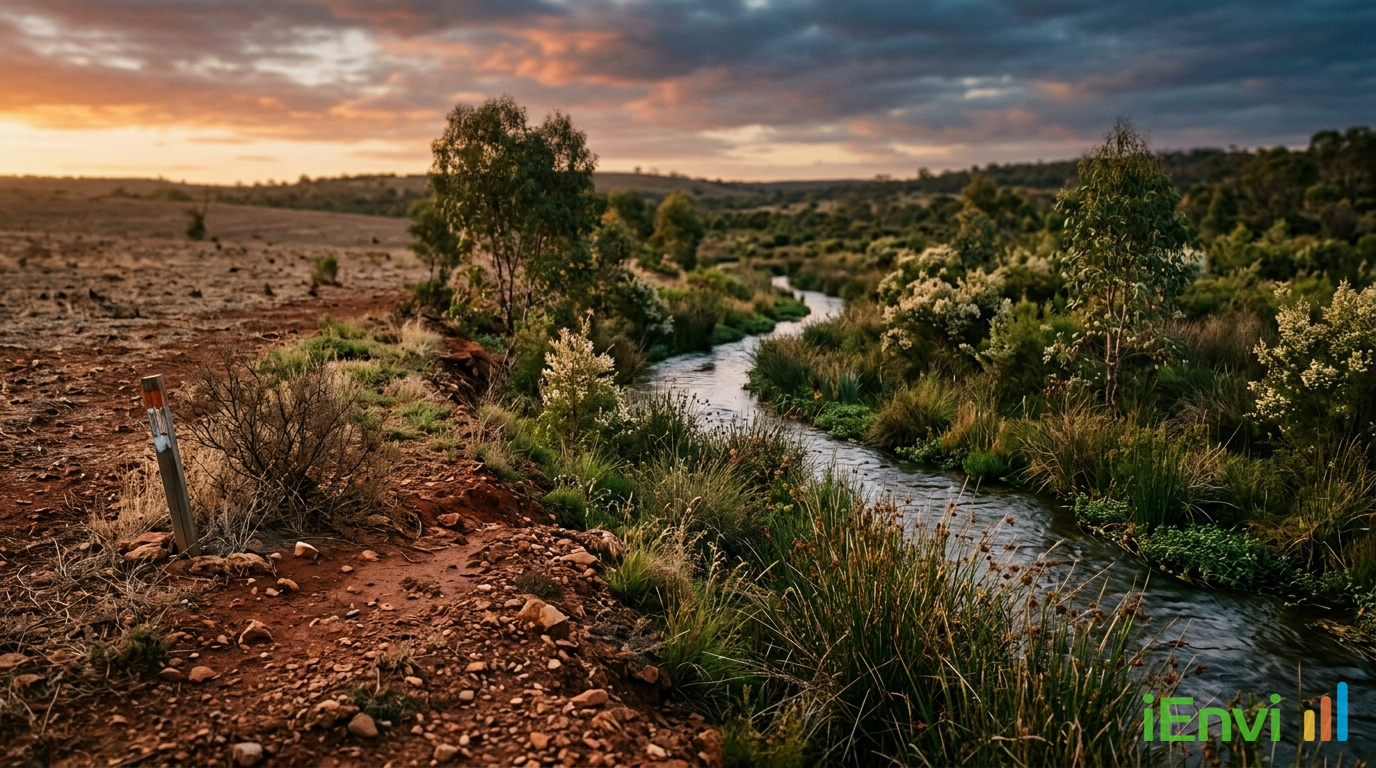
Impact of WA EPA Report 1804 on Biodiversity Offset Strategies
On 26 March 2026, the WA Environmental Protection Authority (EPA) recommended approval for Western Power’s 330kV transmission line running 29 kilometres from the Northern Terminal to the Neerabup Terminal, documented in EPA Report 1804. The project is critical infrastructure for connecting large-scale renewable energy generation to Perth’s electricity grid. However, the conditions attached to that approval represent a meaningful and deliberate shift in how the regulator expects biodiversity offsets to be structured for projects within the highly fragmented Swan Coastal Plain.
In its assessment, EPA Chair Darren Walsh stated explicitly that “the piecemeal acquisition of land as offsets for individual proposals is unlikely to be a sustainable regional strategy.” That statement is not administrative boilerplate. It is a direct signal to developers, planners, and environmental consultants that the conventional offset model, buying intact habitat elsewhere to compensate for clearing on site, is no longer meeting regulatory expectations in regions where cumulative habitat loss has already fragmented ecosystems to a critical degree. The EPA mandated instead that the proponent undertake active rehabilitation and restoration of degraded areas located in close proximity to the project footprint, alongside specialised construction methods that halved the project’s expected vegetation clearing.
For environmental professionals advising infrastructure proponents, property developers, local governments, and legal practitioners across Western Australia, this approval sets a practical precedent that will influence how offset strategies are designed and negotiated for years to come. The implications extend well beyond this single transmission line and touch on broader questions about how Australia manages the tension between essential infrastructure delivery and the long-term viability of threatened species habitat in already-cleared landscapes.
Key details of EPA Report 1804 and the Northern Terminal to Neerabup 330kV Transmission Line approval
EPA Report 1804 assesses the Northern Terminal to Neerabup Terminal 330kV Transmission Line, a 29-kilometre high-voltage infrastructure corridor proposed by Western Power. The project traverses the Swan Coastal Plain, an ecological zone that has experienced extensive historical clearing and now supports fragmented remnant vegetation communities that are home to threatened species, most notably Carnaby’s black cockatoo (Zanda latirostris), a species listed as endangered under both state and Commonwealth legislation. The EPA’s formal assessment was conducted under Part IV of the Environmental Protection Act 1986 (WA), which is the principal mechanism for environmental impact assessment of significant proposals in Western Australia.
A central finding of the assessment is that traditional indirect offsets, specifically the acquisition of existing intact vegetation elsewhere on the Swan Coastal Plain to compensate for residual impacts, were not considered an adequate or sustainable mechanism for this project. The EPA’s reasoning is grounded in the cumulative state of the landscape: when remnant vegetation is already scarce and fragmented, purchasing existing patches does not add any new ecological value to the system. It simply transfers ownership of habitat that already exists. The EPA’s position, as articulated in Report 1804, is that the offset must generate genuine ecological uplift, and in a degraded landscape, that means restoration of land that is currently not functioning as quality habitat.
The approval conditions require Western Power to develop and implement a comprehensive ecological rehabilitation and restoration management plan. Critically, the areas subject to that restoration must be located in close proximity to the project’s impact zone, rather than in geographically distant locations that may not support the same species assemblages or landscape connectivity functions. This spatial requirement is significant because it constrains the proponent’s ability to seek cheaper or more readily available offset land in other parts of the Swan Coastal Plain or beyond. The plan must address multi-year restoration, monitoring, and adaptive management, transferring long-term ecological risk and compliance liability directly to the proponent.
Equally important is the construction methodology outcome documented in the report. Specialised construction methods were adopted during the project design and assessment process, and those methods resulted in the expected vegetation clearing being halved compared to the original project footprint. This reduction in residual impact was itself a precondition for the approval framework, reflecting the EPA’s long-standing hierarchy of avoid, minimise, and then offset. The fact that the proponent achieved a 50 per cent reduction in clearing through method changes, rather than simply offsetting the original footprint, reinforces that the EPA expects proponents to exhaust avoidance and minimisation options before any offset conversation begins.
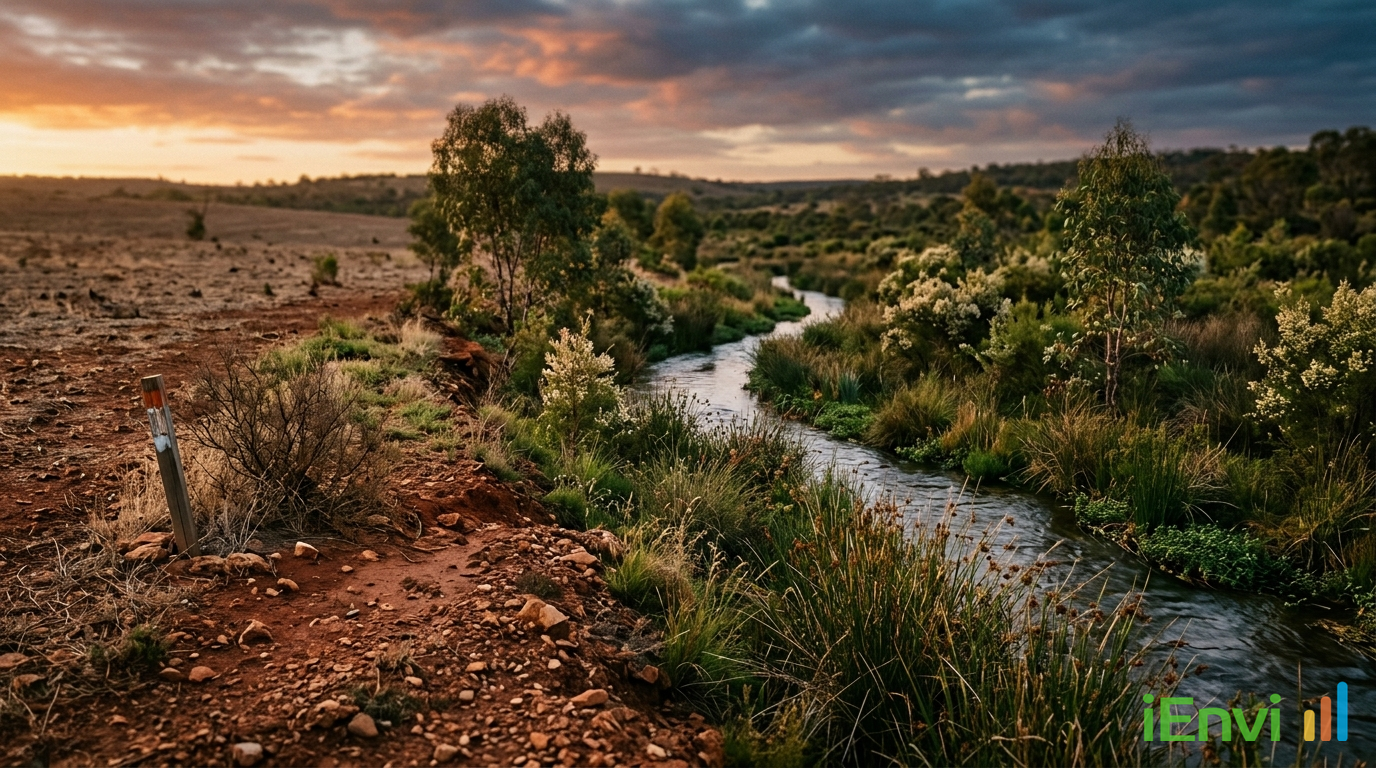
Australian context: how this decision intersects with national and state-level biodiversity offset frameworks
Western Australia’s approach to environmental offsets is governed primarily by the WA Environmental Offsets Policy, administered by the Department of Water and Environmental Regulation (DWER). That policy operates within the framework of Part IV of the Environmental Protection Act 1986 (WA), and it establishes a preference for direct offsets that deliver measurable, additional, and durable conservation outcomes. EPA Report 1804 represents a rigorous application of the “additionality” principle central to that policy. If intact habitat on the Swan Coastal Plain is already scarce, purchasing a parcel of it provides no additionality. Restoring a degraded parcel that is currently below its ecological potential, by contrast, creates new functional habitat where none effectively existed before.
Background and context
On 26 March 2026, the WA Environmental Protection Authority (EPA) recommended approval for Western Power’s 29km Northern Terminal to Neerabup Terminal 330kV Transmission Line (EPA Report 1804). While the infrastructure is critical for connecting large-scale renewable energy to Perth's grid, the EPA’s assessment marks a significant policy line in the sand regarding biodiversity offsets.
Noting the increasingly fragmented ecosystems of the Swan Coastal Plain, EPA Chair Darren Walsh explicitly stated that "the piecemeal acquisition of land as offsets for individual proposals is unlikely to be a sustainable regional strategy" for endangered species like Carnaby's black cockatoos. Instead of allowing the proponent to simply purchase existing habitat elsewhere, the EPA mandated the active rehabilitation and restoration of degraded areas in close proximity to the impact site. This was paired with a requirement for specialised construction methods that successfully halved the project's expected vegetation clearing.
Why it matters for environmental professionals and their clients
For ecologists, environmental planners, and developers, this assessment is a clear regulatory signal that traditional land acquisition offsets (buying intact habitat elsewhere to offset clearing) are becoming less viable in highly cleared or fragmented regions. Regulators are pivoting heavily toward active, local ecological restoration.
Environmental consultants will need to advise clients that future offset strategies must shift away from simple real estate transactions. Securing project approvals under Part IV of the EP Act will increasingly require the development of complex, long-term ecological rehabilitation and restoration management plans for degraded lands near the project footprint.
`https://www.epa.wa.gov.au/media-statements/epa-completes-assessment-power-transmission-infrastructure-plan`
References and related sources
- Primary source: www.epa.wa.gov.au
- https://www.epa.wa.gov.au/media-statements/epa-completes-assessment-power-transm
How iEnvi can help
iEnvi provides specialist consulting services relevant to this topic. Our team includes CEnvP Site Contamination Specialists with experience across contaminated land, groundwater, remediation, ecology, and regulatory compliance.
- iEnvi contaminated land investigation services
- iEnvi remediation and validation services
- iEnvi expert services and independent review services
This is an iEnvi Machete news summary. Prepared by iEnvi to summarise the source article for contaminated land, groundwater, remediation, approvals and site risk professionals.
Published: 01 Apr 2026
Need advice on this topic? Speak to an iEnvi expert at info@ienvi.com.au or 1300 043 684, or contact us online.
Need advice on this issue? iEnvi provides practical, senior-led environmental consulting across contaminated land, remediation, ecology and environmental risk.
Team credentials Contaminated land services Remediation services Groundwater services Talk to iEnvi