
Overview
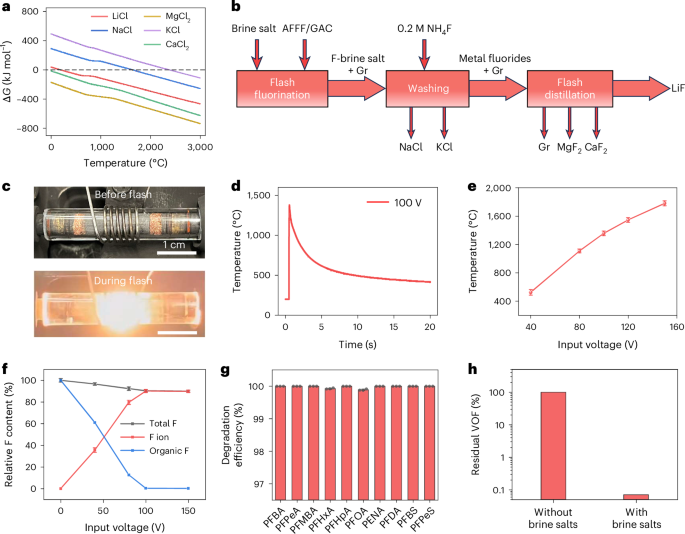
Researchers at Rice University in the United States have demonstrated a technique that transforms spent granular activated carbon (GAC) from PFAS water treatment into a feedstock for lithium battery manufacturing. The process, published in Nature Water, uses flash Joule heating to simultaneously destroy per- and polyfluoroalkyl substances (PFAS) and recover lithium fluoride, a valuable electrolyte precursor. For the Australian contaminated land sector, this research signals a potential shift from costly PFAS waste disposal towards circular economy approaches where remediation byproducts have commercial value.
Key details
Granular activated carbon is the workhorse adsorbent in pump-and-treat systems for PFAS-contaminated groundwater. Once the carbon is saturated, it becomes a regulated waste stream requiring thermal destruction or secure landfill disposal under strict chain-of-custody requirements.
The Rice University method introduces a fundamentally different end-of-life pathway:
- Flash Joule heating: The spent carbon is subjected to rapid electrical pulses that raise the temperature above 1,000 degrees Celsius for fractions of a second. This extreme transient heating completely severs carbon-fluorine bonds, which are among the strongest in organic chemistry, without producing harmful combustion byproducts such as short-chain PFAS or hydrogen fluoride gas.
- Fluorine mineralisation: Rather than simply destroying the PFAS, the process captures the liberated fluorine atoms. When the flash heating occurs in the presence of lithium-containing brine, the fluorine reacts with lithium cations to form lithium fluoride (LiF).
- Valuable product: Lithium fluoride is a key component in solid-state battery electrolytes. The recovered material has commercial value, potentially offsetting treatment costs.
- Destruction efficiency: The researchers reported near-complete PFAS destruction, with no detectable reformation of long-chain or short-chain PFAS compounds in the residual material.
While the technology is at the laboratory and pilot scale, the researchers are working with industry partners to evaluate commercial-scale applications. The process is compatible with a range of spent adsorbent materials, including ion exchange resins used in PFAS treatment.
Australian context
The management of PFAS-contaminated waste is one of the most pressing challenges facing the Australian remediation industry. The PFAS National Environmental Management Plan (PFAS NEMP) Version 3.0, endorsed by Environment Ministers in 2024, sets strict requirements for the storage, transport and disposal of PFAS-containing materials. Key constraints include:
- Thermal destruction requirements: The PFAS NEMP specifies high-temperature incineration (typically above 1,100 degrees Celsius with a minimum two-second residence time) as the benchmark for PFAS destruction. Australia has limited domestic high-temperature incineration capacity, with facilities such as Cleanaway’s technical services division and emerging mobile thermal desorption units serving a growing demand.
- Rising disposal costs: As PFAS investigation and remediation programmes expand, particularly at Defence sites under the national PFAS Investigation and Management Programme, the volume of spent treatment media requiring destruction continues to grow. Disposal costs have increased significantly over the past three years.
- Regulatory expectations: State regulators, including the NSW EPA, Queensland DES and Victorian EPA, are increasingly requiring detailed waste tracking documentation and verification of PFAS destruction efficiency for spent treatment media.
Major PFAS remediation programmes are under way at sites including RAAF Base Williamtown (NSW), Army Aviation Centre Oakey (QLD), RAAF Base Edinburgh (SA) and numerous former firefighting training areas. Each of these programmes generates substantial volumes of spent GAC and other treatment residuals that require management.
Practical implications
Although this technology is not yet commercially available in Australia, the research has several near-term implications for practitioners:
- Waste management planning: Remediation action plans and long-term monitoring programmes should consider emerging treatment technologies when evaluating lifecycle costs. The economic case for PFAS remediation may improve substantially if waste treatment generates a revenue stream rather than a disposal cost.
- Spent media stockpiling: Where regulators permit interim storage of spent GAC under appropriate containment, there may be a case for stockpiling rather than immediately sending material to thermal destruction, pending commercial availability of resource-recovery technologies.
- Technology evaluation: Consultants advising on remediation technology selection should monitor the development of flash Joule heating and similar processes. Feasibility studies for large-scale PFAS remediation should include scenario analysis incorporating future resource-recovery options.
- Circular economy reporting: Clients with sustainability reporting obligations may find value in remediation approaches that align with circular economy principles, particularly in the mining, defence and infrastructure sectors.
- Supply chain opportunities: Australia is a major lithium producer. The intersection of PFAS remediation waste and lithium battery manufacturing supply chains may attract investment and regulatory support for pilot programmes in Australia.
References and related sources
- Nature Water: Waste PFAS-assisted flash fluorination for lithium recovery from brine (primary source)
- Australian Government: PFAS National Environmental Management Plan
- Department of Defence: PFAS Investigation and Management Programme
- View the iEnvi LinkedIn post
How iEnvi can help
iEnvi provides specialist contaminated land and remediation services, including PFAS site investigations, remediation action plans, treatment technology evaluation and long-term monitoring programme design. Our team has direct experience with PFAS-impacted sites across Queensland, New South Wales, Victoria and South Australia. We help clients navigate the regulatory requirements of the PFAS NEMP and state-based legislation while identifying cost-effective, technically sound remediation strategies.
This is an iEnvi Machete news summary. Prepared by iEnvi to summarise the source article for contaminated land, groundwater, remediation, approvals and site risk professionals.
Need advice on this topic? Speak to an iEnvi expert at info@ienvi.com.au or 1300 043 684, or contact us online.
Need advice on this issue? iEnvi provides practical, senior-led environmental consulting across contaminated land, remediation, ecology and environmental risk.
Environmental management plans Contaminated land advice Remediation services Groundwater services Talk to iEnvi