
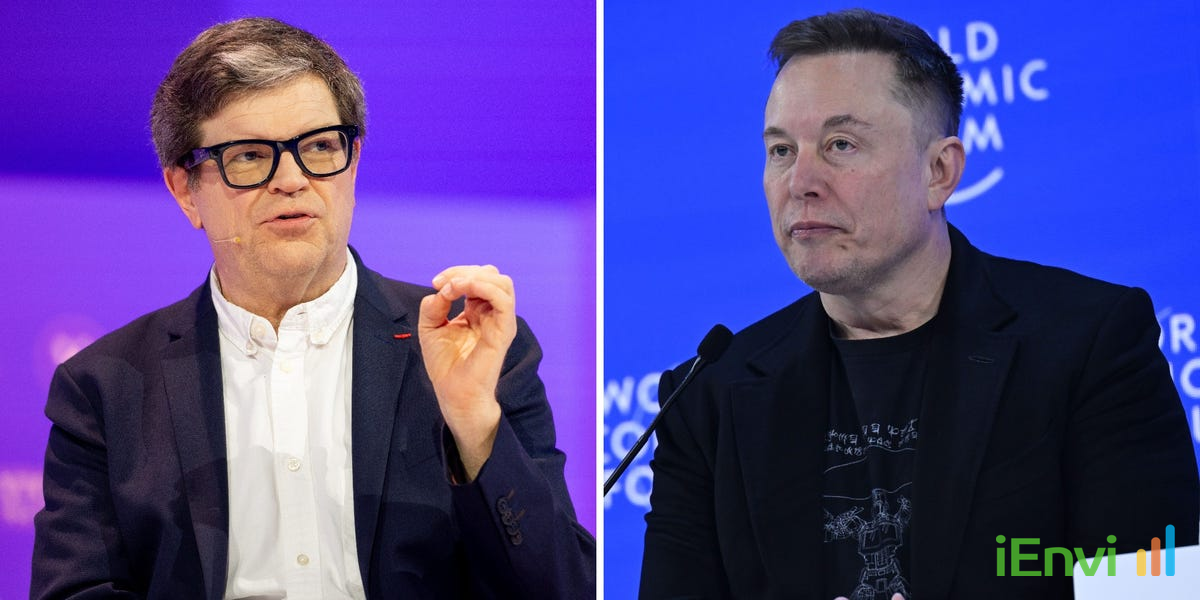
Yann LeCun’s Critique of xAI
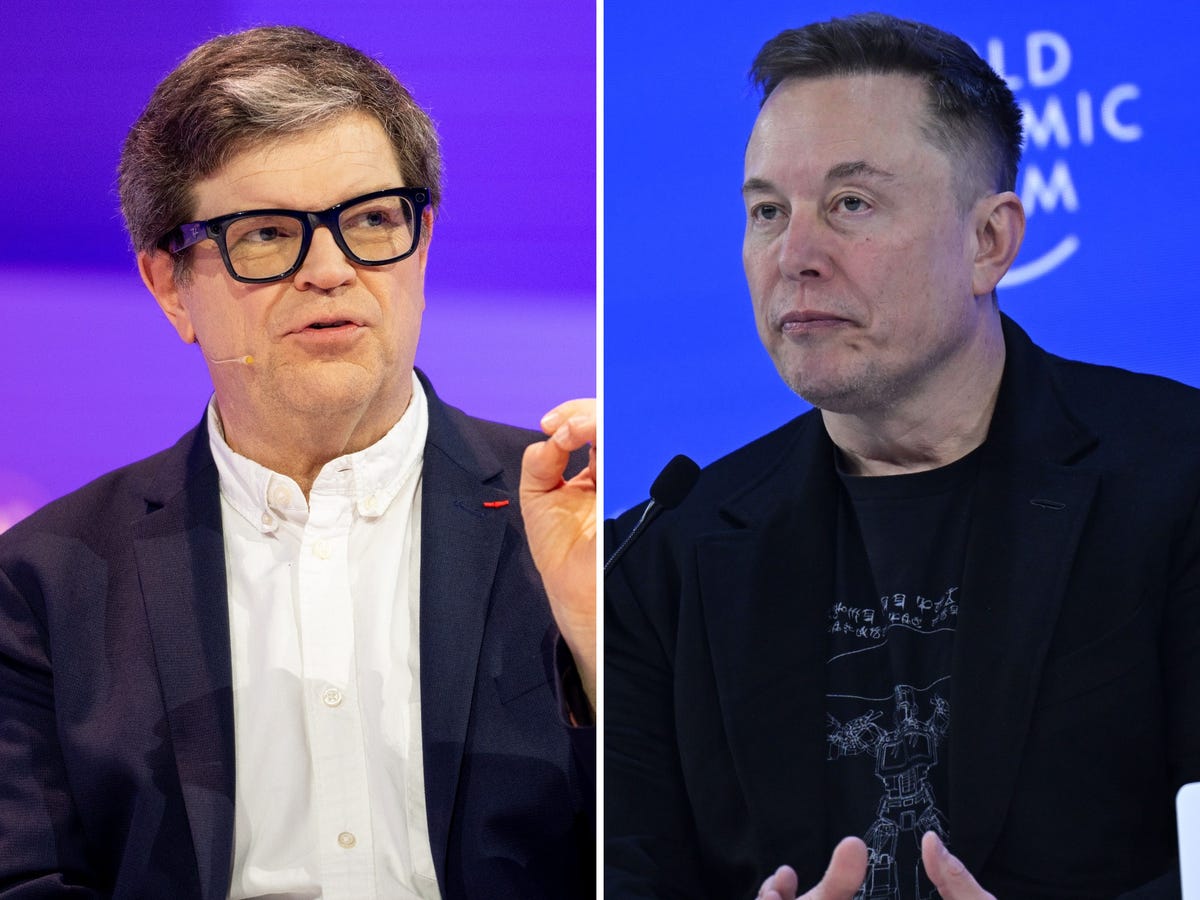
Turing Award winner and AMI Labs founder Yann LeCun delivered a pointed public assessment of Elon Musk’s artificial intelligence venture xAI in a CNBC interview published on 18 June 2026, stating plainly that “xAI is kind of a failure, frankly, because the founding team has departed.” LeCun, who previously served as chief AI scientist at Meta, is one of the most credentialled voices in the global AI research community and a co-recipient of the 2018 Turing Award alongside Geoffrey Hinton and Yoshua Bengio. His remarks are not the opinion of a commentator on the periphery but of a practitioner who has spent decades building and leading large-scale AI research programmes. That context makes the critique unusually difficult to dismiss.
The core of LeCun’s argument is straightforward: raw computing infrastructure does not build frontier AI systems. People do. Despite xAI’s substantial hardware investment, including the Colossus data centre complex, LeCun contends that the departure of all eleven original non-Musk co-founders has left the organisation structurally compromised. Without the elite researchers capable of training, optimising and iterating on foundation models, the compute assets sitting in those data centres cannot be converted into competitive AI products. This is a distinction that capital markets have been slow to price in, having focused heavily on GPU counts and infrastructure announcements as proxies for AI capability.
For Australian business leaders, in-house technology teams, and professional services firms evaluating AI platforms and vendor relationships, LeCun’s assessment raises a practical question that goes beyond Silicon Valley gossip: how do you evaluate the durability of an AI vendor’s capability when the people who built the system are no longer there? The answer has direct implications for enterprise procurement decisions, technology roadmap planning, and the risk frameworks organisations use when embedding AI tools into core workflows.
Key Details on xAI’s Founding Team Departures
LeCun’s central factual claim is that all eleven original non-Musk co-founders of xAI have now departed the organisation. The most recent and symbolically significant exit is Ross Nordeen, a former Tesla Autopilot programme manager who served as a senior operational figure at xAI. Nordeen’s departure was notable not only because of his seniority but because of how it reportedly occurred: he was abruptly cut off from company systems, a circumstance that LeCun cited as emblematic of the broader cultural problems undermining xAI’s ability to retain talent. When the person described as Musk’s primary operational lieutenant at the company exits under those conditions, it signals a breakdown in internal trust that is difficult to repair quickly.
LeCun was also direct about the structural consequences for xAI’s recruiting pipeline. The AI research talent pool at the genuine frontier is exceptionally small. The number of researchers globally who can independently lead the training of a large-scale foundation model, design novel architectures, or solve the alignment and optimisation problems that separate competitive models from also-rans is commonly estimated in the hundreds rather than the thousands. LeCun argued that Musk’s treatment of his previous teams has effectively blacklisted xAI within this community, stating: “Elon is now in a position where it’s very, very difficult for him to hire top people in AI, because he’s not behaved in very good ways toward the previous team.” Reputational damage of this kind compounds over time in tight-knit technical communities where word travels fast and researchers talk to one another constantly.
The business model consequences of this talent gap are already visible. LeCun pointed to xAI’s practice of leasing its Colossus computing infrastructure to competitors, including a short-term compute arrangement with Anthropic, as evidence that the company is being forced to monetise its hardware rather than its AI capabilities. LeCun’s characterisation was direct: “He’s got this huge infrastructure, which he rents to other people, because that’s the only way he can recoup the costs.” This positions xAI less as a frontier AI lab and more as a capital-intensive infrastructure provider. For a company that raised funds on the premise of competing with OpenAI and Google DeepMind at the model level, that is a significant repositioning, whether it is acknowledged publicly or not.
LeCun also briefly addressed Tesla’s Full Self-Driving system, noting with some scepticism that “full self-driving is not full self-driving, but it’s useful.” LeCun mentioned that he owns a Tesla, which gives the comment a degree of practical grounding rather than pure competitive point-scoring. The remark is relevant to the broader xAI discussion because Tesla’s autonomous driving programme and xAI have been positioned by Musk as complementary ventures, with real-world driving data feeding into AI development. If the credibility of those AI claims is contested at the technical level by someone of LeCun’s standing, it raises questions about the coherence of Musk’s broader AI narrative across his various enterprises.
Evaluating AI Vendor Stability for Australian Enterprises
Australia’s professional services sector, including legal, engineering, environmental consulting, financial advisory, and government technology procurement, has accelerated its adoption of generative AI tools substantially since 2023. Many organisations have embedded or are actively evaluating tools built on foundation models developed by a small number of US-based labs, including OpenAI, Anthropic, Google DeepMind, and Meta. The vendor concentration risk in this landscape is real. When a significant share of an organisation’s document review, data analysis, reporting workflows, or client-facing tools depend on a handful of external providers, the stability of those providers matters. LeCun’s critique of xAI is a timely reminder that evaluating an AI vendor’s durability requires looking beyond headline compute figures and product announcements to the underlying human capital that makes those capabilities possible. Organisations with AI embedded in core workflows should be asking whether their vendors have the research depth to maintain and improve their models over time, and what their contingency plans look like if a key provider’s capabilities stall or deteriorate.
References and related sources
- Primary source: www.businessinsider.com
- businessinsider.com
- indiatimes.com
- proactiveinvestors.com.au
- businessinsider.com
- NEPM Assessment of Site Contamination
How iEnvi can help
iEnvi integrates technology and data-driven approaches into environmental consulting. We monitor AI and technology developments that affect how environmental professionals deliver services to clients.
This is an iEnvi Machete news summary. Prepared by iEnvi to summarise the source article for environmental professionals tracking AI, data, and technology developments that affect consulting and project delivery.
Published: 20 Jun 2026
Need advice on this topic? Speak to an iEnvi expert at info@ienvi.com.au or 1300 043 684, or contact us online.
Need advice on this issue? iEnvi provides practical, senior-led environmental consulting across contaminated land, remediation, ecology and environmental risk.
Contaminated land advice Remediation services Discuss your site Talk to iEnvi