
Overview
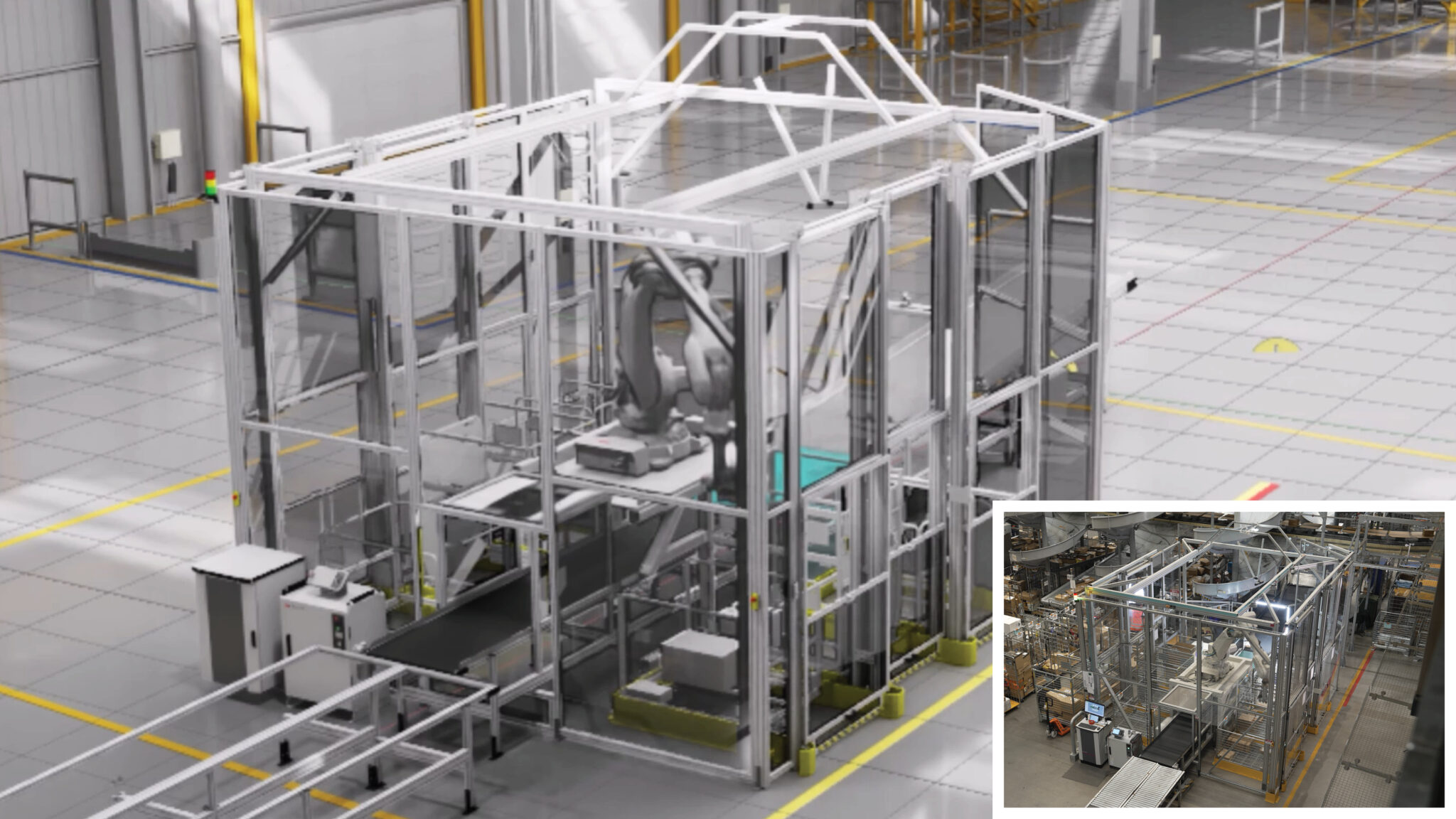
The intersection of advanced physical automation and software engineering is undergoing a profound transformation. Historically, the deployment of industrial robotics has been restricted by the physical realities of the factory floor, where unpredictable environmental variables frequently disrupt theoretical models. The announcement of a strategic partnership between ABB Robotics and NVIDIA in March 2024 to integrate NVIDIA Omniverse libraries directly into the RobotStudio programming and simulation suite marks a significant turning point in this sector. Known as RobotStudio HyperReality, this platform bridges the long-standing sim-to-real gap, enabling industrial systems to be trained, tested, and validated in a high-fidelity virtual environment with unprecedented physical accuracy.
For Australian environmental consultants, industrial property developers, local government planners, and legal advisors, this technology introduces a fundamental shift in how industrial facilities are designed, approved, and operationalised. The traditional division between software engineering and physical facility design is rapidly dissolving. Instead of treating industrial assets as static structures that house dynamic machinery, stakeholders must now view these developments as unified, software-validated entities. This integration allows for the precise estimation of operational footprints, resource consumption, and environmental discharges long before any physical construction begins, representing a substantial step forward for industrial planning and risk management.
By utilising physically accurate synthetic data, RobotStudio HyperReality addresses the primary engineering and operational bottlenecks that have historically plagued complex manufacturing and logistics projects. In Australia, where industrial land is at a premium and regulatory frameworks around noise, worker safety, and environmental impact are stringent, the ability to validate operations virtually offers a powerful tool to streamline approvals. It allows developers to present local councils and state environmental protection authorities with highly reliable, simulated operational data, reducing the uncertainty that often delays major industrial projects.
Key details
To understand the significance of RobotStudio HyperReality, one must examine the technical hurdles it overcomes. In robotics, the sim-to-real gap refers to the discrepancy between a robot’s performance in a digital simulation and its behaviour in the physical world. Standard simulation tools often overlook subtle physical variables such as material friction, sensor noise, variable ambient lighting, and thermal expansion. By embedding NVIDIA Omniverse libraries directly into RobotStudio, the new platform generates synthetic data that is physically accurate to a degree of 99 per cent. This high-fidelity environment simulates the exact physical properties of materials, the dynamics of light reflection, and the intricate mechanics of robotic joints, ensuring that a neural network trained in the virtual space behaves identically when deployed on the factory floor.
The commercial and operational benefits of this high-fidelity simulation are quantified by clear performance metrics. Early pilot programmes conducted by global manufacturing leaders, including electronics giant Foxconn and robotic workforce firm Workr, have demonstrated that the implementation of RobotStudio HyperReality can reduce upfront development costs by up to 40 per cent. Furthermore, the platform accelerates time to market by as much as 50 per cent, effectively halving the time required to deploy complex, AI-driven production lines. Perhaps most notably, the time needed to onboard autonomous agents and robots into a new production environment is reduced from several weeks of manual tuning to mere minutes, shifting the bottleneck of industrial automation from physical debugging to digital verification.
A core strength of this system is its ability to generate synthetic data for edge-case scenarios that would be highly dangerous, expensive, or logistically impossible to replicate in a physical facility. For instance, training a robotic arm to handle highly corrosive chemicals, manage thermal anomalies, or react to sudden mechanical failures carries immense risk in a physical laboratory. Within the Omniverse-driven environment, these scenarios can be simulated thousands of times under varying conditions. The neural networks governing the robots learn to manage these hazards safely, producing a validated control system that is fully prepared for real-world risks on day one of physical operation.
Following the 2024 announcement, the software represents a major shift in industrial commissioning methodologies as it rolls out to ABB customers. Currently, engineering teams spend months on-site fine-tuning physical equipment, adjusting sensors, and resolving unforeseen mechanical conflicts. RobotStudio HyperReality shifts this entire validation pipeline upstream. The digital twin becomes the primary environment for system testing, allowing physical installation to become a straightforward exercise in mechanical assembly and software loading rather than an extended phase of trial-and-error troubleshooting.
Australian context
In the Australian regulatory and business landscape, the introduction of high-fidelity physical AI carries significant weight, particularly concerning Work Health and Safety (WHS) compliance and environmental impact assessments. Under the Work Health and Safety Act 2011, and its state-based equivalents such as Victoria’s Occupational Health and Safety Act 2004, developers and operators of industrial facilities are legally obligated to eliminate or minimise health and safety risks so far as is reasonably practicable. Traditionally, proving that a complex, automated robotic workflow met this standard required extensive on-site testing, documented commissioning trials, and iterative safety case development once equipment was physically installed. With validated synthetic data from RobotStudio HyperReality, operators can now produce substantial portions of that evidence base before a single robot is bolted to the floor, giving regulators, councils, and insurers far greater visibility into operational risk profiles ahead of approval.
References and related sources
- Primary source: blogs.nvidia.com
- NEPM Assessment of Site Contamination
How iEnvi can help
iEnvi provides specialist consulting services relevant to this topic. Our team includes CEnvP Site Contamination Specialists with experience across contaminated land, groundwater, remediation, ecology, and regulatory compliance.
- iEnvi contaminated land investigation services
- iEnvi remediation and validation services
- iEnvi expert services and independent review services
This is an iEnvi Machete news summary. Prepared by iEnvi to summarise the source article for contaminated land, groundwater, remediation, approvals and site risk professionals.
Published: 17 Jun 2026
Need advice on this topic? Speak to an iEnvi expert at info@ienvi.com.au or 1300 043 684, or contact us online.
Need advice on this issue? iEnvi provides practical, senior-led environmental consulting across contaminated land, remediation, ecology and environmental risk.
Team credentials Contaminated land services Remediation services Groundwater services Talk to iEnvi