
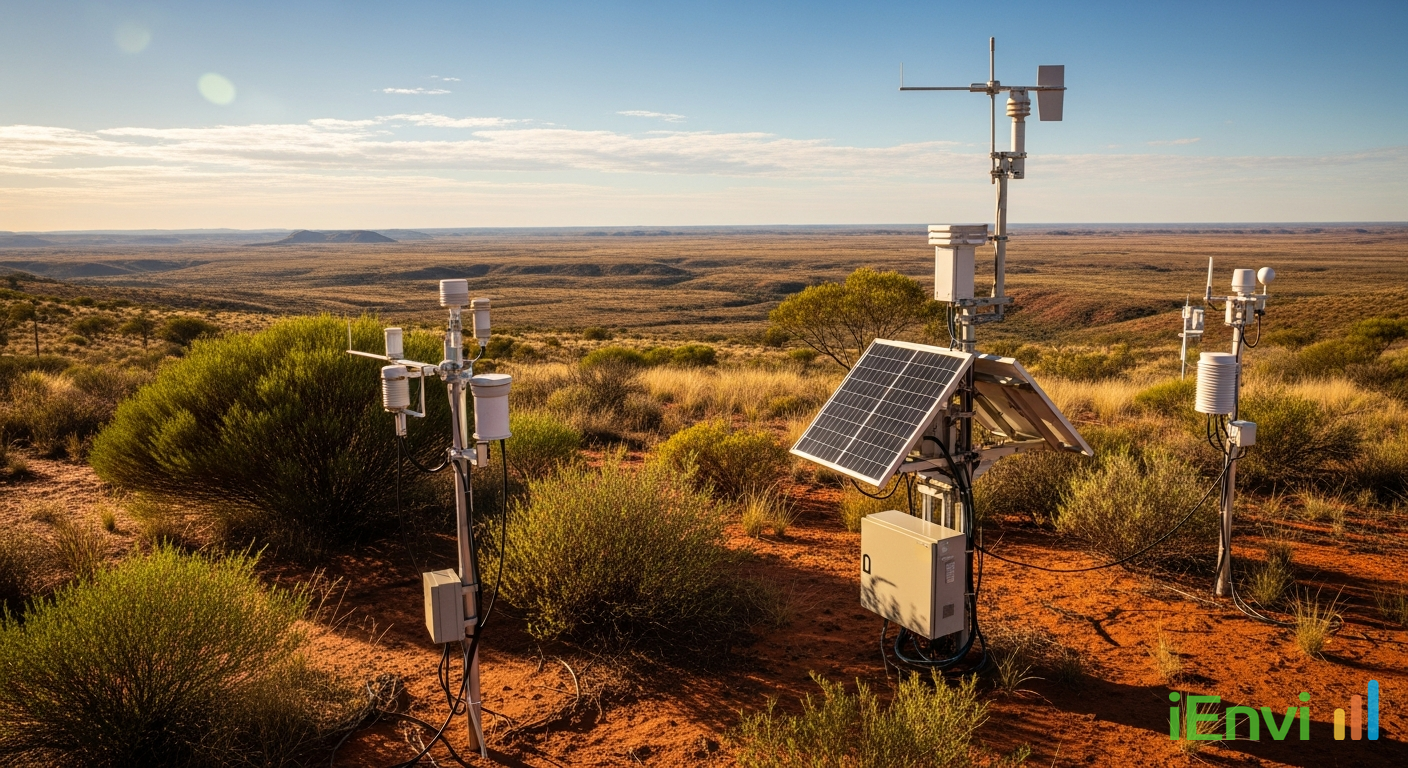
ABS Data Highlights Shift in Government R&D Funding Priorities
On 14 June 2024, the Australian Bureau of Statistics (ABS) released its Research and Experimental Development (R&D) dataset for Government and Private Non-Profit Organisations covering the 2022-23 financial year. The headline finding is unambiguous: environmental sciences has overtaken biomedical and clinical sciences to become the single largest field of research by government R&D expenditure in Australia. This is not a marginal shift. It represents a structural realignment of public funding priorities that has been building for several years and has now reached a tipping point with significant consequences for practitioners, developers, regulators, and asset owners alike.
Total government R&D spending across all fields grew by just 1% to reach $4.4 billion in 2022-23. Adjusted for inflation, this represents a real-terms decline of approximately 4%. Against that restrained backdrop, the 55% surge in environmental sciences funding, an increase of $145 million to reach $407 million, is extraordinary. ABS Head of Business Statistics Tom Lay described the trend plainly: “We are continuing to see rises in spending towards environmental-related R&D. Growth in this area aligns with government investment to promote renewable technologies aimed at reducing carbon emissions under the Net Zero Plan.” The message from the data is that climate transition and environmental stewardship are now the dominant organising priorities for public research investment in this country.
For environmental consultants, developers, local councils, and legal practitioners working in environmental and planning law, this funding realignment has direct operational consequences. The pipeline of government-backed projects in climate resilience, nature-based solutions, and renewable energy infrastructure will expand substantially. More importantly, the science underpinning statutory site assessments, environmental impact evaluations, and risk-based decision-making is about to improve in quality and local relevance. Understanding the scale and direction of this investment is the first step to positioning projects and advice accordingly.
Key details of the ABS R&D funding data for 2022-23
The ABS R&D dataset categorises government and private non-profit expenditure by field of research using the Australian and New Zealand Standard Research Classification (ANZSRC). In 2022-23, environmental sciences recorded total government expenditure of $407 million, up from approximately $262 million in the prior reporting period. The $145 million increase represents the largest dollar-value rise of any single field of research in the dataset. Biomedical and clinical sciences, previously the leading field, also grew, rising to $387 million, but was nonetheless displaced from the top position for the first time.
The contrast with other research fields in the same dataset is stark. Information and computing sciences fell by 25%, a reduction of $112 million, while agricultural, veterinary, and food sciences declined by 11%, losing $67 million. These are not trivial contractions. They indicate that federal and state agencies are making deliberate trade-offs, redirecting finite public research budgets toward environmental priorities and away from fields that may have benefited from earlier technology and biosecurity investment cycles. The net effect is that environmental sciences now commands a disproportionately large share of a total government R&D budget that is itself shrinking in real terms.
The overall government R&D figure of $4.4 billion represents growth of only 1% in nominal terms. With the Consumer Price Index and relevant research input costs running well above that rate, this amounts to a real reduction in total public research capacity. Environmental sciences is effectively absorbing funding that other fields are releasing. This pattern suggests the growth is not solely a product of new money entering the system, but also a deliberate reweighting of existing allocations toward Net Zero Plan objectives. The federal government’s commitment to net zero emissions by 2050, and interim targets under the Climate Change Act 2022, provide the policy architecture that is driving these allocations.
The ABS dataset does not break down environmental sciences expenditure by sub-discipline or by the specific agency or institution receiving funding. However, the major recipients of government environmental R&D in Australia are well established: the Commonwealth Scientific and Industrial Research Organisation (CSIRO), the Australian Research Council (ARC), and state-based research bodies. CSIRO alone has historically accounted for a substantial proportion of environmental R&D through programs such as Environment, Land and Water, and its climate science capabilities. The 55% increase in total spending almost certainly reflects expanded mandates and allocations to these bodies, though confirmation at that level of granularity requires direct agency reporting rather than the ABS aggregate dataset.
Australian context: how this R&D shift interacts with contaminated land, planning, and environmental assessment frameworks
Australia’s statutory environmental assessment frameworks are heavily dependent on the quality and currency of the underlying science. The National Environment Protection (Assessment of Site Contamination) Measure 2013, known as the NEPM 2013, sets investigation levels and ecological screening values that are derived from published toxicological and environmental science literature. Similarly, the PFAS National Environmental Management Plan (PFAS NEMP), now in its third version, relies on guideline values developed through formal review processes that draw on peer-reviewed research and locally calibrated exposure data. When government R&D investment in environmental sciences increases by 55% in a single reporting period, the downstream effect on these frameworks is material: guideline values are reviewed and updated more frequently, locally derived datasets replace conservative international proxies, and the evidentiary basis for site-specific risk assessments becomes more robust. For practitioners preparing environmental site assessments, this means the scientific benchmarks against which contamination is measured will continue to evolve, and staying current with emerging guidance from bodies such as CSIRO and the jurisdictional EPAs will be an ongoing professional obligation.
References and related sources
- Primary source: www.abs.gov.au
- abs.gov.au
How iEnvi can help
iEnvi provides specialist consulting services relevant to this topic. Our team includes CEnvP Site Contamination Specialists with experience across contaminated land, groundwater, remediation, ecology, and regulatory compliance.
- iEnvi remediation services
- iEnvi site assessment services
- iEnvi expert services and independent review services
This is an iEnvi Machete news summary. Prepared by iEnvi to summarise the source article for contaminated land, groundwater, remediation, approvals and site risk professionals.
Published: 14 Jun 2026
Need advice on this topic? Speak to an iEnvi expert at info@ienvi.com.au or 1300 043 684, or contact us online.
Need advice on this issue? iEnvi provides practical, senior-led environmental consulting across contaminated land, remediation, ecology and environmental risk.
Team credentials Environmental management plans Contaminated land advice Remediation services Talk to iEnvi