
Overview
Agility Robotics, the Oregon-based creator of the bipedal humanoid robot Digit, announced on 24 June 2026 that it has entered into a definitive merger agreement with Churchill Capital Corp XI (NASDAQ: CCXI) to become the first pure-play humanoid robotics company to list on a public stock exchange in the United States. The combined entity will trade under the ticker symbol AGLT, with the transaction valued at a pre-money equity valuation of USD $2.5 billion. Closing is expected by the end of 2026, subject to regulatory approvals and shareholder votes.
This transaction marks a structural turning point for the humanoid robotics industry. For years, companies in this space have operated on private venture capital, sustained by carefully produced demonstrations and ambitious timelines that rarely translated into audited commercial results. The shift to a public listing forces Agility to open its financials to scrutiny from institutional investors, regulators, and the broader market. Revenue, production costs, customer retention rates, and deployment outcomes will all become matters of public record. That level of transparency is genuinely new for this industry segment.
For operations, logistics, and supply chain professionals in Australia and globally, the significance extends beyond the financial mechanics of a SPAC transaction. Agility’s listing signals that humanoid robotics is moving out of the pilot phase and into mainstream capital expenditure planning. With over $300 million USD in committed multi-year orders already secured for the forthcoming Digit v5 model, the commercial case for bipedal automation in industrial settings is no longer speculative. Procurement teams, industrial property developers, and operations managers should treat this as an inflection point, not a novelty story.
Key details of the Agility Robotics SPAC merger and Digit v5 deployment
The merger with Churchill Capital Corp XI is structured to generate over $620 million USD in gross proceeds. Of that figure, approximately $420 million USD comes from Churchill XI’s trust account, with the remaining $200 million USD derived from a common-stock Private Investment in Public Equity (PIPE) arrangement. The PIPE is led by Foxconn, the Taiwanese contract manufacturing giant responsible for assembling products for Apple and a growing range of electronics brands. Additional strategic backers participating in or alongside the transaction include Amazon, NVIDIA, SoftBank Vision Fund 2, and DCVC, a deep tech venture fund. The combination of a major contract manufacturer like Foxconn alongside technology infrastructure providers like NVIDIA signals a deliberate strategy to scale hardware production rapidly while integrating advanced AI and safety systems at the platform level.
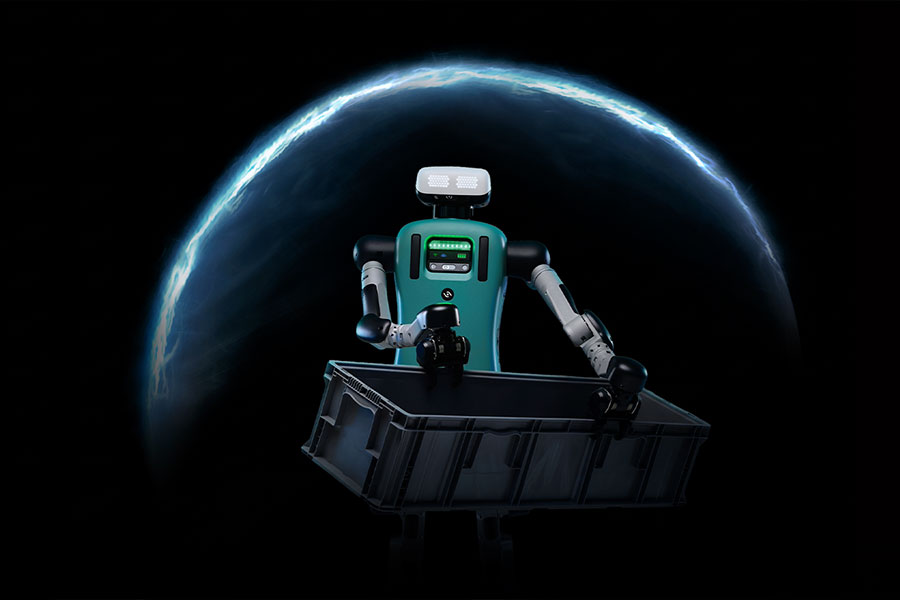
The capital raised will be deployed primarily to scale production of the Digit v5 robot. The v5 represents a meaningful technical upgrade on previous generations. Its maximum carrying capacity has been increased to approximately 22.7 kilograms (50 pounds), up from the previous generation’s limit of approximately 15.9 kilograms (35 pounds). The v5 also introduces fully swappable hands, allowing end-users to reconfigure the robot’s manipulation capabilities depending on task requirements without returning the unit to a service facility. Critically, the v5 integrates the NVIDIA Halos safety system, a platform that enables the robot to sense human workers in its vicinity and dynamically adjust its movement in real time. This removes the requirement for physical safety caging that has historically separated collaborative robots from human workers, reducing both the spatial footprint and capital cost of deployment in active warehouse environments.
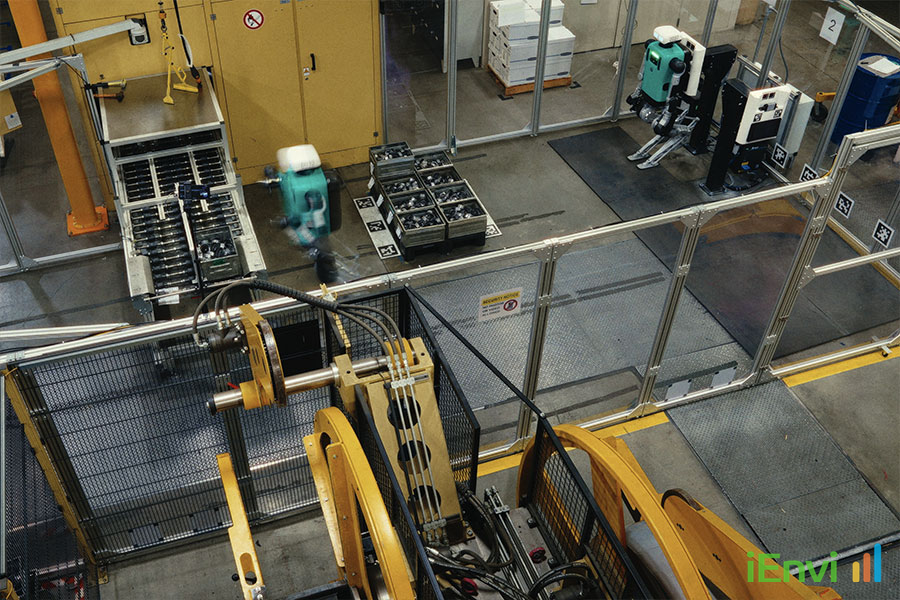
Agility’s commercial footprint at the time of the announcement is notably more substantial than that of most competitors operating in the humanoid space. The company has logged over 65,000 operational hours across nine active customer facilities. At GXO Logistics sites, Digit robots have completed the movement of more than 100,000 totes, a concrete and auditable production metric. Other confirmed commercial partners include Schaeffler, a German-based automotive and industrial supplier with significant Asia-Pacific manufacturing operations, and Toyota Motor Manufacturing Canada. These are not proof-of-concept pilot sites; they are active production environments where the robots are performing repetitive material handling tasks alongside human workers.
Agility CEO Peggy Johnson framed the company’s commercial philosophy plainly during an investor briefing following the announcement: “Companies don’t buy tech; they buy solutions. At Agility, we’re doing just that. That’s missing from the headlines about AI, companies still have to solve real physical problems.” This statement reflects a deliberate positioning of Digit as an operational tool rather than a research platform, which has direct implications for how procurement teams and facility managers should evaluate it relative to competing humanoid platforms that remain in laboratory or limited-trial phases.
Australian context: humanoid robotics, labour markets, and industrial operations
Australia does not currently have a dedicated regulatory framework governing the deployment of humanoid or autonomous mobile robots in commercial workplaces. Safe Work Australia’s Model Work Health and Safety (WHS) Act and associated regulations provide the primary legislative basis under which employers must manage risks from plant and machinery, including autonomous systems. However, the existing framework was written with conventional industrial plant in mind. The introduction of human-collaborative robots that operate without physical safety barriers, such as Digit v5 with its NVIDIA Halos integration, creates a category of workplace hazard that current prescriptive guidance does not explicitly address.
References and related sources
- Primary source: www.agilityrobotics.com
- geekwire.com
- forbes.com
- 247wallst.com
- humanoidrobotsuk.com
How iEnvi can help
iEnvi integrates technology and data-driven approaches into environmental consulting. We monitor AI and technology developments that affect how environmental professionals deliver services to clients.
This is an iEnvi Machete news summary. Prepared by iEnvi to summarise the source article for environmental professionals tracking AI, data, and technology developments that affect consulting and project delivery.
Published: 25 Jun 2026
Need advice on this topic? Speak to an iEnvi expert at info@ienvi.com.au or 1300 043 684, or contact us online.
Need advice on this issue? iEnvi provides practical, senior-led environmental consulting across contaminated land, remediation, ecology and environmental risk.