

ACT Government releases 10-year Healthy Waterways Plan for Lake Tuggeranong to tackle algal blooms and urban nutrient pollution
Overview of the 10-Year Healthy Waterways Plan
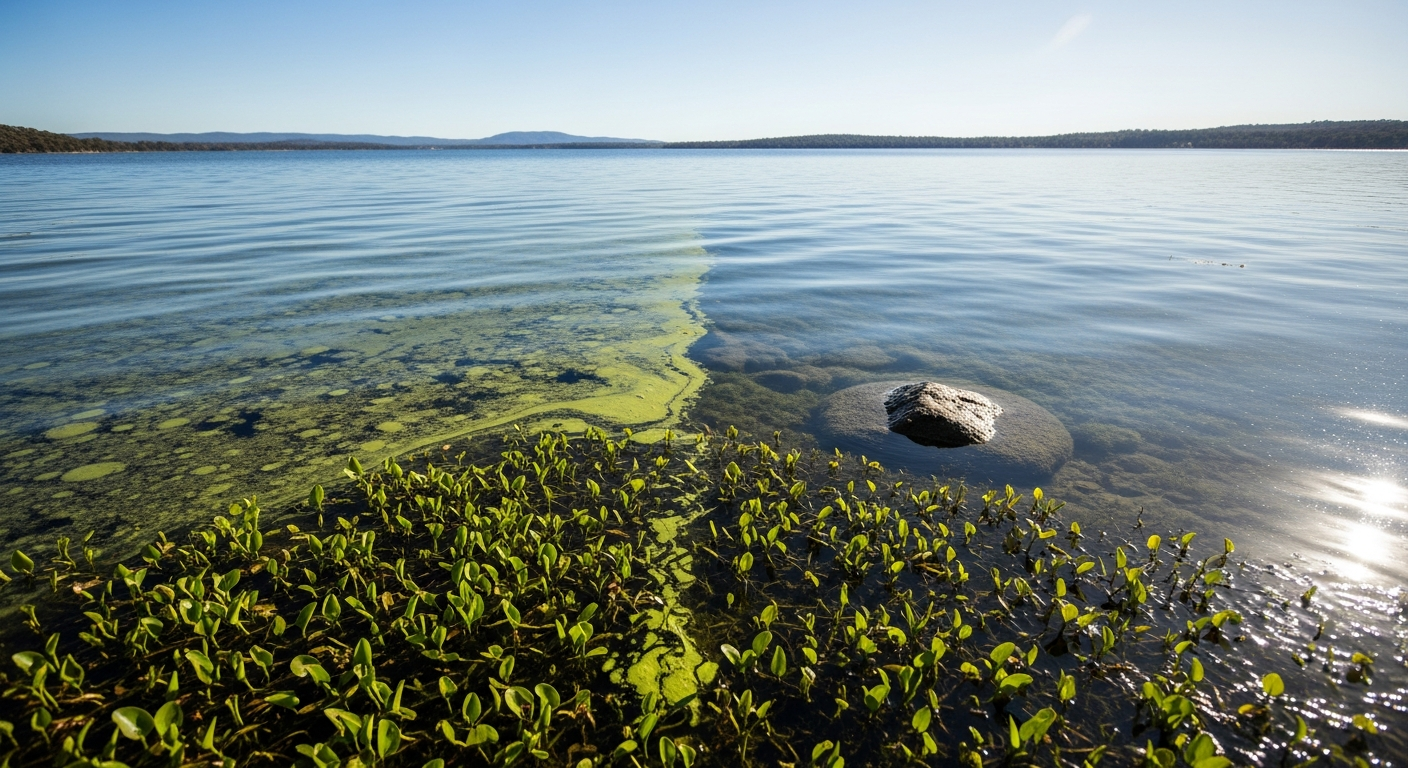
The ACT Government formally released its Healthy Waterways Plan for Lake Tuggeranong on 26 June 2026, establishing a structured, decade-long strategy to restore water quality in one of Canberra’s most heavily used urban lakes. The plan targets 2036 as the endpoint for measurable environmental improvement, with the central objective of reducing excess phosphorus entering the lake through stormwater runoff from the surrounding urban catchment. Phosphorus loading from urban surfaces, including decaying leaf litter, grass clippings, fertiliser application, and exposed soils, is identified as the principal driver of the toxic cyanobacterial (blue-green algal) blooms that have repeatedly rendered the lake unsafe for contact recreation during warmer months.
This release is significant beyond its immediate geographic scope. Lake Tuggeranong is the first urban lake in the ACT to receive a dedicated 10-year plan under the Healthy Waterways Plan framework, but it is not the last. The ACT Government has confirmed that equivalent options papers and 10-year plans will be developed for Lake Burley Griffin (targeted for Q4 2026), Lake Ginninderra (Q2 2027), and Yerrabi Pond (Q2 2027). For water quality consultants, civil and environmental engineers, catchment modellers, and urban planners operating in or adjacent to the ACT, this represents a multi-year pipeline of structured government-funded work across hydrological assessment, constructed wetland design, ecological monitoring, and WSUD compliance support.
For Australian environmental professionals advising developers, local councils, and infrastructure clients, the plan signals a regulatory and procurement environment in the ACT that is shifting decisively toward catchment-scale, nature-based solutions. This is no longer aspirational policy language. Funding has been committed through the 2026-27 ACT Budget to begin immediate on-ground actions, meaning procurement, design, and assessment work will commence within the current financial year.
Key details: phosphorus loading, infrastructure measures, and the plan’s technical scope
The technical foundation of the Healthy Waterways Plan for Lake Tuggeranong rests on the identification of diffuse nutrient pollution, specifically excess phosphorus, as the primary water quality stressor in the lake system. Phosphorus entering via stormwater acts as a limiting nutrient for cyanobacterial growth. When phosphorus concentrations exceed threshold levels in warm, stratified, and low-flow conditions, conditions in a shallow urban lake like Tuggeranong become highly conducive to blue-green algal bloom development. These blooms produce cyanotoxins capable of causing serious health effects in humans and animals through skin contact, ingestion, or inhalation of aerosols, which is why blooms routinely trigger public health closures of the lake foreshore.
The plan’s immediate funded actions under the 2026-27 ACT Budget target nutrient pathways at their source before they enter the stormwater network. Targeted source control measures include expanded street sweeping programmes and community education campaigns focused on waterway-sensitive gardening practices, particularly around fertiliser use and organic waste management adjacent to drainage lines. These measures aim to intercept phosphorus at the point of generation rather than attempting to remove it once it has already entered the lake. Complementing source control, the plan commits to trialling innovative physical and biological methods for active algal bloom suppression within the lake itself, which may encompass technologies such as phosphorus-binding agents, aeration systems, or biological controls depending on trial outcomes.
Over the 10-year implementation horizon, the plan commits to constructing new wetlands, rain gardens, and bio-retention systems throughout the Lake Tuggeranong catchment. These are nature-based water sensitive urban design (WSUD) assets designed to intercept, slow, and filter stormwater before it reaches the lake. Wetlands in particular are effective at phosphorus removal through sedimentation of particulate-bound phosphorus and biological uptake by aquatic macrophytes, though their effectiveness is highly dependent on hydraulic residence time, vegetation management, and sediment accumulation rates over time. The plan also incorporates a commitment to improved research and monitoring, which implies structured data collection on catchment hydrology, water quality parameters, and ecological health indices across the plan period. Ambient water quality and toxicant thresholds for the lake are assessed against the Australian and New Zealand Guidelines for Fresh and Marine Water Quality (ANZG 2018), which provide the current national benchmark framework for freshwater ecosystem protection.
A noteworthy component of the plan is its explicit inclusion of First Nations engagement, with the employment of First Nations rangers to support land and water management within the catchment. This reflects a broader shift in ACT natural resource management toward co-management models that integrate indigenous ecological knowledge alongside conventional monitoring and field management activities. The plan operates under the overarching policy framework of the ACT Water Strategy 2014-44 (known as “Striking the Balance”) and is given regulatory effect through the Environment Protection Act 1997 (ACT) and the Water Resources Act 2007 (ACT).

Australian context: WSUD obligations, ANZG 2018 thresholds, and what the ACT framework means nationally
The Healthy Waterways Plan for Lake Tuggeranong is grounded in ACT-specific legislation, but the water quality science underpinning it is drawn from the national ANZG 2018 framework, which sets guideline values for nutrients, turbidity, and other physico-chemical parameters across different freshwater ecosystem types. For urban lakes in the ACT’s climatic region, these guideline values inform the trigger concentrations at which management intervention is required. Practitioners working across other Australian jurisdictions will recognise the same framework applying to their own council and state-level water quality planning obligations, making the ACT’s structured, catchment-scale approach a practical reference point for comparable urban lake management programmes nationally.
References and related sources
- Primary source: www.act.gov.au
- act.gov.au
- act.gov.au
- act.gov.au
How iEnvi can help
iEnvi provides specialist consulting services relevant to this topic. Our team includes CEnvP Site Contamination Specialists with experience across contaminated land, groundwater, remediation, ecology, and regulatory compliance.
- iEnvi contaminated land investigation services
- iEnvi remediation and validation services
- iEnvi expert services and independent review services
This is an iEnvi Machete news summary. Prepared by iEnvi to summarise the source article for contaminated land, groundwater, remediation, approvals and site risk professionals.
Published: 26 Jun 2026
Need advice on this topic? Speak to an iEnvi expert at info@ienvi.com.au or 1300 043 684, or contact us online.
Need advice on this issue? iEnvi provides practical, senior-led environmental consulting across contaminated land, remediation, ecology and environmental risk.
Team credentials Contaminated land services Remediation services Groundwater services Talk to iEnvi