
Overview
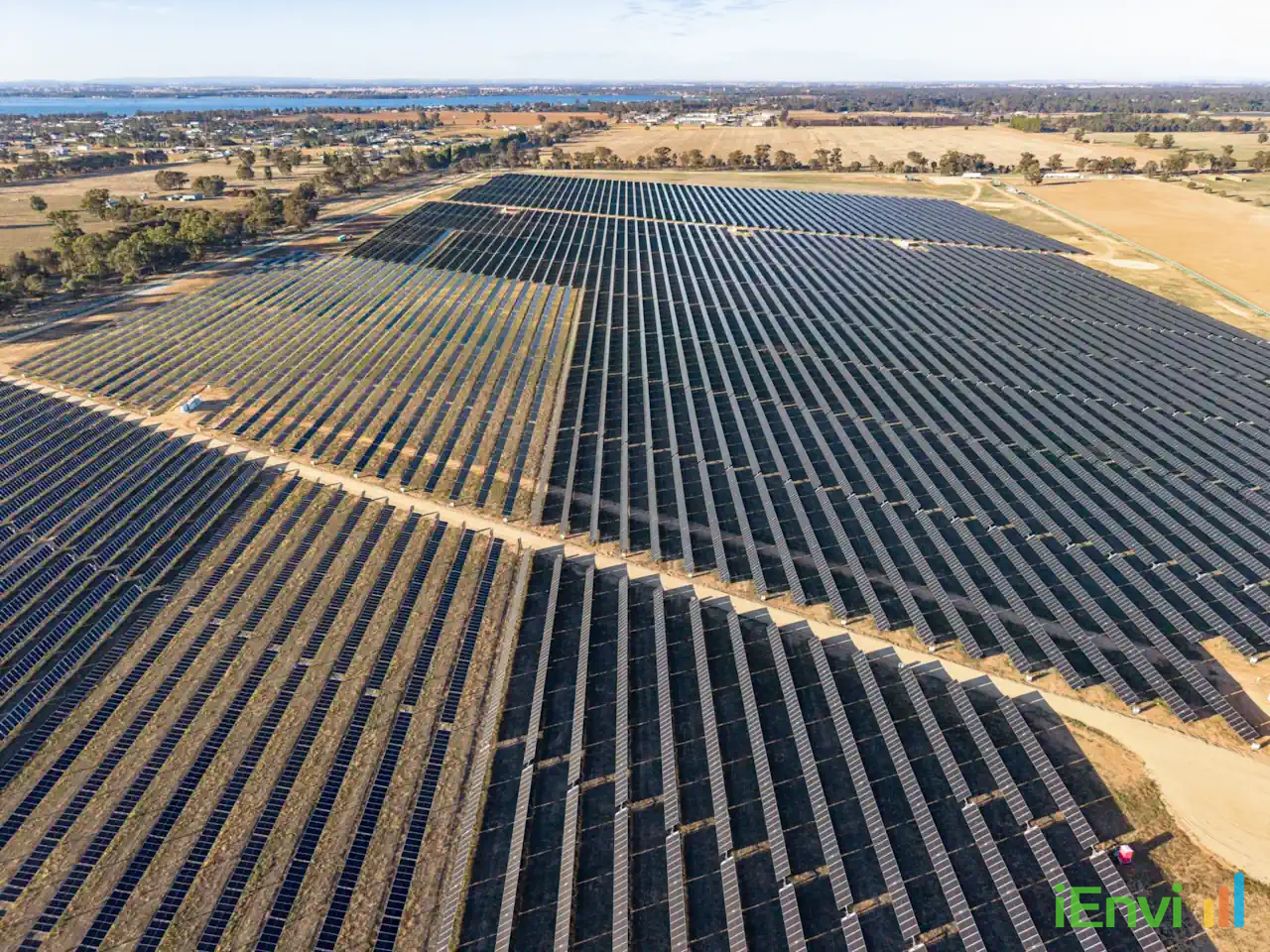
AirTrunk, a hyperscale data centre operator, has signed an exclusivity agreement with European Energy Australia to buy electricity from a 1.2 GW clean energy and storage portfolio in the Hunter-Central Coast Renewable Energy Zone (REZ). The electricity would supply AirTrunk’s proposed 550 MW data centre campus on the former Kurri Kurri aluminium smelter site in the New South Wales Hunter region. RenewEconomy reported the agreement on 12 November 2026.
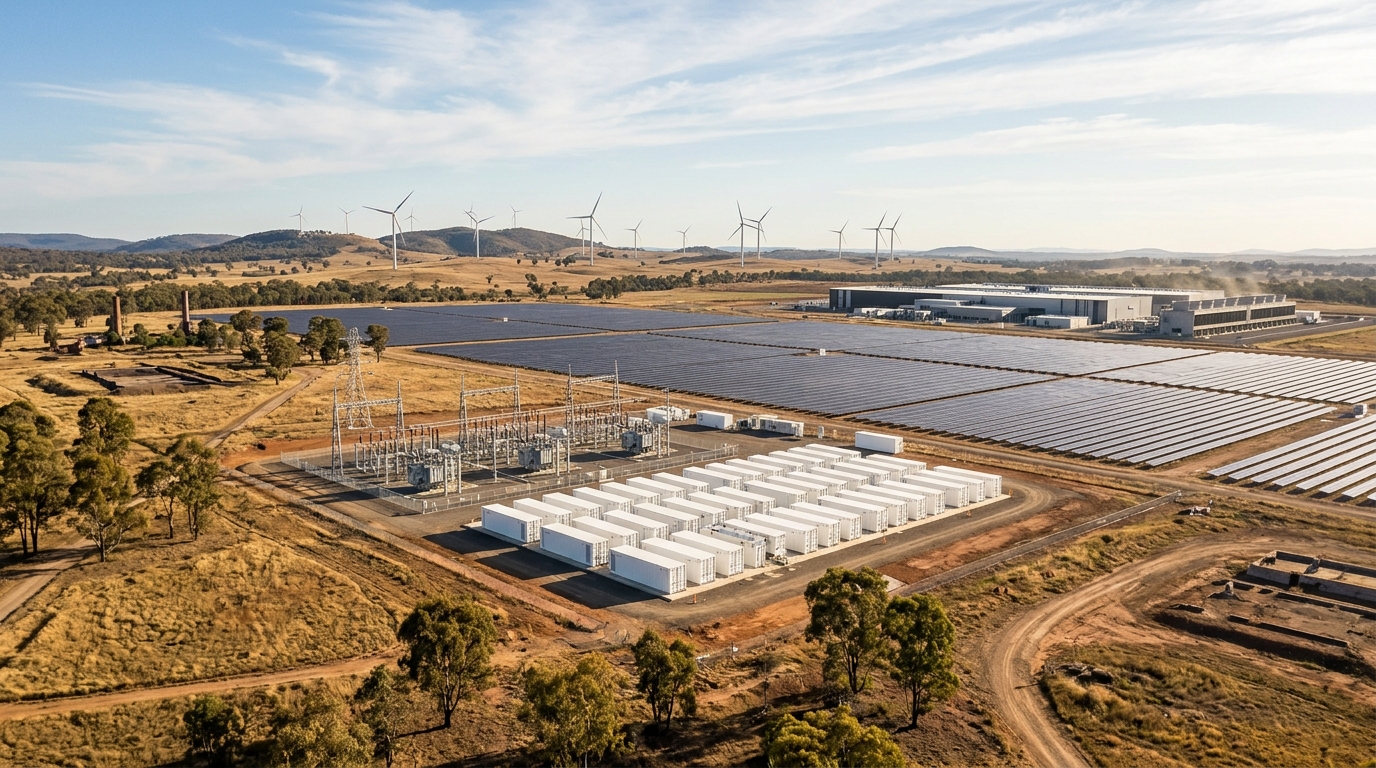
The portfolio has three parts: 260 MW of solar, 350 MW of wind, and a 600 MW / 800 MWh battery energy storage system (BESS). Solar and battery assets are targeted for commercial operation in 2030. Wind is targeted for 2032. AirTrunk has said the arrangement supports its commitment to match 100% of its operational energy demand with new renewable generation.
Coverage of the deal has focused on how the power will be procured. The condition of the site is not part of that reporting, and the contamination discussion below is iEnvi’s analysis. For contaminated land practitioners, planners, lawyers and lenders, the more immediate issue is the land itself. Former aluminium smelters carry a well-documented set of legacy contamination issues. A hyperscale data centre campus brings deep excavation, extensive services trenching and large water demand onto that footprint. How quickly the site can be shown to be suitable for its new use will shape the project program as much as the electricity contracts will.
Key details
The renewable portfolio totals about 1,210 MW of nameplate capacity:
- 260 MW of solar
- 350 MW of wind
- 600 MW of battery power capacity with 800 MWh of storage
A 600 MW battery holding 800 MWh can run at full output for about 1.3 hours. That points to short-duration firming rather than extended storage. The generation assets are new projects inside the Hunter-Central Coast REZ, which operates under the Electricity Infrastructure Investment Act 2020 (NSW). Because commercial operation is staged across 2030 and 2032, the data centre campus and its power supply will be built in overlapping phases.
An exclusivity agreement gives AirTrunk priority access to the portfolio while commercial terms are worked out. It is not a construction commitment on its own. The proposed campus is also at an early stage. A 550 MW facility on a former smelter footprint still has to pass through planning assessment, and contamination is one of the matters the consent authority must consider.
Aluminium smelter sites usually share a recognisable contamination profile, and investigations should be scoped to it rather than to a generic analytical suite. The usual contaminants of concern are:
- Fluoride in soil and groundwater, from potline emissions and waste handling.
- Polycyclic aromatic hydrocarbons (PAHs), from anode production and coal tar pitch handling.
- Spent pot lining (SPL) residues, which contain leachable fluoride and cyanide.
- Asbestos in older buildings, insulation and plant.
Groundwater beneath and down-gradient of potlines, carbon plants and waste storage areas can hold fluoride and cyanide plumes that outlast the operating life of the smelter by decades.
The assessment framework is the National Environment Protection (Assessment of Site Contamination) Measure 1999, as amended in 2013 (ASC NEPM 2013). Several parts of it apply to this kind of project:
- Human health: commercial/industrial Health Investigation Level D (HIL D) and Health Screening Level D (HSL D) set the starting point for the proposed end use.
- Ecology: ecological investigation levels and ecological screening levels (EILs and ESLs) apply to retained soils and landscaped areas.
- Intrusive maintenance workers: deep footings, cable trenches and cooling infrastructure create a credible exposure pathway. The NEPM HSLs, including those for intrusive maintenance workers, were developed for petroleum hydrocarbons. HILs exist for carcinogenic PAHs (as benzo(a)pyrene TEQ), total PAHs and free cyanide, but they are based on standard land use settings rather than trench work, and there is no HIL for fluoride. Fluoride, and PAHs or cyanide where workers face deep or repeated exposure, may need site-specific human health risk assessment.
- Waste: material leaving the site must be classified under the NSW EPA Waste Classification Guidelines (2014).
- Groundwater: discharges and dewatering effluent should be assessed against the Australian and New Zealand Guidelines for Fresh and Marine Water Quality (ANZG 2018).
Australian context: NSW planning and contaminated land framework for brownfield data centres
Hyperscale data centres in NSW are usually assessed as State Significant Development (SSD) under Division 4.7 of the Environmental Planning and Assessment Act 1979. The proponent prepares an Environmental Impact Statement (EIS) in response to the Planning Secretary’s Environmental Assessment Requirements (SEARs). For a facility of this scale, the EIS will need to cover:
- cooling water supply and discharge
- biodiversity corridors
- acoustic management
- transmission easements and grid connection
Contamination sits alongside these matters. Section 4.6 of State Environmental Planning Policy (Resilience and Hazards) 2021, Chapter 4 (Remediation of land), requires the consent authority to consider three questions:
- Is the land contaminated?
- Is it suitable, or can it be made suitable, for the proposed use?
- If remediation is needed, will it be carried out before the land is used?
The Contaminated Land Management Act 1997 (NSW) adds a second layer of obligations. Under the Act, the NSW Site Auditor Scheme provides independent review of contamination reports. It produces Site Audit Statements confirming whether land is suitable for a specified use, often with conditions attached. Where contamination is significant enough to warrant regulation, the EPA can declare the land significantly contaminated and issue management orders requiring investigation or remediation. Separately, section 60 of the Act requires landowners and those responsible for contamination to notify the EPA when certain thresholds are met.
On brownfield SSD projects, the SEARs commonly ask for a preliminary and detailed site investigation, a Remedial Action Plan where remediation is needed, and a site auditor’s view on whether that plan is appropriate. That view is usually given as a Section B Site Audit Statement or interim audit advice. A Section A Site Audit Statement, confirming the land is suitable for the proposed use, typically follows once remediation and validation are complete.
What to watch
For a site like Kurri Kurri, the practical questions are about sequence and scope. Investigations need enough coverage under former potlines, carbon plant areas and waste storage locations to support a design that involves deep excavation and long services corridors. Groundwater data will matter for both dewatering approvals and cooling water planning. Any material that cannot be reused on site will need classification and a disposal route, and SPL-affected soils can limit the options.
The energy supply is not expected until 2030 for solar and storage, and 2032 for wind. That gives the project time to complete investigation, remediation and audit before major construction. Whether that time is used well will depend on how early the contamination work starts and how closely it is tied to the campus design.
References and related sources
- Primary source: reneweconomy.com.au
- NEPM Assessment of Site Contamination
How iEnvi can help
iEnvi provides specialist consulting services relevant to this topic. Our team includes CEnvP Site Contamination Specialists with experience across contaminated land, groundwater, remediation, ecology, and regulatory compliance.
- iEnvi contaminated land services
- iEnvi remediation services
- iEnvi asbestos services
- iEnvi expert services and independent review services
This is an iEnvi Machete news summary. Prepared by iEnvi to summarise the source article for contaminated land, groundwater, remediation, approvals and site risk professionals.
Published: 13 Nov 2026
Need advice on this topic? Speak to an iEnvi expert at info@ienvi.com.au or 1300 043 684, or contact us online.
Need advice on this issue? iEnvi provides practical, senior-led environmental consulting across contaminated land, remediation, ecology and environmental risk.
DSI services Team credentials Contamination risk assessment Contaminated land services Talk to iEnvi