
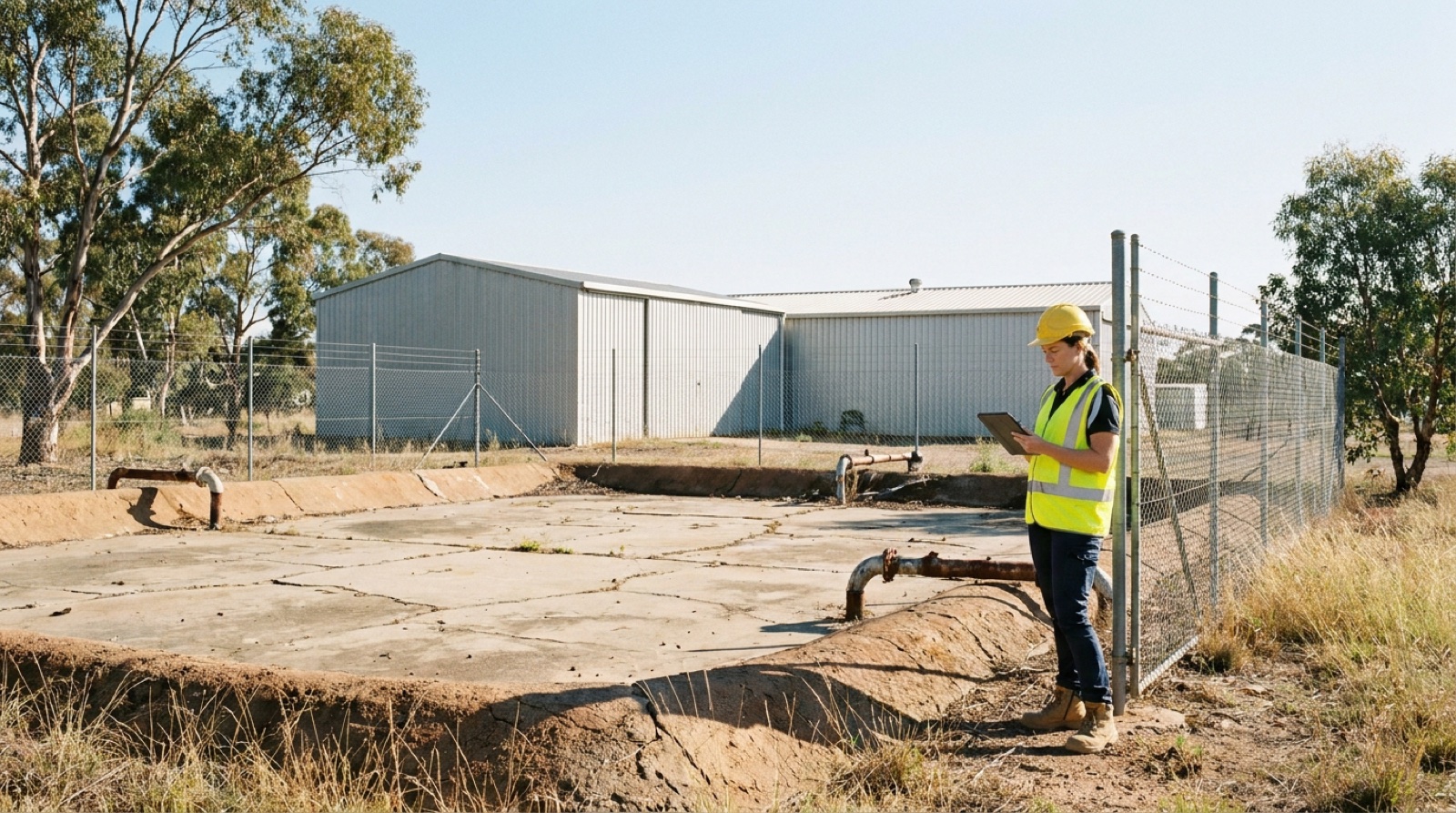
What do contaminated land registers tell a buyer?
Contaminated land registers are public records kept by state and territory environmental regulators. Depending on the jurisdiction, they show whether a site is known to be contaminated, is subject to a regulatory notice, order, audit or management plan, or, in Queensland, has been used for a notifiable activity. Each jurisdiction runs its own system, such as the Environmental Management Register and Contaminated Land Register in Queensland, the list of notified sites and record of notices in New South Wales, and the Priority Sites Register in Victoria. Title memorials and planning controls, such as Victoria’s Environmental Audit Overlay, sit alongside them. A listing does not always mean a site needs clean-up, and a clear search does not mean a site is clean. Registers only hold what the regulator has been told or has found, so they are a starting point for due diligence, not a substitute for it.
Searching contaminated land registers is usually one of the first things a buyer, lender or their lawyer does when a property or business changes hands. A listing, a notice on title or an overlay in the planning scheme can change how a site is valued, what conditions go into the contract and whether a financier will lend on it.
This is the sixth article in our series on environmental due diligence (EDD) for M&A in Australia. Earlier articles covered why environmental due diligence matters in Australian M&A, Phase 1 vs Phase 2 environmental assessments, negotiating price, warranties, indemnities and escrow, vendor environmental due diligence and PFAS liabilities in transactions. This one explains how contaminated land registers and notices work in each state and territory, what they do and do not tell you, and how to use them in a deal.
Why contaminated land registers matter in a transaction
- They reveal known regulatory history. A listing or notice tells you the regulator already knows about contamination or a contaminating activity, and may already require something of the owner or occupier.
- Obligations can pass with the land. In most jurisdictions a regulator can direct the current owner or occupier, not only the party that caused the contamination, and some notices and orders bind later owners. A buyer can inherit obligations simply by taking title or control.
- They shape disclosure. Several jurisdictions require sellers of land to disclose listings, notices or planning controls before a contract is signed, so what a register shows affects what the seller must disclose and what a buyer can rely on.
The catch is that every register is incomplete, recording only what has been notified to or found by the regulator. Many contaminated sites, including former service stations, workshops and depots, have never been reported. That is why register searches sit inside a wider preliminary site investigation rather than replacing it.
Contaminated land registers and notices by state
The names, triggers and search methods differ across Australia. The summaries below are general and current at the time of writing. Check the regulator’s website for the latest process and fees before relying on them.
Queensland
The Department of the Environment, Tourism, Science and Innovation (DETSI) keeps the Environmental Management Register (EMR) and the Contaminated Land Register (CLR) under the Environmental Protection Act 1994. Land is listed on the EMR if a notifiable activity listed in Schedule 3 of the Act, such as petroleum product or oil storage, a service station, a livestock dip or a landfill, has been or is being carried out on it, or if the land is affected by a hazardous contaminant. Land moves to the CLR where action is needed to remediate it to prevent serious environmental harm.
Searches are made online by lot on plan for a fee, and results show whether the land is listed, any notified contaminants and notifiable activities, and any site management plan. An EMR listing for a notifiable activity does not by itself mean the land needs clean-up or is unsuitable for its current use. A seller of listed land must give the buyer written notice before agreeing to sell, under section 408 of the Act, and since 1 August 2025 this disclosure forms part of the seller disclosure statement under the Property Law Act 2023. We explain how land can come off the EMR in our Queensland EMR removal guide.
New South Wales
The NSW EPA publishes two key records under the Contaminated Land Management Act 1997. The list of notified sites shows land notified to the EPA, often under the section 60 duty to report, with a management status for each site. Being on the list does not necessarily mean the land is regulated under the Act. The contaminated land record of notices covers land declared significantly contaminated and related regulatory matters such as preliminary investigation orders, management orders, approved voluntary management proposals, ongoing maintenance orders and site audit statements.
Contaminated land that is not significantly contaminated is usually managed through the planning system instead. Planning certificates issued by councils under section 10.7 of the Environmental Planning and Assessment Act 1979 include prescribed contamination matters, such as whether the land is declared significantly contaminated or subject to a management order, and councils may add other information they hold. A planning certificate must be attached to a NSW contract for sale of land, so it is often where a buyer first sees a contamination issue. Our article on the NSW duty to report contamination explains when notification applies.
Victoria
EPA Victoria’s Priority Sites Register lists sites where EPA has issued a current clean up or pollution abatement notice under the former Environment Protection Act 1970, or a current environmental action notice or other notice to manage contamination under the Environment Protection Act 2017. Sites are removed once they have complied, and the register does not cover sites managed through voluntary agreements or planning controls, such as section 173 agreements.
The Environmental Audit Overlay (EAO) is a planning scheme control applied to land that is known or suspected to be potentially contaminated. Before a sensitive use such as housing, childcare or a primary school can start, it requires an environmental audit, or in some cases a preliminary risk screen assessment finding that an audit is not required. The Victoria Unearthed map brings together priority sites, overlays, audits, EPA licensed sites, historical landfills and groundwater quality restricted use zones.
Under the 2017 Act, an occupier must give a copy of a current notice or order to an incoming occupier, and the person in management or control must provide any environmental audit or preliminary risk screen assessment statement for the site to an incoming person in management or control. The Act also places a duty to manage contaminated land on the person in management or control. On a sale of land, the vendor statement under section 32 of the Sale of Land Act 1962 discloses notices and planning controls affecting the land, which will usually pick up an EAO.
Western Australia
The Department of Water and Environmental Regulation (DWER) classifies reported sites under the Contaminated Sites Act 2003 into one of seven classifications: report not substantiated; possibly contaminated, investigation required; not contaminated, unrestricted use; contaminated, restricted use; remediated for restricted use; contaminated, remediation required; and decontaminated. A memorial is registered on the certificate of title for land classified possibly contaminated, investigation required; contaminated, remediation required; contaminated, restricted use; or remediated for restricted use, and for sites subject to investigation, clean-up or hazard abatement notices. Planning authorities must seek DWER’s advice before deciding subdivision and development proposals on land with a memorial.
The online Contaminated Sites Database only covers sites with confirmed contamination. A nil result does not mean the land is clean, or even that it has never been reported. To see whether a site has been classified at all, including as possibly contaminated, request a basic summary of records (Form 2) from DWER and check the title for a memorial. Owners of land classified contaminated, remediation required; contaminated, restricted use; or remediated for restricted use must give a prospective buyer, mortgagee or lessee a written disclosure under section 68 of the Act, using the prescribed form, at least 14 days before the transaction completes.
South Australia
Under the Environment Protection Act 1993, section 83A requires a site owner, occupier, site contamination consultant or auditor to notify the EPA of site contamination that affects or threatens groundwater. Notifications are recorded on the EPA public register, together with records such as site contamination audit reports, transfers of liability and voluntary site contamination assessment and remediation proposals. The EPA’s online site contamination index shows which sites have records, and the records themselves can be requested.
For a sale, the vendor’s statement under section 7 of the Land and Business (Sale and Conveyancing) Act 1994 includes information from the EPA on site contamination records. South Australia also has groundwater prohibition areas, where taking groundwater is restricted because of contamination.
Tasmania
The EPA Tasmania can serve investigation, remediation and site management notices under Part 5A of the Environmental Management and Pollution Control Act 1994. A notice is attached to the land title and stays there until it has been fully complied with. Currently regulated contaminated sites are shown on the LISTmap EPA regulated premises layer, and the EPA will search its historical records for a single property on application, which may attract a fee.
Australian Capital Territory
The ACT EPA keeps a register of contaminated sites under the Environment Protection Act 1997. It is narrower than it sounds. It records sites subject to specified EPA orders or audits under the Act, not every contaminated site the EPA knows about. A contaminated land search can be requested through Access Canberra, and contamination information forms part of the conveyancing enquiries made when buying a lease.
Northern Territory
Where the NT EPA regulates contamination under the Waste Management and Pollution Control Act 1998, regulatory notices and audit reports for the land are placed on its public register. Notices and audits can also be viewed spatially in NR Maps. Because these records only cover regulated sites, site history and inspection carry particular weight in the Territory.
What registers do not show
A clear search result is easy to over-read. Before relying on one, remember that registers generally do not capture:
- contamination that has never been reported, which is common on older industrial and commercial sites
- past activities from before reporting duties existed, or before the regulator started keeping records
- contamination migrating onto the site from a neighbour, such as a fuel plume from an adjoining service station
- emerging contaminants such as PFAS where nobody has sampled for them
- contamination managed only through planning conditions, voluntary agreements or private arrangements, in some jurisdictions
- information about nearby listed sites, unless you search them too
This is why a Phase 1 assessment combines register searches with historical aerial photographs, title, council and dangerous goods records, a site inspection and interviews, and searches neighbouring up-gradient lots as well as the target site.
What a listing or notice means for price, conditions and lenders
A listing is not automatically bad news. What matters is why the site is listed and what is still required.
Reading the listing
- Activity-based listings, such as a Queensland EMR entry for historical fuel storage, flag potential rather than confirmed contamination. The question is whether anyone has investigated it.
- Confirmed contamination with a management plan or restricted use classification often means the site can keep operating, but with conditions that may limit redevelopment, excavation or groundwater use, and that carry ongoing costs.
- Current notices or orders are the most significant. They may require investigation, remediation, monitoring or reporting to a timetable, and a buyer needs to know who will carry those obligations after completion.
Price and contract conditions
Once a listing is understood, it can be costed, giving the buyer an early, documented issue to negotiate with rather than a vague concern. Typical responses include a price adjustment, a condition that the seller complete defined works or obtain a regulator decision before completion, a specific indemnity for a notice, or a retention linked to closing out the obligation. We covered how to frame those terms in our article on using findings to negotiate price and indemnities.
Where a seller fails to give a required disclosure, or gives an inaccurate one, some jurisdictions give the buyer a right to terminate or rescind, or other remedies. These rules differ between states and between residential and commercial sales, so your lawyer should confirm what applies.
Share sales and asset sales
Most statutory disclosure rules attach to a sale of land. In a share sale the land stays with the same company, so those rules may not be triggered, and the buyer takes on the company’s existing position, including any notices, management plans and liability for contamination it caused. Searches then need to cover every site the target owns or occupies, and sites it has left where it may remain liable, with disclosure coming through the warranties and data room instead.
Lenders
Financiers commonly ask about contamination status and may require register searches as part of credit approval. A listing, memorial or notice can trigger requests for further reporting, a lower loan to value ratio or specific conditions, and lenders also weigh their own exposure if they ever take possession of the site. Clear reporting on what the listing means, what has been done and what remains usually speeds this up.
How sellers get ahead of the register search
Buyers will run register searches, so sellers should run them first. Our vendor due diligence article covers the broader process. For registers specifically, a seller can:
- search the site and neighbouring land early, so there are no surprises in the buyer’s first report
- gather the history behind any listing, including reports, audits, site management plans and correspondence with the regulator
- check that any notices have been complied with, and whether the listing could be closed, revoked or amended with the right evidence
- prepare disclosure documents that meet the state’s requirements and explain the listing in plain terms
A seller who can show that a listing relates to a long-closed activity, already investigated and managed, protects the price far better than one who leaves the buyer to guess.
Both sellers and buyers should take legal advice before commissioning new sampling. Results can trigger reporting duties that differ between states, and in some jurisdictions, such as South Australia, those duties extend to consultants and auditors as well as owners and occupiers. Engaging consultants through lawyers may help keep reports privileged, but privilege does not remove a statutory duty to notify the regulator.
A practical register search checklist
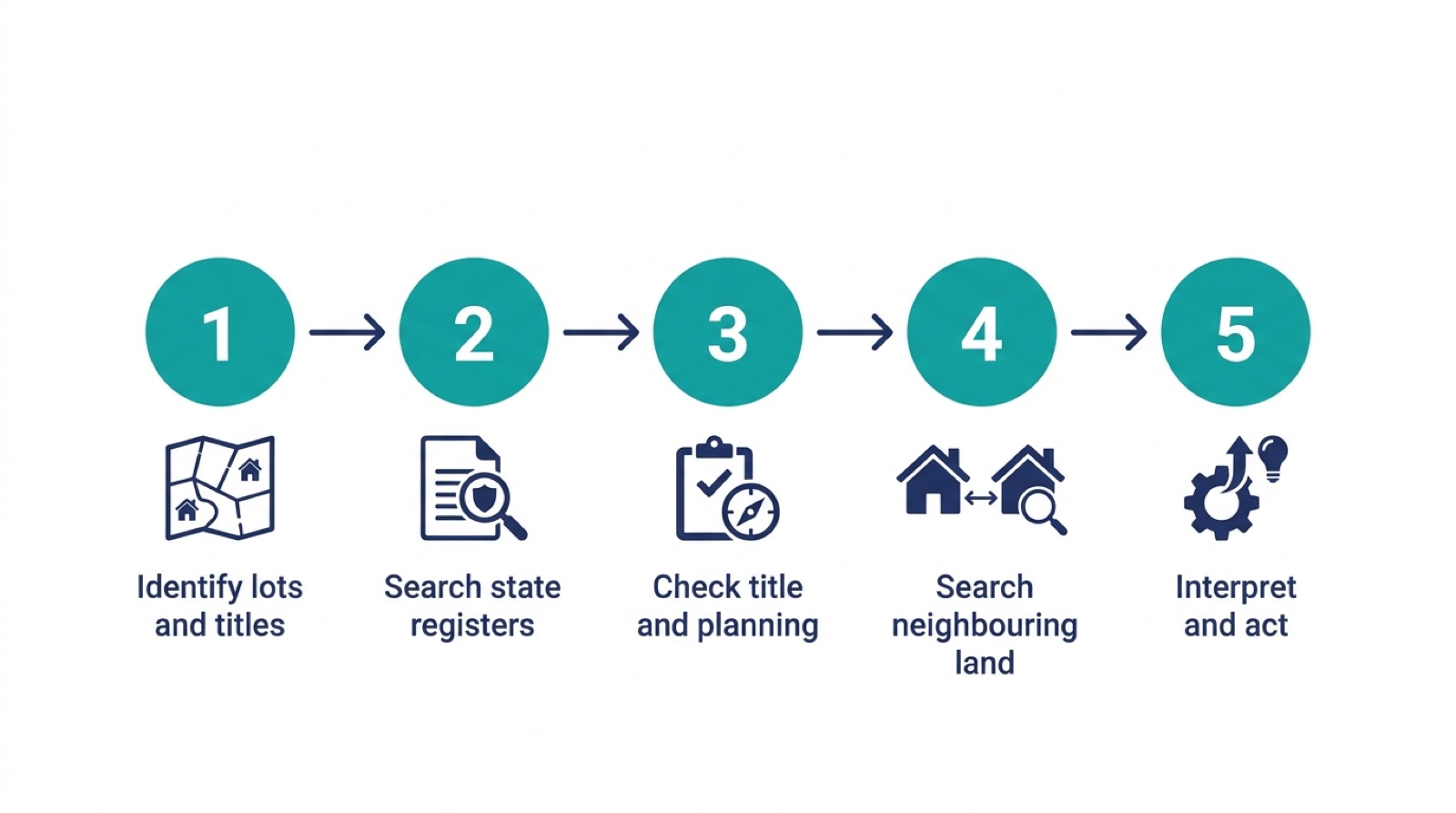
- Identify every lot, title and lease in the transaction, including easements and road reserves where relevant. In a share sale, include every site the target company owns or occupies.
- Search the relevant state or territory contaminated land registers and public registers for each lot.
- Check title for memorials, notices or covenants linked to contamination.
- Obtain planning certificates or check planning overlays.
- Search neighbouring and up-gradient properties, and request the underlying reports, notices and management plans for any listing.
- Have a suitably qualified consultant interpret the results against the site history and the intended use.
Common mistakes with contaminated land registers
- Treating a nil search as evidence that a site is uncontaminated.
- Searching only the main lot and missing adjoining lots or leased areas.
- Relying on an online database when fuller records must be requested separately.
- Assuming a listing means the site must be cleaned up before it can be sold.
- Not asking who will be responsible for an existing notice or management plan after completion.
Why iEnvi specialises in contaminated land register and notice due diligence
We help buyers, sellers, lenders and their lawyers turn register results into clear advice they can act on. Our work includes:
- Register, title and planning searches across all states and territories, interpreted alongside site history as part of a contaminated land assessment.
- Detailed site investigations where a listing needs to be confirmed, closed out or costed.
- Advice on existing notices, orders and management plans through our regulator notice and order response service, and our guide to EPA clean-up notices and orders.
- Support with register removal or amendment, such as a former service station EMR removal in eastern Brisbane, and advice on when a site audit is required.
Our work is led by Michael Nicholls, a Certified Environmental Practitioner (CEnvP) Site Contamination Specialist. See our team and credentials, and our environmental due diligence for property transactions and M&A service.
Talk to iEnvi about register searches for your transaction
If you are buying, selling or financing a site and a register search has come back with a listing, a notice or a nil result you are not sure you can rely on, talk to us early. We can interpret the results, check the history and tell your advisers what the listing means for price, conditions and finance. Call us on 1300 043 684 or send us a message through our contact page.
This article is general information only and is not legal or financial advice. Registers, disclosure obligations and environmental laws differ between states and territories and change over time, so get advice that suits your deal and sites.
References
- Queensland Government. About the land registers and Buying and selling contaminated land, Environmental Protection Act 1994.
- NSW Environment Protection Authority. Notified and regulated contaminated land, Contaminated Land Management Act 1997.
- EPA Victoria. Victoria Unearthed and Priority Sites Register, Environment Protection Act 2017.
- Department of Water and Environmental Regulation (WA). Guideline: Identification, reporting and classification of contaminated sites.
- Environment Protection Authority South Australia. Site contamination index and Property interests (Section 7).
- EPA Tasmania. Part 5A Notices and Land Contamination Information.
- Access Canberra. Contaminated sites, Environment Protection Act 1997.
- Northern Territory EPA. Contaminated land databases and resources.
Need advice on this issue? iEnvi provides practical, senior-led environmental consulting across contaminated land, remediation, ecology and environmental risk.
PSI services DSI services Team credentials Contaminated land advice Talk to iEnvi