

Overview
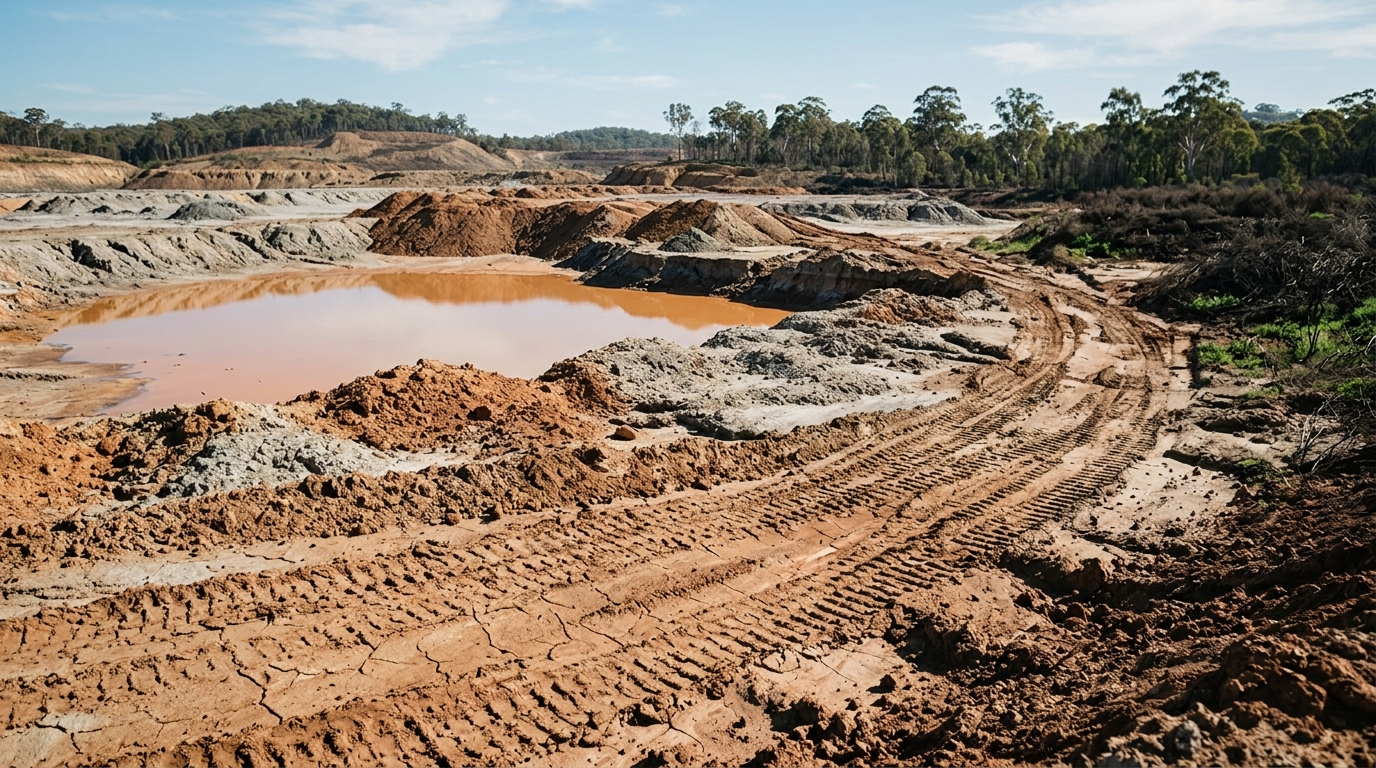
The Department of Climate Change, Energy, the Environment and Water is conducting a comprehensive federal investigation into Alcoa of Australia following the unauthorised clearing of 318 hectares of native jarrah forest at its Willowdale bauxite mine in Western Australia. This federal intervention represents a critical escalation in regulatory oversight, specifically because the habitat destruction occurred while the multinational mining entity was already subject to an active federal compliance investigation during 2023 and 2024. Documents obtained from federal regulators reveal that the government has officially characterised this latest environmental impact as a deliberate repeat breach, a designation that carries severe legal, financial and reputational consequences for the operator. This development follows a landmark $55 million enforceable undertaking established in early 2026 to address previous compliance failures at the company’s Huntly and Willowdale mining operations, signalling that historical regulatory agreements have failed to deter ongoing unauthorised activities.
For Australian environmental consultants, corporate lawyers, municipal planners and project developers, this case serves as an unambiguous warning that the landscape of environmental compliance is undergoing a structural shift. The traditional corporate approach of treating environmental non-compliance as a manageable, transactional business cost is no longer viable under the current federal enforcement model. As the Commonwealth continues its progression towards the establishment of a National Environmental Protection Agency, federal regulators are increasingly demonstrating a willingness to bypass state-level compromises and enforce strict compliance with federal environmental laws. This case highlights how cumulative environmental impacts, historical compliance records and patterns of operational conduct are now being integrated into regulatory assessments, meaning that a single unapproved action can trigger a cascade of compounding legal liabilities.
The intersection of terrestrial ecology and water resource management in this investigation further elevates its significance for environmental practitioners. The unauthorised clearing did not occur in an isolated ecological vacuum; rather, it took place within high-value native forest ecosystems that overlap with critical municipal drinking water catchments. Consequently, federal and state regulators are no longer treating biodiversity loss and water quality degradation as separate, compartmentalised risks. Instead, they are adopting an integrated catchment-scale approach to environmental enforcement, where the destruction of deep-rooted native vegetation is directly linked to potential long-term impacts on water security and catchment health. This integration of multiple environmental risk vectors represents a significant evolution in regulatory scrutiny that all major project proponents must prepare for.
Key details
The technical specifics of this investigation centre on the unauthorised clearing of 318 hectares of high-conservation-value jarrah forest within the Darling Range of Western Australia. This area represents critical foraging, roosting and nesting habitat for several species listed under the Environment Protection and Biodiversity Conservation Act 1999. Specifically, the cleared vegetation supports populations of federally threatened fauna, including Carnaby’s black cockatoo (Zanda latirostris), the forest red-tailed black cockatoo (Calyptorhynchus banksii naso), Baudin’s black cockatoo (Zanda baudinii), the quokka (Setonix brachyurus) and the numbat (Myrmecobius fasciatus). The destruction of mature, hollow-bearing jarrah trees is particularly damaging to these avian species, as suitable nesting hollows can take upwards of 120 years to naturally form in these forest ecosystems, rendering the environmental damage effectively irreversible within human planning timescales.
The regulatory history preceding this fresh investigation is critical to understanding the severity of the current federal response. In February 2026, the federal government finalised a $55 million enforceable undertaking with Alcoa to resolve historical compliance breaches at both the Huntly and Willowdale bauxite operations. The financial structure of this previous undertaking is highly unusual and sets an important precedent for environmental offsets in Australia. Rather than directing the penalty funds to consolidated government revenue, the agreement mandated that $40 million of the total settlement be allocated directly to the strategic acquisition of private land to secure permanent, tangible ecological offsets. This structural allocation highlights a clear regulatory transition towards restorative ecological justice, forcing non-compliant corporate entities to fund physical conservation outcomes rather than simply paying administrative fines.
The timing of the newly identified 318-hectare clearing is what has triggered the severe classification of a deliberate repeat breach. Because this unauthorised clearing occurred during 2023 and 2024, a period when the mining operator was under active, formal federal investigation for separate compliance failures, the regulator has concluded that internal corporate oversight and environmental management systems were fundamentally deficient. This timeline indicates that the operator failed to halt non-compliant land clearing practices even while undergoing intense regulatory scrutiny, thereby compounding its legal liability. The federal government is now evaluating these actions not as isolated operational errors, but as a systemic pattern of corporate non-compliance that undermines the integrity of the Commonwealth’s environmental protection framework.

References and related sources
- Primary source: www.theguardian.com
- NEPM Assessment of Site Contamination
- EPBC Act
How iEnvi can help
iEnvi provides specialist consulting services relevant to this topic. Our team includes CEnvP Site Contamination Specialists with experience across contaminated land, groundwater, remediation, ecology, and regulatory compliance.
- iEnvi groundwater services
- iEnvi remediation and validation services
- iEnvi expert services and independent review services
This is an iEnvi Machete news summary. Prepared by iEnvi to summarise the source article for contaminated land, groundwater, remediation, approvals and site risk professionals.
Published: 21 May 2026
Need advice on this topic? Speak to an iEnvi expert at info@ienvi.com.au or 1300 043 684, or contact us online.
Need advice on this issue? iEnvi provides practical, senior-led environmental consulting across contaminated land, remediation, ecology and environmental risk.
Team credentials Contaminated land services Remediation services Groundwater services Talk to iEnvi