
What is the NSW POEO Public Register?
The Protection of the Environment Operations Act 1997 public register is a fundamental tool for environmental compliance, land-use planning, and property due diligence across New South Wales. For decades, environmental consultants, property developers, local councils, and legal practitioners have relied on this statutory repository to verify the regulatory standing of sites, assess historical chemical use, and monitor active environmental protection licences. Local government authorities regularly consult this database during the assessment of development applications to determine whether historical activities on a parcel of land pose a risk of contamination. A recently confirmed security vulnerability affecting this system has introduced an unexpected layer of administrative and operational risk for organisations managing contaminated land, hazardous materials, and industrial operations.
The New South Wales Environment Protection Authority has announced a significant data breach involving the Protection of the Environment Operations public register. An unauthorised third party successfully accessed non-public documents associated with several specific categories of environmental licences. This breach represents a major intersection of cyber security and environmental regulation, demonstrating that digital compliance systems can pose operational and administrative risks to licence holders if they are not adequately secured. As state environmental regulators transition to fully digital submission and tracking portals, the protection of commercial and personal data submitted for statutory compliance must be prioritised to prevent exploitation by malicious actors.
For environmental professionals and their clients, this development demands an immediate re-evaluation of how regulatory communications are handled and how data integrity is verified. While the primary function of the public register is transparency and community right-to-know, the exposure of contact information and administrative details of licence holders creates a direct pathway for sophisticated social engineering attacks. Site owners, developers, and consultants must understand the precise scope of this breach to protect their ongoing operations from subsequent security threats and fraudulent regulatory demands.
Scope of the EPA Data Breach
According to the official disclosure from the state environmental regulator, the security vulnerability was active on the public register platform for approximately nine years, spanning from 2015 until its discovery and remediation in February 2024. The actual unauthorised access event took place on 28 June 2023, during which an external party extracted non-public administrative documents. The scope of the exposed records is extensive, covering documents dated between 1 January 2011 and 13 November 2022, a period of more than eleven years. This means that any individual or corporate entity that held or applied for specific environmental licences during this timeframe may have had their information exposed.
The breach did not affect all public register files, but was instead concentrated on non-public documentation linked to three distinct licensing categories: Dangerous Goods, Radiation, and Pesticides licences. These licensing frameworks are governed by specific statutory instruments, including the Dangerous Goods (Road and Rail Transport) Act 2008, the Radiation Control Act 1990, and the Pesticides Act 1999. The non-public documents associated with these licences often contain detailed administrative information that is not intended for general public viewing, including compliance correspondence, internal application details, and regulatory assessments.
The specific types of personal information compromised within these documents include the full names of licence holders or nominated corporate officers, official postal addresses, and contact email addresses. These details are frequently used by organisations to manage compliance, receive official notifications, and submit statutory returns. The exposure of these specific data points is highly critical, as it provides malicious actors with the exact context needed to draft highly tailored communications targeting the responsible parties within an organisation.
Crucially, the regulator has confirmed that no financial data, bank account details, or primary proof of identity documents, such as driver licences or passports, were compromised during the incident. Upon identifying the vulnerability, the regulator temporarily removed the public register from service to conduct security verification and apply necessary patches. The platform has since been restored, and formal notifications have been lodged with Cyber Security NSW and the Information and Privacy Commission NSW to ensure compliance with state privacy frameworks. This coordinated response highlights the severity of the incident and the state’s obligation to adhere to legislative requirements regarding data protection.
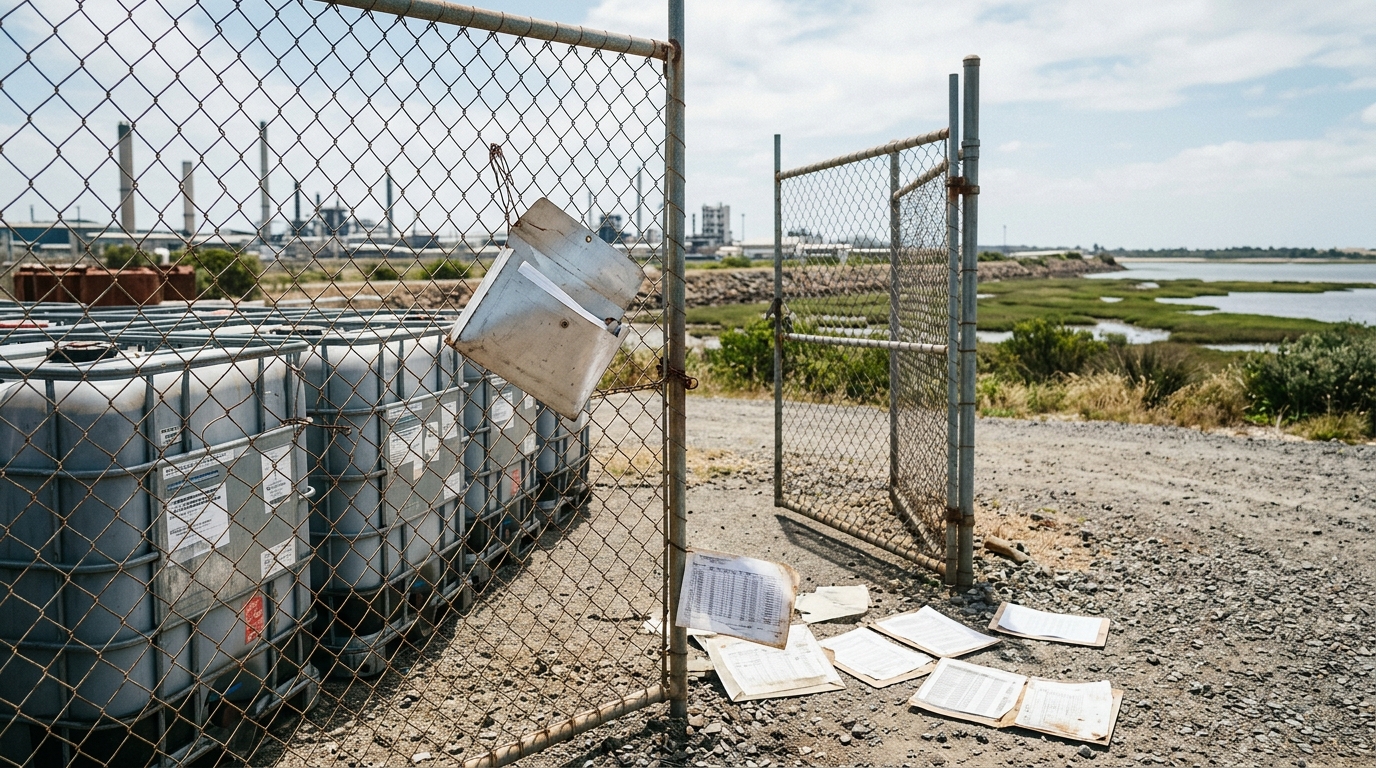
Australian context
This data breach occurs within a highly regulated national framework where environmental data disclosure is increasingly prioritised. Under the Protection of the Environment Operations Act 1997, the public register is designed to ensure community right-to-know principles are maintained. However, this incident highlights a growing tension between environmental transparency and corporate privacy. It parallels similar challenges faced by interstate regulators, such as the Victorian Environment Protection Authority under the Environment Protection Act 2017, and the Queensland Department of Environment, Science and Innovation, both of which manage comprehensive public portals for environmental licensing and contaminated land registers. These interstate systems must now be scrutinised to ensure that similar vulnerabilities do not expose sensitive operator data.
In Australia, the regulatory response to data breaches of this nature is governed by the Notifiable Data Breaches scheme under the Privacy Act 1988, alongside state-based frameworks such as the Privacy and Personal Information Protection Act 1998 in New South Wales. The NSW EPA’s notification to Cyber Security NSW and the Information and Privacy Commission NSW reflects the obligations placed on government agencies to disclose eligible data breaches in a timely manner. For licence holders affected by this incident, the practical implications extend beyond privacy concerns. Operators should anticipate an increase in targeted phishing attempts and fraudulent correspondence purporting to come from the EPA or related regulatory bodies. Environmental consultants and legal advisers should review their client communication protocols, verify the authenticity of any regulatory correspondence through official channels, and remind affected parties to remain vigilant against suspicious requests for payment, additional documentation, or login credentials. The incident serves as a clear reminder that environmental compliance now sits squarely within the broader domain of cyber security risk management.
References and related sources
- Primary source: www.epa.nsw.gov.au
- NSW EPA
How iEnvi can help
iEnvi provides specialist consulting services relevant to this topic. Our team includes CEnvP Site Contamination Specialists with experience across contaminated land, groundwater, remediation, ecology, and regulatory compliance.
- iEnvi remediation services
- iEnvi contaminated land investigation services
- iEnvi expert services and independent review services
This is an iEnvi Machete news summary. Prepared by iEnvi to summarise the source article for contaminated land, groundwater, remediation, approvals and site risk professionals.
Published: 21 May 2026
Need advice on this topic? Speak to an iEnvi expert at info@ienvi.com.au or 1300 043 684, or contact us online.
Need advice on this issue? iEnvi provides practical, senior-led environmental consulting across contaminated land, remediation, ecology and environmental risk.
Team credentials Contaminated land services Remediation services Groundwater services Talk to iEnvi