
Overview
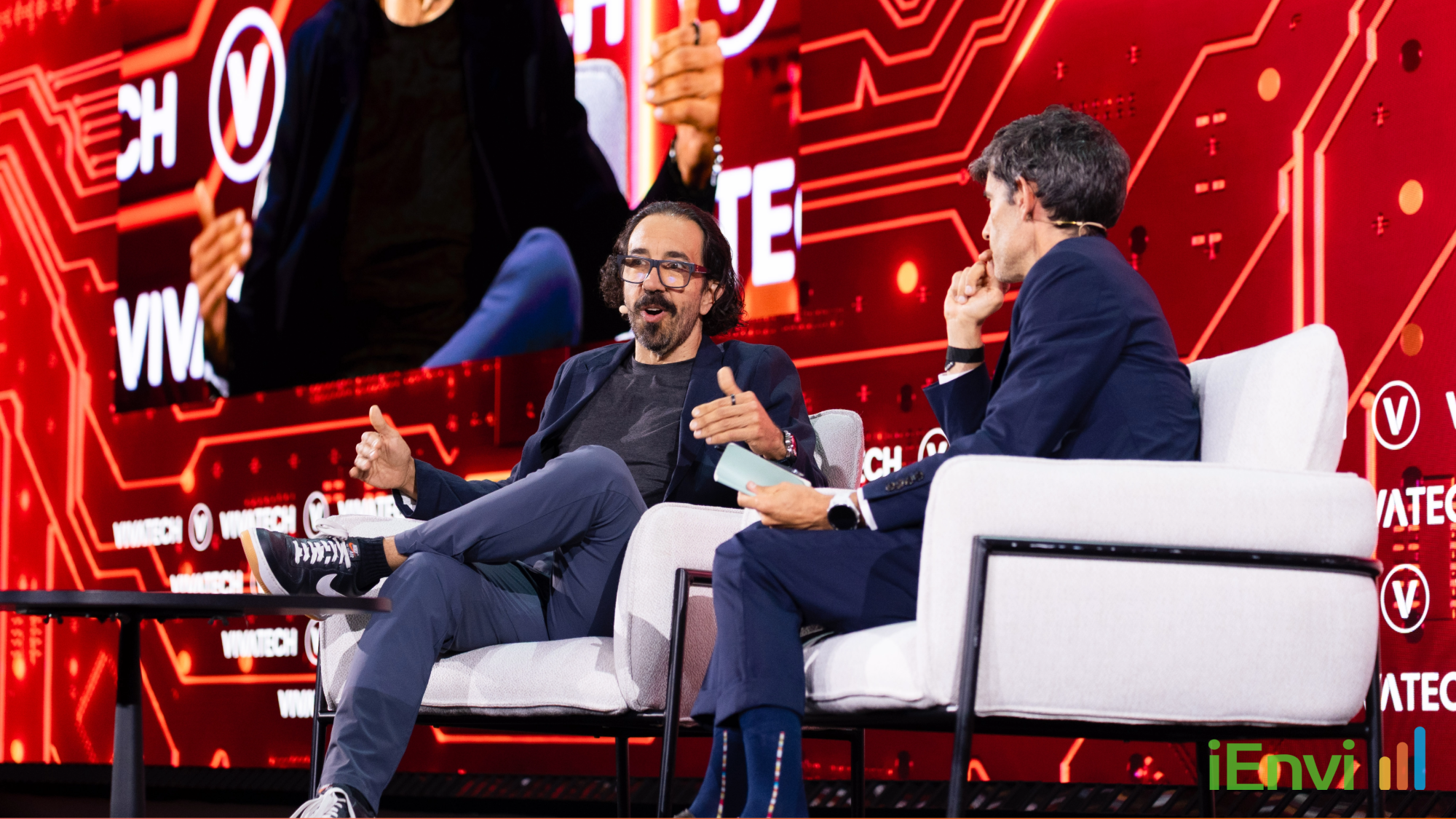
At the VivaTech conference in Paris, Peter DeSantis, Amazon’s Senior Vice President of AI, Silicon Development, and Quantum Computing, delivered a pointed and technically grounded assessment of where artificial intelligence actually stands. Speaking with Nick Thompson, CEO of The Atlantic, DeSantis argued that despite the extraordinary commercial momentum and investment flowing into generative AI, the industry is still at the very beginning of meaningful innovation. His core claim is direct: today’s AI systems need “a couple more orders of magnitude” of improvement in efficiency before the technology becomes genuinely transformative for enterprise operations and broader society.
This is a significant statement from someone who sits at the operational centre of one of the world’s largest cloud infrastructure providers. DeSantis is not a commentator or analyst. He is one of the principal architects of the physical and algorithmic infrastructure that runs large language models and enterprise AI workloads at global scale. When he describes the current state of transformer-based models as hitting efficiency and latency walls, he is speaking from direct engineering experience, not market speculation. That distinction matters enormously for businesses and professional services firms currently under pressure to adopt AI tools and demonstrate returns on investment.
For Australian professional services firms, including those operating across the environmental consulting, legal, planning, and engineering sectors, this assessment provides important calibration. The pressure to deploy AI solutions quickly and demonstrate competitive differentiation has been building for the past two years. DeSantis’s analysis offers a technically credible counterweight to that pressure, signalling that the infrastructure underpinning truly reliable, low-latency AI is still being built. Understanding the nature of the current technical constraints is essential for any organisation making medium to long-term decisions about AI integration.
Key details
DeSantis identified two interconnected technical barriers limiting the practical utility of current AI systems. The first is computational efficiency. He stated that the industry has seen approximately one order of magnitude improvement in model efficiency over the past one to two years, but that a further two orders of magnitude of improvement are required before AI becomes “truly interesting in any way, shape, or form.” To contextualise that scale, one order of magnitude represents a tenfold improvement. Two additional orders of magnitude means current systems would need to become roughly one hundred times more efficient than they are today before reaching the threshold DeSantis considers genuinely transformative.
The second barrier is latency, and this is where DeSantis introduced one of the most technically specific and commercially relevant details of the discussion. He argued that for natural human-to-AI collaboration to function effectively, models must operate on a 40-millisecond response clock. This figure is grounded in human neuroscience and communication research: 40 milliseconds is approximately the threshold at which humans process conversational cues including pauses, stammering, backchannelling, and subtle shifts in tone. Current cloud-dependent transformer architectures cannot meet this constraint. Token-generation bottlenecks in transformer models, which process and generate language sequentially through attention mechanisms, introduce latency that far exceeds 40 milliseconds in real-world enterprise deployments. This means that the vision of seamless, real-time human-AI collaboration remains technically out of reach under current infrastructure conditions.
DeSantis pointed to custom silicon as a critical part of the solution pathway. He described a hardware-software flywheel in which application-specific integrated circuits (ASICs), such as AWS Trainium2 and Graviton5, are co-designed with specific model architectures to achieve double the industry-average model FLOP (floating point operations per second) utilisation compared to general-purpose graphics processing units (GPUs). This co-design approach allows companies building what DeSantis called “world models” (systems that simulate physical environments and complex real-world conditions) to extract significantly more computational work per unit of energy and hardware cost. The shift away from generic GPU infrastructure toward purpose-built ASICs represents a structural change in how AI capability is delivered, not merely an incremental hardware upgrade.
Critically, DeSantis also made clear that new model architectures, not just new hardware, are required. Current transformer models rely heavily on attention mechanisms that create severe token-generation bottlenecks when sub-50-millisecond response times are required. Achieving the latency thresholds necessary for genuine human-AI collaboration will require architectural departures from the transformer paradigm that has dominated the field since 2017. DeSantis stated plainly that “we are just at the beginning of innovation at all layers of the stack,” which encompasses silicon design, model architecture, training methodology, and systems integration. He also reinforced that regardless of hardware progress, “humans are still going to be at the centre of our most complex innovations for the foreseeable future,” positioning skilled professionals as directors and validators of AI systems rather than passive users or displaced workers.
Australian context: AI adoption timelines and infrastructure planning for professional services firms
Australia’s professional services sector, including environmental consulting, law, engineering, and planning, has been navigating a period of intense pressure to adopt generative AI tools.
References and related sources
- Primary source: www.aboutamazon.com
- aboutamazon.com
- aboutamazon.com
How iEnvi can help
iEnvi integrates technology and data-driven approaches into environmental consulting. We monitor AI and technology developments that affect how environmental professionals deliver services to clients.
This is an iEnvi Machete news summary. Prepared by iEnvi to summarise the source article for environmental professionals tracking AI, data, and technology developments that affect consulting and project delivery.
Published: 18 Jun 2026
Need advice on this topic? Speak to an iEnvi expert at info@ienvi.com.au or 1300 043 684, or contact us online.
Need advice on this issue? iEnvi provides practical, senior-led environmental consulting across contaminated land, remediation, ecology and environmental risk.
Contaminated land advice Remediation services Discuss your site Talk to iEnvi