
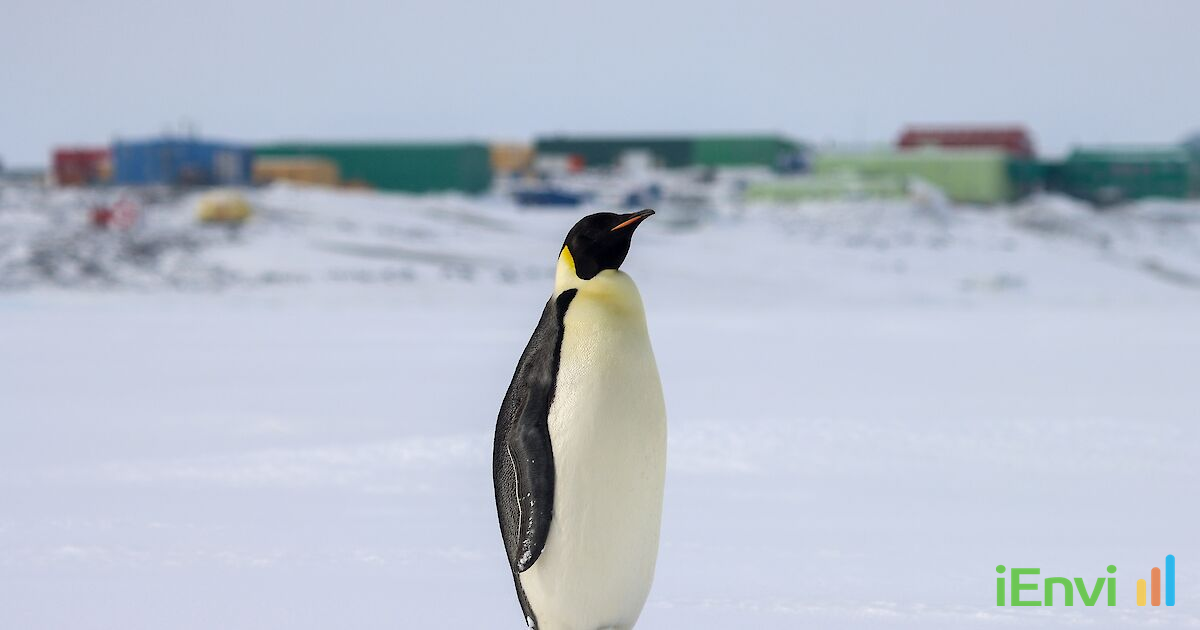
Overview of the Davis Station Infrastructure Upgrades
The Australian Antarctic Division (AAD) has secured environmental authorisation for the Davis Critical Infrastructure Works (DCIW), a major component of the broader Antarctic Infrastructure Renewal Program (AIRP). The authorisation was signed by the Delegate of the Minister for the Environment and Water on 26 June 2026 and publicly announced on 21 July 2026. The approval clears the path for a multi-year construction programme at Davis research station, one of Australia’s three permanent Antarctic stations, where ageing water, power, and mechanical services infrastructure will be systematically replaced to support continued long-term scientific operations in one of the world’s most ecologically sensitive environments.
The project is being delivered by the Antarctic Infrastructure Renewal (AIR) Alliance, a four-party arrangement comprising the AAD, Bouygues Construction Australia, Mott MacDonald Australia, and Stantec Australia. Procurement, logistics coordination, and pre-fabrication activities are currently underway in Australia. Cargo and personnel are scheduled to depart Hobart in October 2026, with on-site construction commencing in November 2026 and works programmed to continue through to 2032. The scale, duration, and geographic complexity of the project place it among the most logistically and environmentally demanding infrastructure programmes ever undertaken under Australian government administration.
For environmental professionals, particularly those working in contaminated land, remote site remediation, waste management, and impact assessment, this project represents a benchmark case study. It demonstrates how regulatory compliance frameworks operate at the intersection of Commonwealth domestic legislation and international treaty obligations, and how a closed-loop waste strategy can be practically engineered for a site with no conventional waste disposal infrastructure. The lessons extend well beyond Antarctica and are directly applicable to remote resource projects, legacy remediation programmes, and complex infrastructure delivery across Queensland, New South Wales, Victoria, and South Australia.
Key details of the Davis Critical Infrastructure Works approval
The environmental authorisation was granted under sub-section 12N(2) of the Antarctic Treaty (Environment Protection) Act 1980 (Cth), referred to throughout as the ATEP Act. This provision governs activities in the Antarctic Treaty area that have been assessed through an Initial Environmental Evaluation (IEE) and determined to have no more than a minor or transitory environmental impact. The IEE framework under the Antarctic Treaty system is the procedural mechanism by which proponents must demonstrate that proposed activities will not cause permanent, widespread, or irreversible harm to the Antarctic environment before any physical works can commence. Achieving this authorisation under the ATEP Act does not replace requirements under the Environment Protection and Biodiversity Conservation Act 1999 (Cth) (EPBC Act); rather, the two statutes operate concurrently, creating one of the most stringent dual-legislation environmental approval pathways applied to any Australian-administered project anywhere in the world.
The scope of the DCIW encompasses the replacement of end-of-life water supply, power generation and distribution, and mechanical services infrastructure at Davis station. Davis is located on the Ingrid Christensen Coast of Princess Elizabeth Land in East Antarctica, at approximately 68 degrees south latitude. Construction conditions at this latitude present extreme thermal, logistical, and biosecurity challenges. Average winter temperatures at Davis range below minus 20 degrees Celsius, and the station is accessible by sea only during the brief Antarctic summer window, typically between November and March. This constrains the annual construction season to approximately four to five months per year, which is why the programme extends across multiple seasons through to 2032.
A defining feature of the approved programme is the commitment to a fully closed-loop waste management strategy. All construction waste generated during the multi-year works will be returned to Australia for recycling or approved disposal. No waste material is to be left on the continent. Implementing this in practice requires meticulous inventory tracking throughout all construction phases, purpose-built containment systems to prevent biosecurity breaches during marine transport, and coordination of return logistics aligned with the constrained shipping schedule. The biosecurity dimension is critical: Antarctic environmental protection protocols prohibit the introduction of non-native biological material and equally prohibit leaving behind any matter that could affect the terrestrial or nearshore biological communities at or surrounding the station.
The IEE assessment process required by the Antarctic Treaty system evaluates not merely the immediate physical footprint of construction activities, but also long-term biological, physical, and aesthetic changes to the surrounding wilderness area. This includes assessment of noise and vibration impacts on wildlife, potential fuel and chemical spill pathways, dust and particulate dispersion, and disturbance to terrestrial communities including mosses, lichens, and invertebrates that colonise ice-free ground near the station. The requirement to evaluate aesthetic impacts on wilderness character is a consideration rarely applied with such rigour in domestic Australian environmental impact assessment and reflects the primacy given to preserving Antarctic wilderness values under the Protocol on Environmental Protection to the Antarctic Treaty, commonly referred to as the Madrid Protocol.
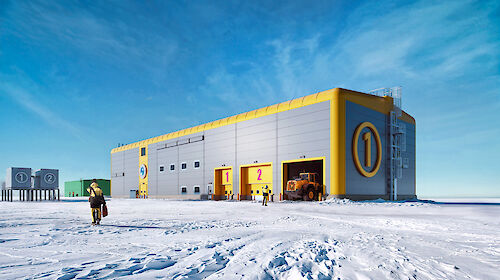
Australian regulatory context for Antarctic environmental approvals and remote site impact assessment
The regulatory framework governing the DCIW reflects a layered architecture that environmental practitioners in Australia’s domestic project sector rarely encounter in comparable form. At the international level, the Madrid Protocol — adopted in 1991 and entering into force in 1998 — establishes Antarctica as a natural reserve devoted to peace and science, and designates the Antarctic environment and its associated ecosystems as fundamental considerations in the planning and conduct of all activities. Australia’s domestic implementation of the Protocol is achieved primarily through the ATEP Act, which imposes authorisation requirements, environmental evaluation obligations, and prohibitions on activities likely to cause significant or lasting harm.
Sitting alongside this is the EPBC Act, which independently applies where Commonwealth actions may have a significant impact on matters of national environmental significance. For a project of the DCIW’s scale, both regimes engage simultaneously. This dual-track approval obligation means that project proponents must satisfy distinct assessment criteria under each statute, prepare documentation that meets the evidentiary standards of each regime, and maintain ongoing compliance reporting across both frameworks for the life of the works. The administrative burden this creates is substantial, and it underscores why the AAD’s project team and the AIR Alliance require dedicated environmental compliance capability throughout the programme’s multi-season duration.
For environmental professionals practising in Queensland, New South Wales, Victoria, or South Australia, the DCIW offers directly transferable lessons in how to structure environmental management plans for remote and logistically constrained sites, how to design waste tracking and return systems where no local disposal pathway exists, and how to integrate biosecurity risk management into construction planning and procurement. The project also illustrates the value of front-loading environmental evaluation work — the IEE process was completed prior to authorisation, meaning that environmental risk identification, mitigation design, and monitoring commitments were embedded in the project’s approved scope rather than retrofitted during delivery.
References and related sources
- Primary source: www.antarctica.gov.au
How iEnvi can help
iEnvi provides specialist consulting services relevant to this topic. Our team includes CEnvP Site Contamination Specialists with experience across contaminated land, groundwater, remediation, ecology, and regulatory compliance.
- iEnvi contaminated land investigation services
- iEnvi remediation and validation services
- iEnvi expert services and independent review services
This is an iEnvi Machete news summary. Prepared by iEnvi to summarise the source article for contaminated land, groundwater, remediation, approvals and site risk professionals.
Published: 23 Jul 2026
Need advice on this topic? Speak to an iEnvi expert at info@ienvi.com.au or 1300 043 684, or contact us online.
Need advice on this issue? iEnvi provides practical, senior-led environmental consulting across contaminated land, remediation, ecology and environmental risk.
Team credentials Site remediation Environmental management plans Contaminated land services Talk to iEnvi