
Overview
The Australian and Queensland Governments announced on 22 July 2026 that the Great Artesian Basin Rehabilitation Program (GABRP) saved 4,923 megalitres (ML) of groundwater over the 2025-26 financial year. This result was achieved through a jointly funded program involving Commonwealth and Queensland government contributions alongside industry partners and private landholders, and it represents one of the more consequential groundwater management outcomes recorded in Australia in recent years. For context, 4,923 ML is roughly equivalent to nearly five billion litres of freshwater returned to the basin system in a single 12-month period.
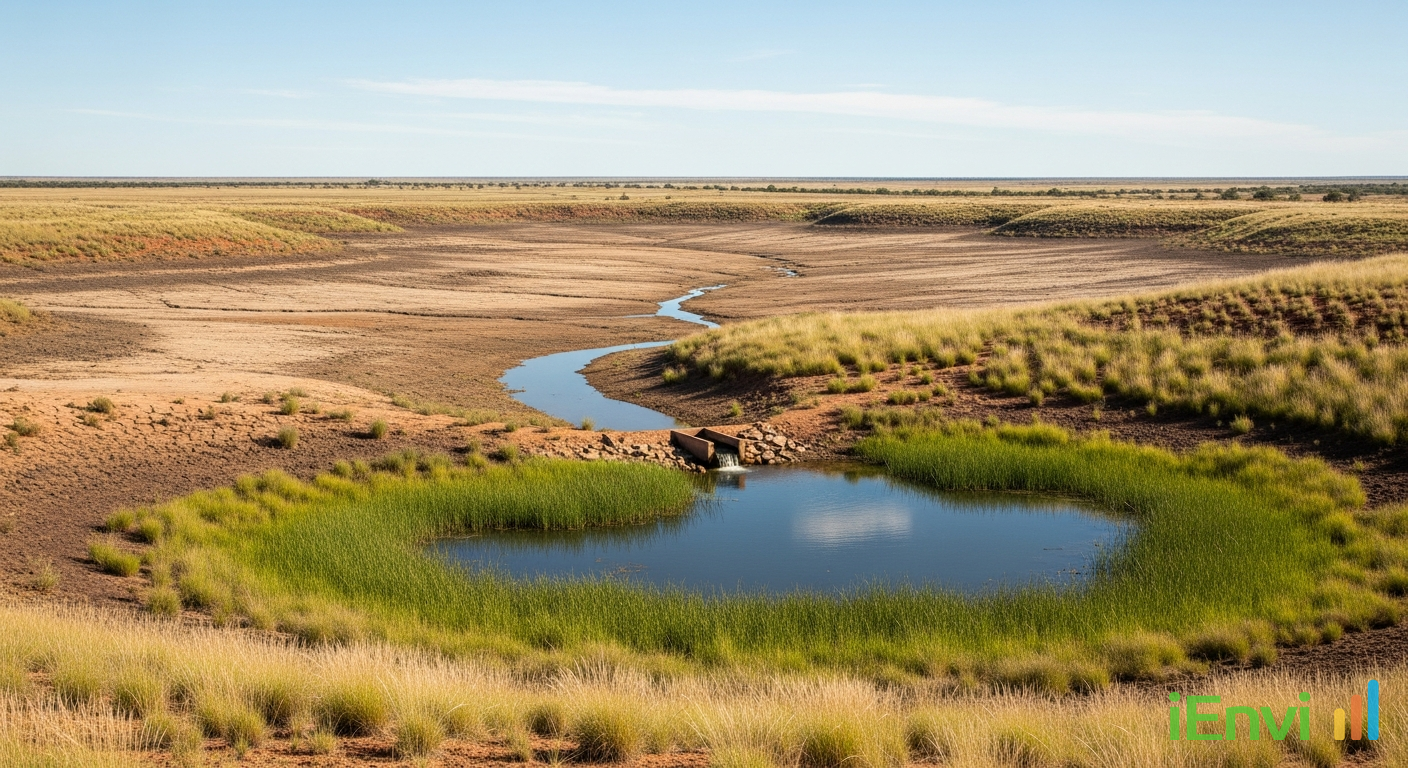
The Great Artesian Basin (GAB) is one of the largest and deepest freshwater aquifer systems in the world, underlying approximately 22% of the Australian continent across Queensland, New South Wales, South Australia, and the Northern Territory. Decades of uncontrolled bore flow and the use of open earthen drains caused significant pressure loss across the basin, drying out natural springs and reducing available water for both ecological and productive uses. The GABRP was established to reverse this decline through systematic bore rehabilitation and infrastructure replacement. The program’s cumulative results now demonstrate that the intervention is working at a meaningful scale.
For environmental professionals advising on projects in GAB-affected regions, this announcement carries direct technical and regulatory implications. Rising artesian pressure alters regional groundwater flow dynamics, changes baseline conditions relied upon in hydrogeological models, and creates compliance obligations for bore holders who have not yet acted. Ecological consultants must also take note: the natural springs supported by GAB discharge are listed as an endangered threatened ecological community under the Environment Protection and Biodiversity Conservation Act 1999 (EPBC Act), making them a Matter of National Environmental Significance (MNES) that can trigger federal assessment requirements for nearby development activities.
Key details of the 2025-26 GABRP results and program scope
Over the 2025-26 financial year, the GABRP delivered three measurable infrastructure outcomes: the rehabilitation of 30 bores, the installation of seven controlled watering systems, and the replacement of 150 kilometres of open bore drains with enclosed, watertight piping systems. The water saving attributable to these works alone is 4,923 ML per annum. Looking ahead, the program has committed $9.7 million in funding for 36 new projects in the following 12 months, with those works projected to save an additional 4,960 ML per year once completed.
The cumulative lifetime achievements of the GABRP place these annual figures in perspective. Since the program’s inception, 809 uncontrolled artesian bores have been rehabilitated, and more than 15,542 kilometres of open bore drains have been replaced with piped systems. The total annualised water saving attributable to GABRP works now sits at approximately 232,000 ML per year. This volume of water, when retained within the aquifer system rather than lost to evaporation and uncontrolled surface discharge, has been sufficient to restore artesian pressure across portions of the basin, bringing previously ceased-to-flow bores and natural mound springs back into active discharge.
The regulatory framework governing bore management in Queensland is the Water Plan (Great Artesian Basin and Other Regional Aquifers) 2017 (GABORA), made under the Water Act 2000 (Qld). GABORA imposes a hard compliance deadline: all uncontrolled flowing bores must be controlled, and all open bore drains must be replaced with watertight delivery systems by September 2032. This is not an aspirational target but a statutory obligation. Bore holders who have not yet undertaken these works face regulatory exposure as the deadline approaches, with fewer than seven years remaining from the date of this announcement.
GABORA also contains a commercial mechanism that environmental advisors should be communicating to industrial and agricultural clients. Under Section 51 of the Water Plan (and the detailed provisions of Part 4 Division 3, Sections 52 to 54), a proponent who privately funds bore watertightness works is eligible to apply for a water savings licence for at least 30% of the volumetric saving achieved by those works. This means that a landholder or industrial operator who invests in compliant infrastructure can retain a measurable water entitlement as a direct return on that capital expenditure, which fundamentally changes the cost-benefit calculus for bore rehabilitation projects.
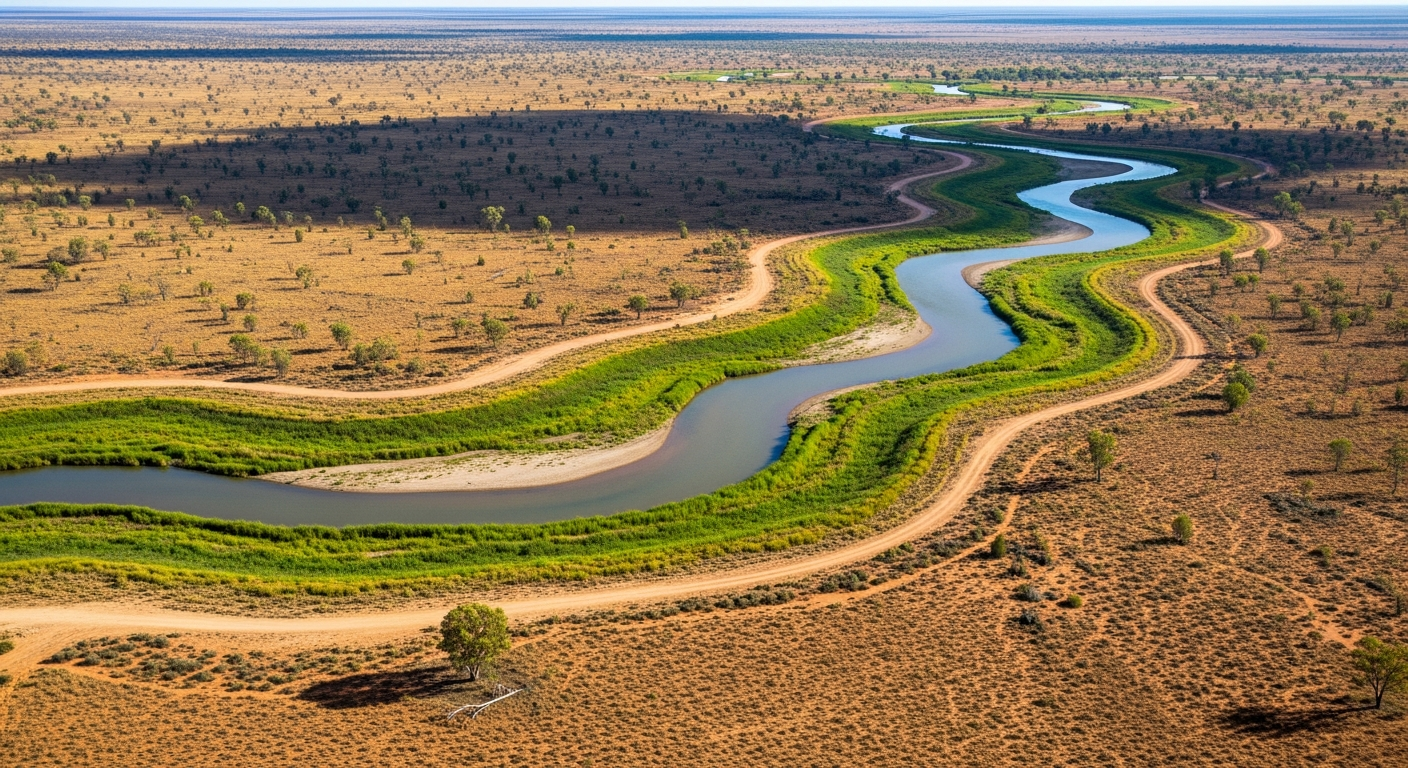
Australian context: GABRP implications for groundwater-dependent ecosystems and regulatory compliance across QLD, NSW and SA
The ecological significance of the GABRP cannot be separated from Australia’s federal environmental law. The community of native species dependent on natural discharge of groundwater from the Great Artesian Basin has been listed as an endangered threatened ecological community under the EPBC Act since 2001. This listing means that any project or action likely to have a significant impact on natural GAB spring communities constitutes an impact on a Matter of National Environmental Significance and may require referral to the Commonwealth Minister for the Environment under Part 7 of the EPBC Act. Artesian springs support highly endemic fauna and flora, including species found nowhere else on Earth, and their ecological function is entirely dependent on sustained artesian pressure. The GABRP works, by restoring that pressure, are the primary mechanism through which these communities are being protected and, in some cases, recovered.
For hydrogeologists preparing regional groundwater models in support of Environmental Impact Statements (EIS), mining leases, and other major approvals in GAB-overlying regions, the GABRP results carry direct technical consequences. Baseline pressure conditions and groundwater flow dynamics are shifting as rehabilitation works take effect across the basin. Models calibrated against historical data may no longer accurately represent current or future conditions without incorporating the annualised water savings and pressure recovery trends attributable to the GABRP. Environmental practitioners should ensure that groundwater assessments for projects in affected areas account for these changes, and that referral decisions under the EPBC Act appropriately consider proximity to and potential impacts on natural GAB spring communities listed as a threatened ecological community.
References and related sources
- Primary source: www.dlgwv.qld.gov.au
- beefcentral.com
- https://minister.dcceew.gov.au/watt/media-releases/joint-media-release-4923-ml-w
How iEnvi can help
iEnvi provides specialist consulting services relevant to this topic. Our team includes CEnvP Site Contamination Specialists with experience across contaminated land, groundwater, remediation, ecology, and regulatory compliance.
- iEnvi groundwater services
- iEnvi remediation and validation services
- iEnvi expert services and independent review services
This is an iEnvi Machete news summary. Prepared by iEnvi to summarise the source article for contaminated land, groundwater, remediation, approvals and site risk professionals.
Published: 23 Jul 2026
Need advice on this topic? Speak to an iEnvi expert at info@ienvi.com.au or 1300 043 684, or contact us online.
Need advice on this issue? iEnvi provides practical, senior-led environmental consulting across contaminated land, remediation, ecology and environmental risk.
Team credentials Contaminated land services Remediation services Groundwater services Talk to iEnvi