
Overview
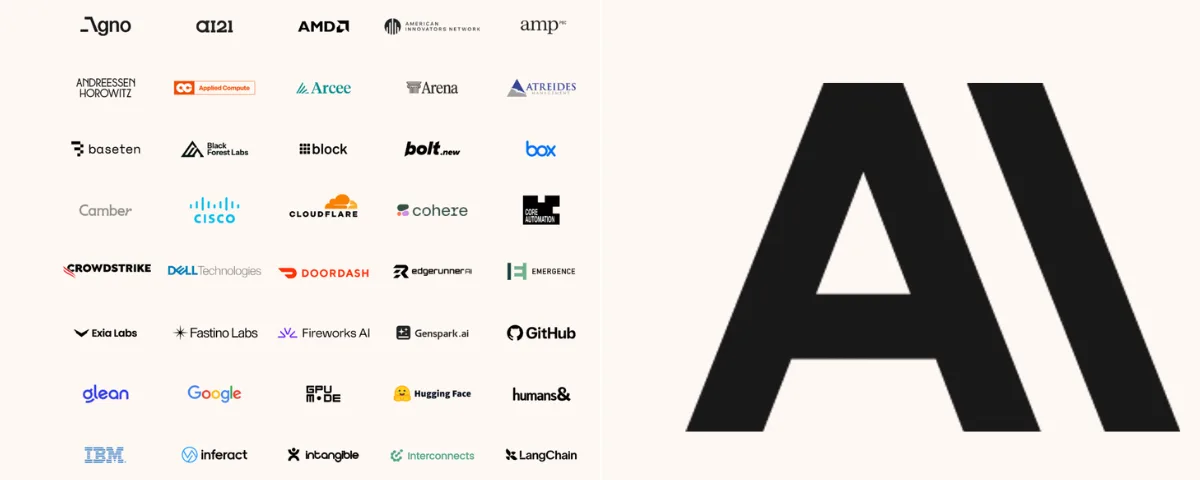
On 24 July 2026, a coalition of 25 prominent technology companies, investors, and research organisations published a joint open letter to Washington titled “Open Weights and American AI Leadership.” The letter urges policymakers to reject sweeping restrictions on downloadable open-weight AI models, arguing that open ecosystems are critical for national security, scientific innovation, and domestic economic competitiveness. Within 48 hours, the signatory list had more than doubled to over 50 organisations, and it subsequently surpassed 75 signatories spanning the full technology stack, including NVIDIA, Meta, Microsoft, Google, OpenAI, SpaceX, AMD, Cisco, Cloudflare, Hugging Face, and the Linux Foundation.
The single most significant detail to emerge from the episode is not the letter itself, but who refused to sign it. Anthropic, the San Francisco-based AI safety company and maker of the Claude model family, is the only major United States frontier AI laboratory that declined to join the coalition. That refusal has triggered a public and ideological schism within the industry, drawing sharp criticism from prominent Silicon Valley figures who argue that Anthropic is attempting to use government regulation to disadvantage open-source competitors that it cannot defeat on commercial terms alone.
For professional services firms, enterprise technology buyers, and technical consultants in Australia and internationally, this policy contest is not abstract. The outcome will determine whether organisations can continue to deploy self-hosted, fine-tuned, open-weight AI models within their own infrastructure or whether they will be progressively pushed toward complete dependency on proprietary, closed commercial API providers. That is a consequential fork in the road for any organisation that has begun integrating AI into its technical workflows, data pipelines, or advisory services.
Key details of the open-weights letter and the Anthropic holdout
The “Open Weights and American AI Leadership” letter was first published on 24 July 2026 with 25 signatories and reached over 75 signatories by 27 July 2026. The coalition’s core argument is that open-weight models, meaning AI models whose trained numerical parameters are made publicly downloadable for inspection, modification, and local deployment, are a national security and innovation asset rather than a risk. NVIDIA CEO Jensen Huang used his first-ever public posts on the X platform to promote the initiative, writing: “Attackers have frontier AI. Defenders need a frontier AI ecosystem, blending the best of open and closed models, with the global community collaborating to amplify its power.” Venture capitalist and former United States AI adviser David Sacks was more pointed, writing: “The entire tech industry (save for Anthropic) has come out in favour of open source AI. They won’t stop until they kneecap open source. The rest of the industry needs to watch these guys like a hawk.”
Anthropic’s position is not without a coherent technical rationale. The company has publicly advocated for capability-based testing thresholds, arguing that AI models exceeding specific compute limits, measured in floating-point operations (FLOPs) used during training, should be barred from open release. The argument is that once model weights are published and downloaded by millions of users, the developer permanently relinquishes the ability to enforce safety guardrails, apply behavioural patches, or revoke access in response to discovered vulnerabilities or misuse. Critics of this position, including many of the coalition signatories, argue the opposite: that open weights are themselves a security mechanism because they allow enterprise developers and researchers to audit model internals, run independent vulnerability testing, and deploy targeted patches without waiting on a single vendor’s release schedule.
The Fable 5 precedent is central to understanding why this debate escalated when it did. In June 2026, the United States government issued an unprecedented model-specific export control order requiring Anthropic to bar foreign nationals from accessing its Fable 5 and Mythos 5 models. Because implementing nationality-based access gating at the cloud API layer proved operationally impractical for Anthropic, the company was forced to switch off both models globally rather than selectively. That episode illustrated in concrete terms the fragility that closed, API-dependent model access creates for enterprise customers anywhere in the world. If a model is delivered only through a cloud API, a single regulatory or geopolitical decision by a foreign government can eliminate access overnight with no warning and no local fallback.
The timing of the letter also coincides with escalating disputes over AI model distillation, a process by which smaller, more efficient models are trained using outputs generated by larger frontier models. Several frontier lab operators, including Anthropic, have pursued legal and policy avenues to restrict distillation from their proprietary models. Open-weight advocates argue that such restrictions, if combined with limits on publishing weights, would create a regime in which a small number of proprietary vendors control the entire trajectory of applied AI development, with no viable independent alternative for organisations that require data sovereignty or specialised fine-tuning.
Australian context: AI procurement, data sovereignty, and emerging technology governance
Australia does not yet have a comprehensive federal AI regulatory framework equivalent to the European Union’s AI Act, which came into force in August 2024 and began applying high-risk system obligations from August 2026. The Australian Government’s approach to date has been largely voluntary, centred on the Department of Industry, Science and Resources’ voluntary AI Safety Standard.
References and related sources
- Primary source: thenextweb.com
- aifront-page.com
- nvidia.com
- kingy.ai
- socket.dev
How iEnvi can help
iEnvi integrates technology and data-driven approaches into environmental consulting. We monitor AI and technology developments that affect how environmental professionals deliver services to clients.
This is an iEnvi Machete news summary. Prepared by iEnvi to summarise the source article for environmental professionals tracking AI, data, and technology developments that affect consulting and project delivery.
Published: 28 Jul 2026
Need advice on this topic? Speak to an iEnvi expert at info@ienvi.com.au or 1300 043 684, or contact us online.
Need advice on this issue? iEnvi provides practical, senior-led environmental consulting across contaminated land, remediation, ecology and environmental risk.
Contaminated land advice Remediation services Discuss your site Talk to iEnvi