
Overview
ANZ will no longer directly finance new or expanded upstream oil and gas projects, or new midstream infrastructure built solely to serve them. The bank set out the position in its 2026 Annual Report, lodged with the Australian Securities Exchange (ASX) on Monday, 9 November 2026. The updated climate-related policy states that ANZ “will not directly finance new or expansion upstream oil and gas projects … or new midstream infrastructure dedicated solely to new upstream oil and gas projects (such as new transmission pipelines)”. ANZ has also stopped onboarding new-to-bank upstream oil and gas clients. RenewEconomy reported the change on 9 November 2026, in an article by Sophie Vorrath.
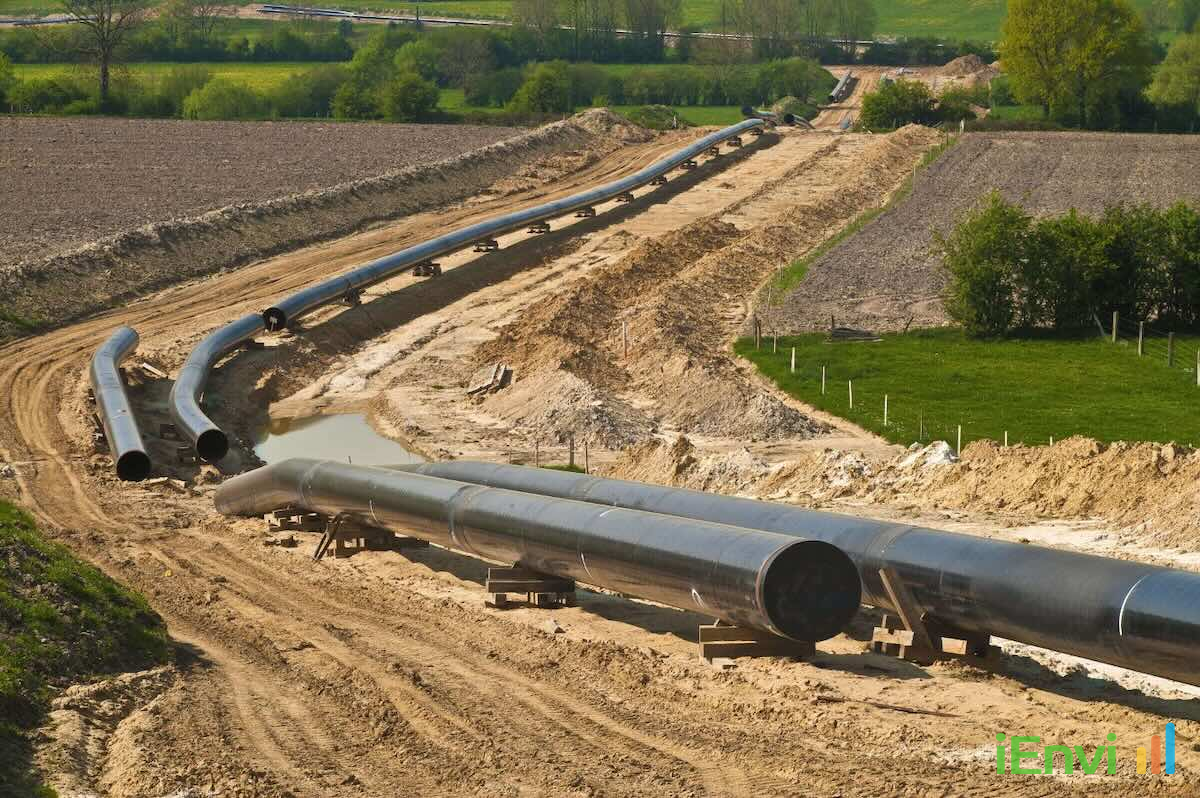
ANZ is the last of Australia’s Big Four banks to adopt explicit financing exclusions of this kind. Commonwealth Bank, National Australia Bank (NAB) and Westpac already have them. The most immediate project affected is APA Group’s proposed 1,561-kilometre transmission pipeline, estimated to cost about $10 billion. It would carry gas from the Beetaloo Sub-basin in the Northern Territory to Queensland LNG export terminals and East Coast markets. Market Forces says that with all four major banks withdrawing direct debt, Beetaloo export pipeline infrastructure is now effectively unbankable through the primary domestic lenders.
The decision matters to Australian environmental professionals and their clients beyond the gas sector. Developers, lawyers and councils should note the distinction it exposes. An environmental approval confirms that a project may proceed lawfully. It does not confirm that the project can raise capital. Lenders now apply their own climate, water and closure tests, and those tests can decide whether an approved project is built.
Key details
ANZ’s exclusion targets the purpose of the funds, not the sector as a whole. As reported, it covers three things:
- direct finance for new or expansion upstream oil and gas projects
- new midstream infrastructure dedicated solely to new upstream projects, with new transmission pipelines given as the example
- onboarding new-to-bank upstream oil and gas clients
Existing clients, existing assets and general corporate facilities are not necessarily caught by this wording. Lender due diligence will therefore focus on what a facility will actually fund.
The Beetaloo Sub-basin is an onshore formation estimated to hold about 14.2 trillion cubic metres (500 trillion cubic feet) of gas. Development would rely on hydraulic fracturing, and the gas would need new transmission infrastructure to reach export and domestic markets. The proposed APA pipeline is that link. Without bank debt from the four majors, the project would have to find capital from offshore lenders, private credit, equity or government sources.
ANZ’s exclusion sits within its climate-related policy, and emissions are a central issue in the debate over Beetaloo. Estimates cited in public discussion of the basin put lifecycle emissions from development as high as 1.4 billion tonnes of carbon dioxide equivalent (CO₂-e), although figures vary with assumptions about the scale of development. These figures cover Scope 1, 2 and 3 emissions, which means combustion of the gas by end users is counted alongside emissions from production and processing. For a bank that must report financed emissions, an exposure of that size is a reporting and credit risk.
The disclosure regime gives banks a direct reason to act. AASB S2 Climate-related Disclosures applies under the Corporations Act 2001 (Cth) and is being phased in. The largest entities (Group 1) must report for financial years beginning on or after 1 January 2025. Entities must disclose any climate transition plan they have and report Scope 3 emissions. For banks, Scope 3 includes financed emissions, although Scope 3 reporting has relief in the first reporting year. Because the regime is mandatory, climate exposure is more likely to be treated as part of credit risk assessment than as a voluntary sustainability commitment.
Australian context
Beetaloo is one of the most closely regulated onshore gas regions in Australia. Exploration is governed by:
- the Petroleum Act 1984 (NT)
- the Petroleum (Environment) Regulations 2016 (NT)
- the Environment Protection Act 2019 (NT)
- the Code of Practice: Onshore Petroleum Activities in the Northern Territory
Operators must hold approved Environment Management Plans. The Code of Practice came out of the 2018 Scientific Inquiry into Hydraulic Fracturing in the Northern Territory, known as the Pepper Inquiry. The framework includes regional baseline work under the Strategic Regional Environmental and Baseline Assessment (SREBA) program, together with well-specific groundwater monitoring and geochemical scrutiny.
Commonwealth law also applies. The Environment Protection and Biodiversity Conservation Act 1999 (Cth) (EPBC Act) protects listed threatened species and ecological communities under sections 18 and 18A. Sections 24D and 24E, known as the “water trigger”, apply to coal seam gas, other unconventional gas (including shale gas, following 2023 amendments) and large coal mining developments that affect water resources. Emissions from large facilities are reported under the National Greenhouse and Energy Reporting Act 2007 (Cth) (NGER Act). The Safeguard Mechanism sets baselines for facilities above its coverage threshold, with specific settings for new gas fields. Proponents face these layers before any financier assesses the project.
The ANZ decision shows that passing through these regulatory layers does not settle the commercial question. A project can hold its NT approvals, address EPBC matters and plan for Safeguard Mechanism compliance, and still be unable to borrow from the domestic majors. A similar distinction applies in contaminated land practice. Consultants routinely assess sites against the National Environment Protection (Assessment of Site Contamination) Measure 1999, as amended in 2013 (NEPM 2013), and compare groundwater and surface water results with the Australian and New Zealand Guidelines for Fresh and Marine Water Quality (ANZG 2018). Meeting those criteria supports regulatory sign-off, but lenders, purchasers and insurers often carry out their own environmental due diligence and can set conditions of their own.
References and related sources
- Primary source: reneweconomy.com.au
- reneweconomy.com.au
- bsky.app
How iEnvi can help
iEnvi provides specialist consulting services relevant to this topic. Our team includes CEnvP Site Contamination Specialists with experience across contaminated land, groundwater, remediation, ecology, and regulatory compliance.
- iEnvi groundwater services
- iEnvi remediation and validation services
- iEnvi expert services and independent review services
This is an iEnvi Machete news summary. Prepared by iEnvi to summarise the source article for contaminated land, groundwater, remediation, approvals and site risk professionals.
Published: 09 Nov 2026
Need advice on this topic? Speak to an iEnvi expert at info@ienvi.com.au or 1300 043 684, or contact us online.
Need advice on this issue? iEnvi provides practical, senior-led environmental consulting across contaminated land, remediation, ecology and environmental risk.
Team credentials Contaminated land services Remediation services Groundwater services Talk to iEnvi