
Overview
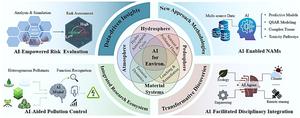
New research published in the journal Artificial Intelligence and Environment outlines how machine learning models are transforming the environmental consulting industry, shifting contaminated land assessment from reactive field sampling toward predictive precision. The study, published under DOI 10.66178/aie-0026-0004, describes the transition from static conceptual site models to dynamic, data-driven frameworks that can identify hidden contamination sources and optimise remediation strategies in real time.
Key details
The research paper examines several specific applications of artificial intelligence in contaminated land practice. Traditional approaches to site assessment rely on phased investigation programs: desktop studies followed by intrusive sampling, laboratory analysis, and iterative refinement of conceptual site models. Each phase generates data, but the analysis is typically manual and constrained by the number of data points collected during each round of fieldwork.
Machine learning algorithms change this dynamic fundamentally. By processing historical monitoring data alongside continuous sensor inputs, these models can identify patterns in contaminant behaviour that manual analysis would miss. For groundwater contamination, this means the ability to track plume migration in near-real time, predict future plume extent, and identify contamination sources that may not be apparent from conventional sampling networks.
The paper highlights several practical applications:
- Dynamic Conceptual Site Models: Rather than producing a static representation that is updated only after each sampling round, AI-integrated models function dynamically, continuously refining the understanding of site conditions as new data becomes available.
- Contamination source identification: Machine learning algorithms can analyse correlations across large datasets to pinpoint previously unidentified contamination sources, including diffuse sources that produce signatures too subtle for conventional analysis.
- Remediation optimisation: Predictive models allow remediation engineers to target intervention points more precisely. For in situ chemical oxidation (ISCO), this means optimising injection locations, reagent volumes, and treatment timing. For monitored natural attenuation (MNA), predictive models can forecast the timeframe required to meet regulatory criteria with greater confidence.
- Risk assessment refinement: Probabilistic modelling using AI can improve the accuracy of human health and ecological risk assessments by better characterising exposure pathways and receptor behaviour.
Australian context
Australian contaminated land practice is governed by the National Environment Protection (Assessment of Site Contamination) Measure 1999 (amended 2013), commonly referred to as the ASC NEPM. The NEPM establishes the framework for site investigation, risk assessment, and remediation across all Australian jurisdictions. While the NEPM does not yet specifically address the integration of AI tools, several aspects of the framework are well suited to enhancement through machine learning approaches.
The development of conceptual site models is a central requirement of the NEPM. Schedule A of the NEPM requires that conceptual site models be progressively refined as new information becomes available. AI-driven dynamic models align naturally with this requirement, providing a mechanism for continuous refinement that goes beyond what is achievable through periodic manual updates.
State regulators including the NSW EPA, Victorian EPA, and Queensland DES are increasingly encouraging the use of advanced data analytics in site assessment. The NSW EPA’s contaminated land management guidelines, for example, emphasise the importance of robust data analysis in supporting risk-based decision making. As AI tools become more accessible and validated, it is likely that regulators will begin to expect their use in complex site assessments, particularly for large or long-duration projects such as gasworks remediation, legacy industrial sites, and PFAS investigations.
The Australian environmental consulting sector is also facing a skills challenge. The integration of data science capabilities with traditional hydrogeology and contaminated land expertise requires investment in training and recruitment. Firms that develop these capabilities early will be better positioned to deliver the sophisticated assessments that regulators and clients are beginning to demand.
Practical implications
Environmental consultants and remediation practitioners should consider the following:
- Existing long-term monitoring datasets represent a significant untapped resource. Applying machine learning analysis to historical groundwater monitoring data can reveal trends and patterns that inform more targeted and cost-effective remediation strategies.
- Consultants preparing detailed site investigations for complex contaminated sites should evaluate whether AI-assisted data analysis can improve the efficiency of their sampling programs and reduce the number of investigation phases required to characterise the site.
- Remediation engineers should explore how predictive modelling can optimise the design and operation of active remediation systems, reducing reagent consumption, energy use, and overall project costs.
- Firms should invest in building data science capabilities alongside traditional environmental science expertise, either through training existing staff or recruiting specialists with relevant skills.
- When presenting AI-enhanced findings to regulators, it is important to maintain transparency about the models used, their limitations, and how they complement rather than replace conventional investigation and assessment methods.
References and related sources
- EurekAlert: Artificial intelligence reshaping environmental research (primary source)
- DOI: 10.66178/aie-0026-0004 – Published in Artificial Intelligence and Environment
- iEnvi LinkedIn discussion on this topic
How iEnvi can help
iEnvi combines deep expertise in contaminated land assessment and remediation with an understanding of emerging data-driven approaches. Our team can help you leverage advanced analytical methods to improve site characterisation, optimise remediation performance, and deliver more robust risk assessments.
Our relevant services include contaminated land assessment using advanced investigation and analytical methods, remediation design and optimisation for complex sites, and expert witness services for contaminated land disputes requiring rigorous technical analysis.
This is an iEnvi Machete news summary. Prepared by iEnvi to summarise the source article for contaminated land, groundwater, remediation, approvals and site risk professionals.
Need advice on this topic? Speak to an iEnvi expert at info@ienvi.com.au or 1300 043 684, or contact us online.
Need advice on this issue? iEnvi provides practical, senior-led environmental consulting across contaminated land, remediation, ecology and environmental risk.
DSI services Ecological risk assessment Contaminated land advice Remediation services Talk to iEnvi