

Overview
On 31 March 2026, the Australian Securities and Investments Commission (ASIC), in partnership with the Australian Accounting Standards Board (AASB), released the first tranche of official e-learning guidance modules to support companies preparing for Australia’s mandatory sustainability reporting regime. The release covers three foundational modules: the core legislative requirements under the Corporations Act 2001 (Cth), the fundamentals of climate change reporting, and the disclosure of climate-related physical risks. This is not preparatory or aspirational material. It is the regulatory baseline that ASIC will use when assessing compliance, and it is directed explicitly at Group 2 and Group 3 entities who are now approaching their mandatory commencement dates.
The significance of this release extends well beyond corporate finance teams and company secretaries. The gap between site-level environmental data and corporate financial reporting is closing faster than many practitioners anticipated. Physical climate risk assessments, groundwater vulnerability analyses, coastal inundation modelling, and contaminated land risk characterisations are now directly relevant inputs to financial disclosures that will be scrutinised by auditors and regulators. Environmental consultants, ESG practitioners, property developers, lawyers advising on due diligence, and councils with significant asset portfolios all have a direct stake in understanding what this guidance requires.
The rollout is structured across three entity groups, with Group 1 already captured and reporting underway. The ASIC and AASB modules released on 31 March 2026 are timed specifically to give Group 2 and Group 3 entities a meaningful preparation window before their respective deadlines. Given the data collection, systems integration, and expert assessment work required to meet the standard, that window is considerably shorter than the calendar dates suggest.
Key details
Australia’s mandatory sustainability reporting framework is structured under amendments to the Corporations Act 2001 (Cth) and gives effect to the AASB S2 Climate-related Disclosures standard, which is modelled closely on the International Sustainability Standards Board’s IFRS S2. Group 1 entities, which are the largest listed and unlisted companies, commenced reporting for financial years beginning on or after 1 January 2025. Group 2 entities must commence for financial years beginning on or after 1 July 2026. Group 3 entities follow for financial years beginning on or after 1 July 2027. ASIC’s Regulatory Guide 280 (Sustainability Reporting) provides the overarching compliance framework within which these modules sit.
Group 2 entities are generally those meeting at least two of three size thresholds: consolidated revenue of $200 million or more, consolidated gross assets of $500 million or more, or 500 or more employees. Group 3 captures smaller entities, including a broader range of registered companies and other reporting entities that will be drawn into the regime progressively. The three guidance modules released on 31 March 2026 address: the legislative obligations under the Corporations Act 2001 and how they interact with AASB S2; the conceptual foundations of climate-related financial reporting including scenario analysis and governance disclosures; and, critically for environmental practitioners, the specific requirements for identifying, measuring, and disclosing climate-related physical risks to assets and operations.
The physical risk module is of particular technical relevance. AASB S2 requires entities to disclose climate-related physical risks across two categories: acute physical risks, which include extreme weather events such as cyclones, floods, and bushfires; and chronic physical risks, which include long-term shifts in temperature, sea level rise, and changes to precipitation patterns. Entities must assess these risks against both a low-emissions scenario and a high-emissions scenario, typically aligned with a global average temperature increase of 1.5 degrees Celsius and 4.0 degrees Celsius respectively above pre-industrial levels. The standard requires that these assessments be based on defensible, documented data and methodology, not qualitative assertions. This is the element that brings environmental site assessment, contaminated land characterisation, and climate modelling directly into the financial reporting chain.
ASIC has been explicit that the good faith compliance provisions within the framework, which provide some protection for entities that make genuine but imperfect early disclosures, are not an indefinite shield. The relief provisions are transitional and will tighten as the regime matures. Entities that fail to invest in building genuine data infrastructure and assessment capability during the preparation window will find themselves exposed as those provisions are wound back. ASIC has confirmed it will prioritise monitoring of disclosures for completeness and accuracy, with enforcement action available under the Corporations Act 2001 for misleading or deceptive sustainability statements.
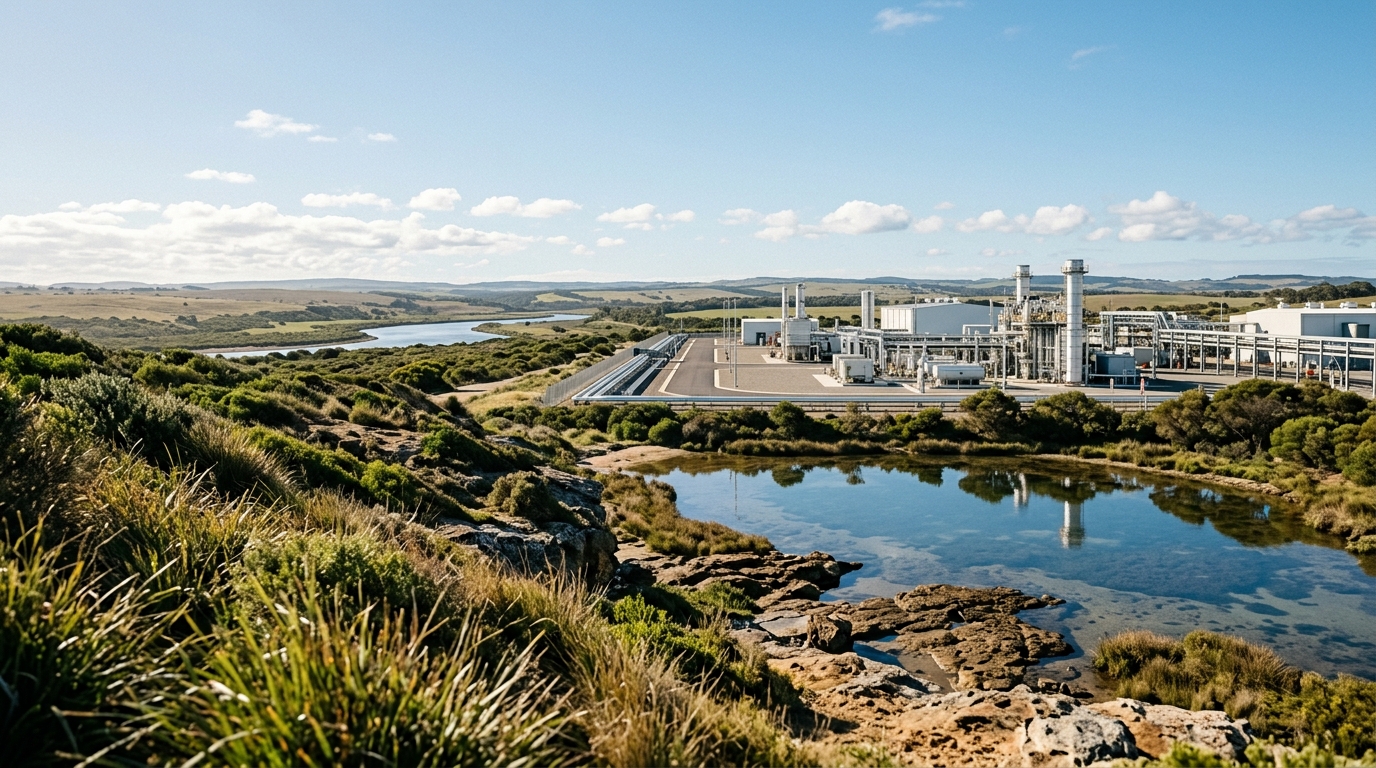
Australian context: mandatory climate disclosure obligations under the Corporations Act 2001 and AASB S2
Australia’s mandatory sustainability reporting framework is among the most comprehensive in the Asia-Pacific region and draws directly from the IFRS S2 standard developed by the International Sustainability Standards Board. Unlike voluntary ESG reporting frameworks such as the Task Force on Climate-related Financial Disclosures (TCFD) or CDP, this regime carries the full force of the Corporations Act 2001 (Cth). That distinction is critical. Voluntary frameworks have historically allowed entities to describe physical climate risk in general terms with minimal methodological rigour. Under AASB S2, that approach is no longer available. [Article incomplete — source text required to complete this section.]
Background and context
Headline: ASIC Launches Official Regulatory Guidance and Modules to Prepare Companies for Mandatory Sustainability Reporting
On 31 March 2026, the Australian Securities and Investments Commission (ASIC), in partnership with the Australian Accounting Standards Board (AASB), released its first tranche of official guidance modules to help companies prepare for Australia’s new mandatory sustainability reporting regime. The first three modules detail the core legislative requirements under the Corporations Act 2001, the fundamentals of climate change reporting, and the disclosure of climate-related physical risks. While Group 1 entities are already captured, ASIC has explicitly targeted this release at Group 2 and Group 3 entities to ensure they begin building compliance capability ahead of their respective commencement dates.
Why it matters for environmental professionals and their clients:
The rollout of mandatory climate disclosures is no longer a future horizon—it is actively phasing in. Group 2 entities must commence sustainability reporting for financial years beginning on or after 1 July 2026, with Group 3 following on 1 July 2027. For environmental consultants and ESG practitioners, these ASIC/AASB modules provide the exact regulatory baseline that regulators will use to assess compliance. Practitioners can use this guidance to help SME clients audit their current environmental data collection, assess their physical climate risks, and align their Conceptual Site Models (CSMs) and ESG frameworks with the AASB S2 Climate-related Disclosures standard before the regulatory deadlines hit.
References and related sources
- Primary source: www.asic.gov.au
- https://asic.gov.au/about-asic/news-centre/news-items/asic-launches-e-learning-e
How iEnvi can help
iEnvi provides specialist consulting services relevant to this topic. Our team includes CEnvP Site Contamination Specialists with experience across contaminated land, groundwater, remediation, ecology, and regulatory compliance.
- iEnvi groundwater services
- iEnvi remediation and validation services
- iEnvi expert services and independent review services
This is an iEnvi Machete news summary. Prepared by iEnvi to summarise the source article for contaminated land, groundwater, remediation, approvals and site risk professionals.
Published: 04 Apr 2026
Need advice on this topic? Speak to an iEnvi expert at info@ienvi.com.au or 1300 043 684, or contact us online.
Need advice on this issue? iEnvi provides practical, senior-led environmental consulting across contaminated land, remediation, ecology and environmental risk.
Team credentials Contaminated land services Remediation services Groundwater services Talk to iEnvi