
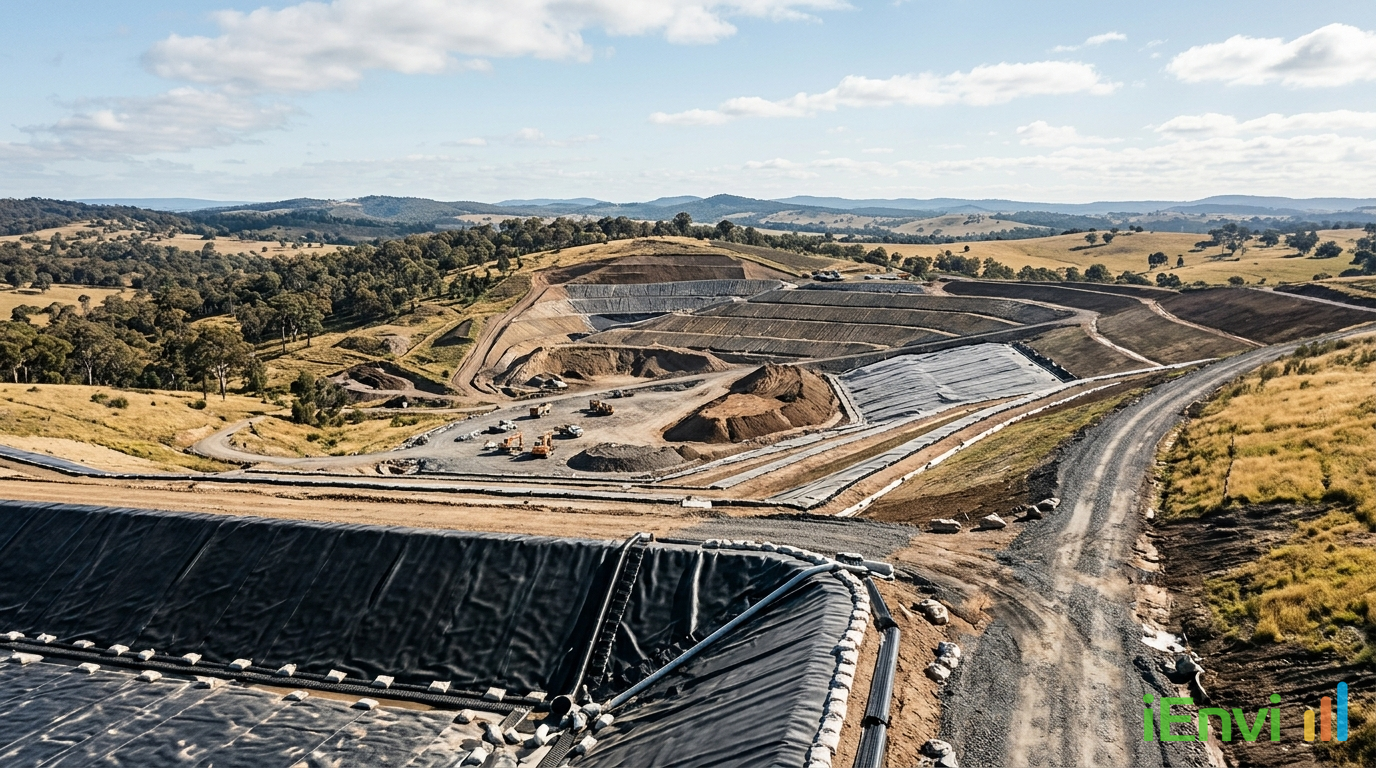
NSW EPA Regulatory Action at Woodlawn Landfill
On 3 April 2026, the NSW Environment Protection Authority issued a prevention notice to Veolia Environmental Services requiring immediate corrective action at the Woodlawn Landfill near Tarago, approximately 70 kilometres south-west of Canberra. The enforcement action followed a sustained period of offsite odour impacts on surrounding communities that the EPA traced to significant operational failures in the facility’s landfill gas capture and leachate management systems. The notice represents one of the more publicly prominent regulatory interventions at a major Australian waste facility in recent years, and the requirements placed on Veolia are both technically demanding and operationally disruptive.
Woodlawn operates as part of a broader eco-precinct and has historically been positioned as a model for integrated waste management. The facility accepts significant volumes of municipal solid waste and relies on engineered gas extraction and leachate collection infrastructure to contain and manage the environmental outputs of decomposing organic material. When those systems underperform, the consequences extend well beyond the facility boundary. In this case, community complaints about unacceptable odours became persistent from mid-March 2026, prompting the EPA investigation that led to the notice. NSW EPA Executive Director of Operations Stephen Beaman stated plainly: “Landfill operators have an obligation to the community to ensure their operations are run to the highest environmental standards, which is why we’re requiring Veolia to act as a matter of urgency.”
For environmental consultants, landfill operators, hydrogeologists, and lawyers advising waste facility owners, this enforcement action carries direct lessons. It illustrates the pace at which the NSW EPA will move once community amenity complaints reach a threshold it considers unacceptable, and it sets out in concrete terms the independent oversight requirements the regulator will impose when operator-managed systems are found to be deficient. Understanding the specific conditions of this notice is essential for any practitioner working in the landfill sector or advising clients who own or operate similar facilities.
Key details of the NSW EPA prevention notice conditions
The prevention notice issued on 3 April 2026 imposes a structured and time-bound remediation programme on Veolia with several distinct and non-negotiable components. The first and most immediate obligation is the preparation and submission of an independently prepared short-term action plan, which must be delivered within eight weeks of the notice date. That action plan must specifically address two operational systems: leachate level reduction and landfill gas capture improvement. Critically, the plan must be independently prepared, meaning Veolia cannot simply submit a document prepared by its own in-house engineering team. The EPA has explicitly required external authorship to ensure the diagnostic and remedial proposals are not shaped by internal interests or operational convenience.
Once the action plan is accepted, all remediation measures identified within it must commence within four months of the prevention notice date. This four-month commencement deadline is a firm regulatory threshold, not a guideline. For the engineering teams involved, this creates an extremely compressed timeline for what will likely involve subsurface investigation of the leachate collection network, capacity assessment of the gas extraction infrastructure, potential pump and pipe upgrades, and potentially drilling of additional extraction or monitoring wells. Mobilising the hydrogeological and gas engineering specialists required to scope and design those works, secure subcontractors, and commence physical works within four months at a facility of Woodlawn’s scale represents a genuine operational challenge.
The notice also mandates three separate and ongoing monitoring and oversight obligations that will continue beyond the initial remediation phase. Veolia is required to increase the frequency of leachate monitoring above whatever schedule was previously in place. Separately, an independent expert must be engaged to conduct regular landfill gas monitoring across the site. A third and distinct requirement is the engagement of an independent qualified consultant to carry out regular site inspections and odour surveys both on and around the premises. The deliberate separation of the gas monitoring expert from the broader inspection consultant suggests the EPA wants discipline-specific technical oversight rather than a single generalised reviewer. Weekly progress reports must be submitted to the regulator throughout the compliance period, maintaining a high frequency of accountability that effectively keeps the facility under continuous regulatory scrutiny until the offsite impacts have demonstrably ceased.
The odour complaints that triggered the investigation reportedly became persistent from mid-March 2026. The EPA’s investigation connected these community impacts directly to operational deficiencies rather than to an isolated incident or unusual weather event. This characterisation matters because it implies a systemic failure in routine environmental controls rather than an excusable emergency, and that distinction influences how the regulator frames its enforcement posture and how courts would assess any subsequent legal proceedings if Veolia were to fail to comply with the notice conditions.
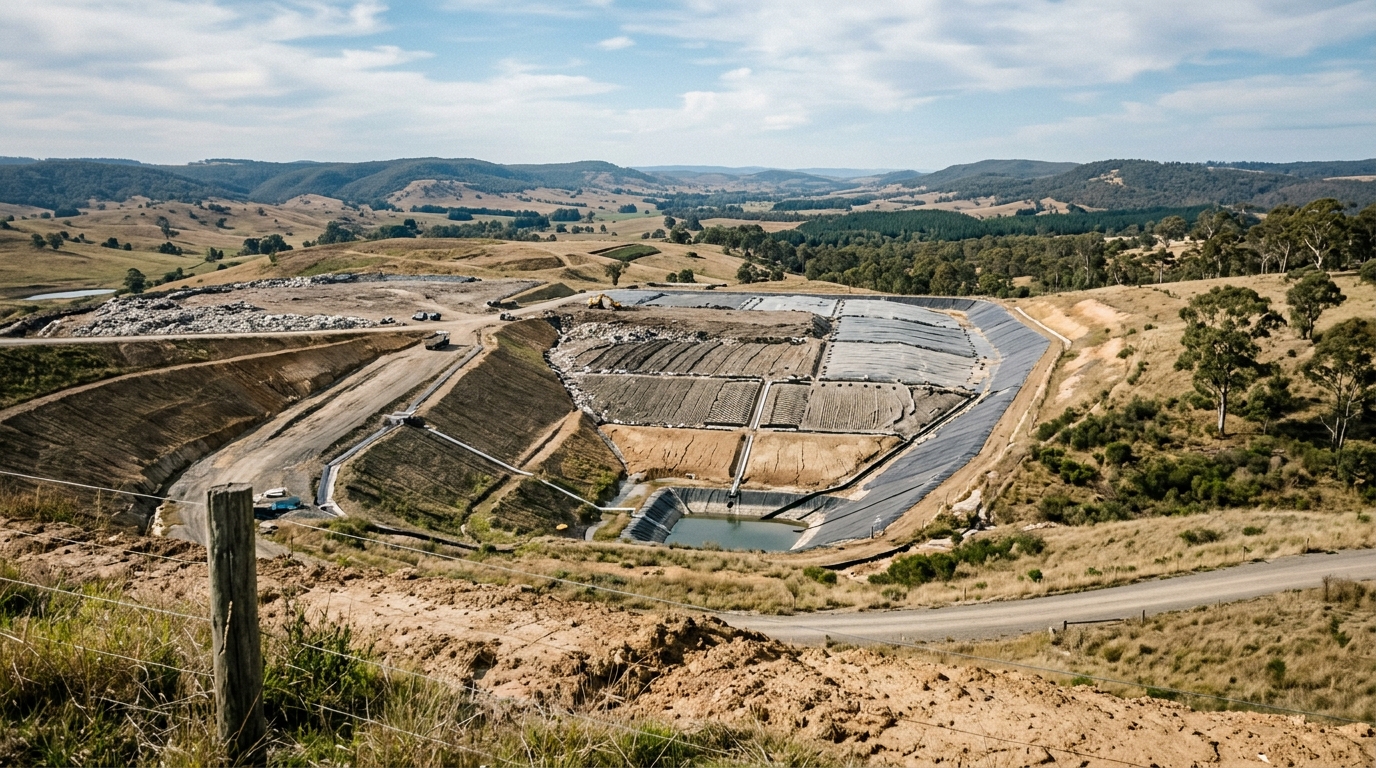
Australian context: landfill regulation, prevention notices, and the broader compliance framework
Prevention notices in New South Wales are issued under the Protection of the Environment Operations Act 1997 (POEO Act). Under section 89 of that Act, the EPA may issue a prevention notice to the occupier of premises when it believes the activity carried out on those premises is causing or is likely to cause harm to the environment, whether or not the activity is authorised by an environment protection licence.
Background and context
Headline: NSW EPA Issues Prevention Notice to Veolia Over Woodlawn Landfill Gas and Leachate Failures
On 3 April 2026, the NSW Environment Protection Authority (EPA) issued a strict prevention notice to Veolia Environmental Services, mandating immediate action to rectify significant pollution control failures at the Woodlawn Landfill in Tarago. Following an investigation into persistent, unacceptable offsite odours impacting the local community since mid-March, the EPA identified major operational deficiencies in the facility's landfill gas capture and leachate management systems.
Under the prevention notice, Veolia is required to submit an independently prepared, short-term action plan within eight weeks to reduce leachate levels and improve gas capture, with all remediation measures to commence within four months. Additionally, Veolia must increase the frequency of leachate monitoring, engage an independent expert to conduct regular landfill gas monitoring; AND separately engage an independent qualified consultant to carry out regular inspections of the landfill site along with odour surveys on and around the premises, and submit weekly progress reports to the regulator.
NSW EPA Executive Director of Operations Stephen Beaman [note: verify current title — as of January 2024 EPA org chart, Beaman's listed title is Executive Director Regulatory Practice & Coordination, not Executive Director of Operations. However, this exact title 'Executive Director of Operations' is used verbatim in the official April 2026 EPA media release and corroborating sources, so accept as current] made the regulator's stance clear: "Landfill operators have an obligation to the community to ensure their operations are run to the highest environmental standards, which is why we're requiring Veolia to act as a matter of urgency."
Why it Matters for Environmental Professionals:
For landfill operators, environmental auditors, and remediation consultants, this enforcement action underscores the critical regulatory focus on robust leachate and gas management systems. The EPA’s mandate for independent expert monitoring and rapid remediation planning highlights the growing requirement for third-party verification when operational controls fail. It serves as a stark reminder that proactive maintenance of environmental infrastructure is far less costly—reputationally and financially—than retrospective compliance under a prevention notice. Practitioners should review their own site management plans to ensure gas capture and leachate extraction systems are resilient enough to prevent offsite amenity impacts.
References and related sources
- Primary source: www.epa.nsw.gov.au
- https://www.epa.nsw.gov.au/Working-together/Community-engagement/updates-on-issu
- NSW EPA
How iEnvi can help
iEnvi provides specialist consulting services relevant to this topic. Our team includes CEnvP Site Contamination Specialists with experience across contaminated land, groundwater, remediation, ecology, and regulatory compliance.
- iEnvi remediation services
- iEnvi contaminated land investigation services
- iEnvi expert services and independent review services
This is an iEnvi Machete news summary. Prepared by iEnvi to summarise the source article for contaminated land, groundwater, remediation, approvals and site risk professionals.
Published: 05 Apr 2026
Need advice on this topic? Speak to an iEnvi expert at info@ienvi.com.au or 1300 043 684, or contact us online.
Need advice on this issue? iEnvi provides practical, senior-led environmental consulting across contaminated land, remediation, ecology and environmental risk.
Team credentials Contaminated land services Remediation services Groundwater services Talk to iEnvi