
Overview
On 16 July 2024, the Australian Government announced that 25 per cent of the nation’s land mass is now formally protected under the National Reserve System, following the official dedication of the Simpson Desert Indigenous Protected Area. The new IPA adds more than 4.7 million hectares of sand dunes, stone plains, and seasonal wetlands to the reserve network, making it one of the largest single additions to the National Reserve System in recent history. The IPA is managed by the Central Land Council in partnership with the Eastern Arrernte, Lower Southern Arrernte, and Akityarre peoples across the Pmere Nyente, Atnetye, and Pmer Ulperre Ingwemirne Arletherre Aboriginal land trusts.
The milestone carries direct operational significance for environmental consultants, project proponents, property developers, planning authorities, and legal advisers working across Australia. The expansion of formally protected land changes the geographic and ecological baseline against which biodiversity impacts are assessed. It also accelerates the federal government’s trajectory toward its internationally binding commitment under the Kunming-Montreal Global Biodiversity Framework to protect 30 per cent of Australia’s land and oceans by 2030. The gap remaining to reach that target is substantial: an additional 39 million hectares must be secured within the next four years.
This announcement arrives at a critical moment for Australian environmental regulation more broadly. The federal Nature Repair Market is in its early operational phase, the Environment Protection and Biodiversity Conservation Act 1999 (EPBC Act) continues to be the primary instrument for managing impacts on matters of national environmental significance, and state and territory biodiversity offset frameworks are under review or recently reformed across multiple jurisdictions. The Simpson Desert IPA dedication is therefore not simply a conservation achievement. It is a regulatory signal with practical consequences for project planning, offset strategy, and transaction risk assessment.
Key details of the Simpson Desert IPA and Australia’s 25 per cent protected land milestone
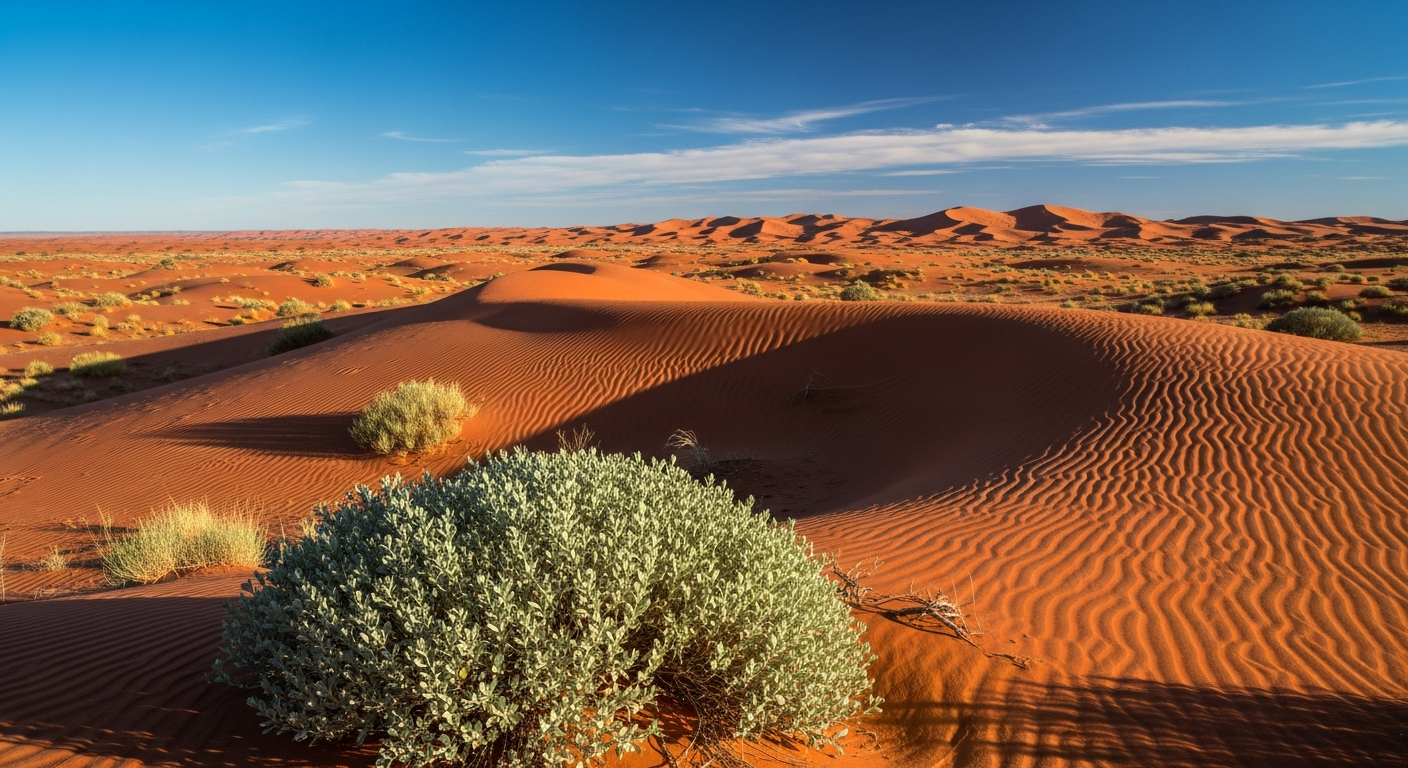
The Simpson Desert IPA encompasses more than 4.7 million hectares and spans border regions of the Northern Territory, Queensland, and South Australia. The landscape includes iconic sand dune systems, gibber stone plains, and ephemeral wetlands that support nationally significant ecological communities. The area provides documented critical habitat for a number of priority threatened species listed under the EPBC Act, including the greater bilby (Macrotis lagotis), the central rock-rat (Zyzomys pedunculatus), the night parrot (Pezoporus occidentalis), and the princess parrot (Polytelis alexandrae). All four species carry significant weight in federal biodiversity assessments, and the formal protection of this habitat has direct implications for how referrals and assessments under the EPBC Act are framed for projects in adjacent or hydrologically connected areas.
The conservation management framework for the IPA integrates traditional land management practices with contemporary techniques. Priority management actions include culturally informed fire management (often described as “right-way fire”), targeted control of invasive species such as buffel grass (Cenchrus ciliaris), and feral animal management directed at cats, foxes, and camels. Buffel grass in particular presents a significant ecosystem threat across central Australia, altering fire regimes and suppressing native understorey. Its control is increasingly a feature of conditions attached to EPBC Act approvals and state environment protection orders affecting arid and semi-arid landscapes.
The National Reserve System now covers 25 per cent of Australia’s total land mass following this dedication. Indigenous Protected Areas now account for more than 55 per cent of the National Reserve System by area, reflecting the growing role of First Nations-led conservation in meeting Australia’s protected area targets. The Kunming-Montreal Global Biodiversity Framework, adopted at COP15 in December 2022, commits Australia to protecting 30 per cent of land and 30 per cent of oceans by 2030. With 25 per cent of land now formally protected, the remaining 5 per cent equates to approximately 39 million hectares that must be added to the reserve network within four years. The federal government has indicated that strategic land acquisitions and further IPA dedications are the primary mechanisms for closing that gap.
The federal Nature Repair Market, established under the Nature Repair Market Act 2023, is now in its early operational phase. This market allows landholders to generate biodiversity certificates by undertaking approved conservation actions on their land. As the National Reserve System expands, the geographic distribution of available offset and certificate supply will shift, with implications for the pricing and availability of credits in regions adjacent to newly protected areas. Proponents relying on market-based biodiversity offsets as a condition of EPBC Act approval or state environmental authority need to account for these supply-side dynamics in their project planning.
Australian context: EPBC Act, state biodiversity frameworks, and the expanding National Reserve System
The EPBC Act remains the principal federal instrument governing project impacts on matters of national environmental significance, including listed threatened species, listed ecological communities, and nationally designated protected areas. The formal dedication of the Simpson Desert IPA means that approximately 4.7 million hectares of land now carries heightened regulatory status. Projects with a physical, hydrological, or ecological footprint that extends into or near the IPA boundary will require careful referral and impact assessment processes.
References and related sources
- Primary source: ministers.pmc.gov.au
- nit.com.au
- indailyqld.com.au
- alp.org.au
- EPBC Act
How iEnvi can help
iEnvi provides specialist consulting services relevant to this topic. Our team includes CEnvP Site Contamination Specialists with experience across contaminated land, groundwater, remediation, ecology, and regulatory compliance.
- iEnvi contaminated land investigation services
- iEnvi remediation and validation services
- iEnvi expert services and independent review services
This is an iEnvi Machete news summary. Prepared by iEnvi to summarise the source article for contaminated land, groundwater, remediation, approvals and site risk professionals.
Published: 16 Jul 2026
Need advice on this topic? Speak to an iEnvi expert at info@ienvi.com.au or 1300 043 684, or contact us online.
Need advice on this issue? iEnvi provides practical, senior-led environmental consulting across contaminated land, remediation, ecology and environmental risk.
Team credentials Contaminated land services Remediation services Groundwater services Talk to iEnvi