
Environmental Approval for Davis Station Infrastructure
The Australian Antarctic Division (AAD) has secured formal environmental authorisation for the Davis Critical Infrastructure Works (DCIW), a major component of the broader Antarctic Infrastructure Renewal Program (AIRP). The approval, granted by the Delegate of the Minister for the Environment and Water under sub-section 12N(2) of the Antarctic Treaty (Environment Protection) Act 1980 (Cth) (ATEP Act), clears the path for a comprehensive overhaul of end-of-life water, power, and mechanical utility systems at Davis research station in East Antarctica. This is one of the most environmentally constrained infrastructure approvals undertaken under Australian federal law in recent years, and it carries considerable relevance for environmental professionals working on complex projects in sensitive or remote settings.
The significance of this milestone extends well beyond the Antarctic continent. The approval process required preparation and public consultation of a formal Initial Environmental Evaluation (IEE) under the Antarctic Treaty system, a process that intersects directly with obligations under the Environment Protection and Biodiversity Conservation Act 1999 (Cth) (EPBC Act). For developers, asset owners, and project proponents operating in any jurisdiction where overlapping federal and international regulatory regimes apply, the DCIW approval demonstrates the complexity that arises when multiple legislative frameworks must be satisfied simultaneously before ground can be broken.
Logistics planning and pre-fabrication are now underway in Australia following the granting of authorisation. Cargo and personnel are scheduled to depart Hobart in October 2026, with on-continent construction commencing in November 2026 and an estimated completion date of 2032. The project is being delivered by the Antarctic Infrastructure Renewal (AIR) Alliance, a collaborative partnership comprising the Australian Antarctic Division, Bouygues Construction Australia, Mott MacDonald, and Stantec. The scale, sensitivity, and regulatory rigour of this approval make it a useful reference case for environmental practitioners across multiple sectors.
Key details of the Davis Critical Infrastructure Works approval
The Davis Critical Infrastructure Works involve the replacement of the station’s ageing utility systems with modern, purpose-built infrastructure designed for the operational demands and environmental constraints of Antarctica. The approved scope includes installation of a second reverse osmosis (RO) desalination plant to supplement or replace the existing water supply system, a new heated seawater intake system to support that desalination capacity, and construction of a central utilities building to consolidate mechanical and electrical services. These works address infrastructure that has reached the end of its serviceable life, presenting both operational risk and environmental risk if left unremediated.
The statutory approval pathway for this project ran through sub-section 12N(2) of the ATEP Act, which governs activities undertaken in the Australian Antarctic Territory that may have more than a minor or transitory impact on the Antarctic environment. The IEE prepared in support of the application was assessed by the Antarctic and Environmental Regulation Section and subjected to a formal public consultation period before the Delegate of the Minister made the determination. This process mirrors, in many respects, the referral and assessment pathway under the EPBC Act for actions likely to have a significant impact on a matter of national environmental significance, though the Antarctic Treaty framework imposes its own distinct thresholds, criteria, and management requirements.
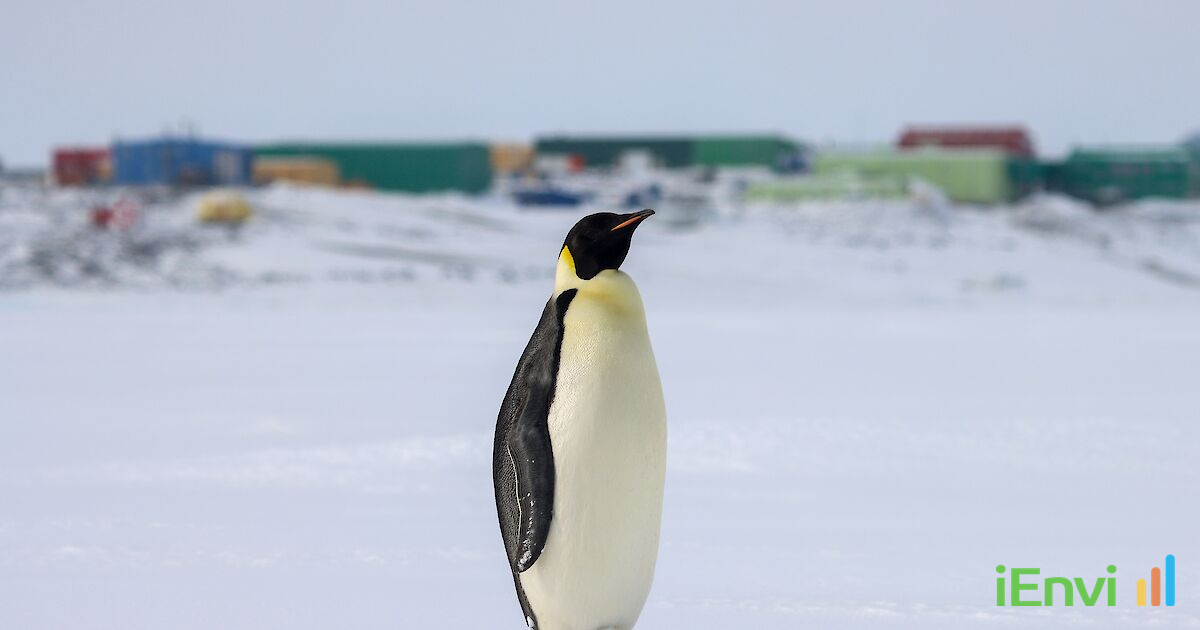
Two compliance controls are central to the authorisation conditions. First, strict biosecurity protocols are mandated to prevent the introduction of non-native species to the continent, a requirement consistent with Annex II of the Protocol on Environmental Protection to the Antarctic Treaty (the Madrid Protocol). All equipment, materials, and personnel movements must satisfy biosecurity screening requirements before departure from Australia. Second, physical buffers must be maintained around local wildlife populations, including seal and penguin colonies in the vicinity of Davis station, to limit exposure to construction noise and artificial light. Both controls require site-specific management planning that is integrated into the construction methodology rather than bolted on after design is finalised.
Perhaps the most operationally demanding condition of the authorisation is the waste management requirement. One hundred per cent of the waste generated during demolition of existing infrastructure and construction of new facilities must be tracked, contained, and returned to Australia for recycling or approved disposal. No waste is to be left on the continent. This closed-loop waste management obligation covers all material streams, including construction debris, packaging, hazardous materials, and any contaminated soils or liquids generated during works. Compliance with this requirement demands detailed waste tracking systems, purpose-built containment and return logistics, and contractual obligations flowing through the entire supply and construction chain.

Australian regulatory context for Antarctic and remote environment approvals
For Australian environmental professionals, the DCIW approval illustrates how the ATEP Act and the EPBC Act operate in parallel for activities with a federal nexus in sensitive environments. The EPBC Act, administered by the Department of Climate Change, Energy, the Environment and Water, applies to actions that may have a significant impact on matters of national environmental significance, including world heritage values, threatened species, and listed marine environments. The ATEP Act operates alongside the EPBC Act for activities in the Australian Antarctic Territory, imposing additional and in some respects more stringent obligations that reflect Australia’s commitments under the Madrid Protocol. Proponents must satisfy both regimes independently — a favourable outcome under one does not discharge obligations under the other. For practitioners advising on projects in other overlapping regulatory environments, the DCIW approval serves as a practical illustration of how to structure assessment processes, manage stakeholder consultation, and design compliance systems when no single legislative instrument captures the full scope of a project’s environmental obligations.
References and related sources
- Primary source: www.antarctica.gov.au
- antarctica.gov.au
- antarctica.gov.au
- antarctica.gov.au
How iEnvi can help
iEnvi provides specialist consulting services relevant to this topic. Our team includes CEnvP Site Contamination Specialists with experience across contaminated land, groundwater, remediation, ecology, and regulatory compliance.
- iEnvi contaminated land investigation services
- iEnvi remediation and validation services
- iEnvi expert services and independent review services
This is an iEnvi Machete news summary. Prepared by iEnvi to summarise the source article for contaminated land, groundwater, remediation, approvals and site risk professionals.
Published: 23 Jul 2026
Need advice on this topic? Speak to an iEnvi expert at info@ienvi.com.au or 1300 043 684, or contact us online.
Need advice on this issue? iEnvi provides practical, senior-led environmental consulting across contaminated land, remediation, ecology and environmental risk.
Team credentials Contaminated land services Remediation services Groundwater services Talk to iEnvi