
Overview
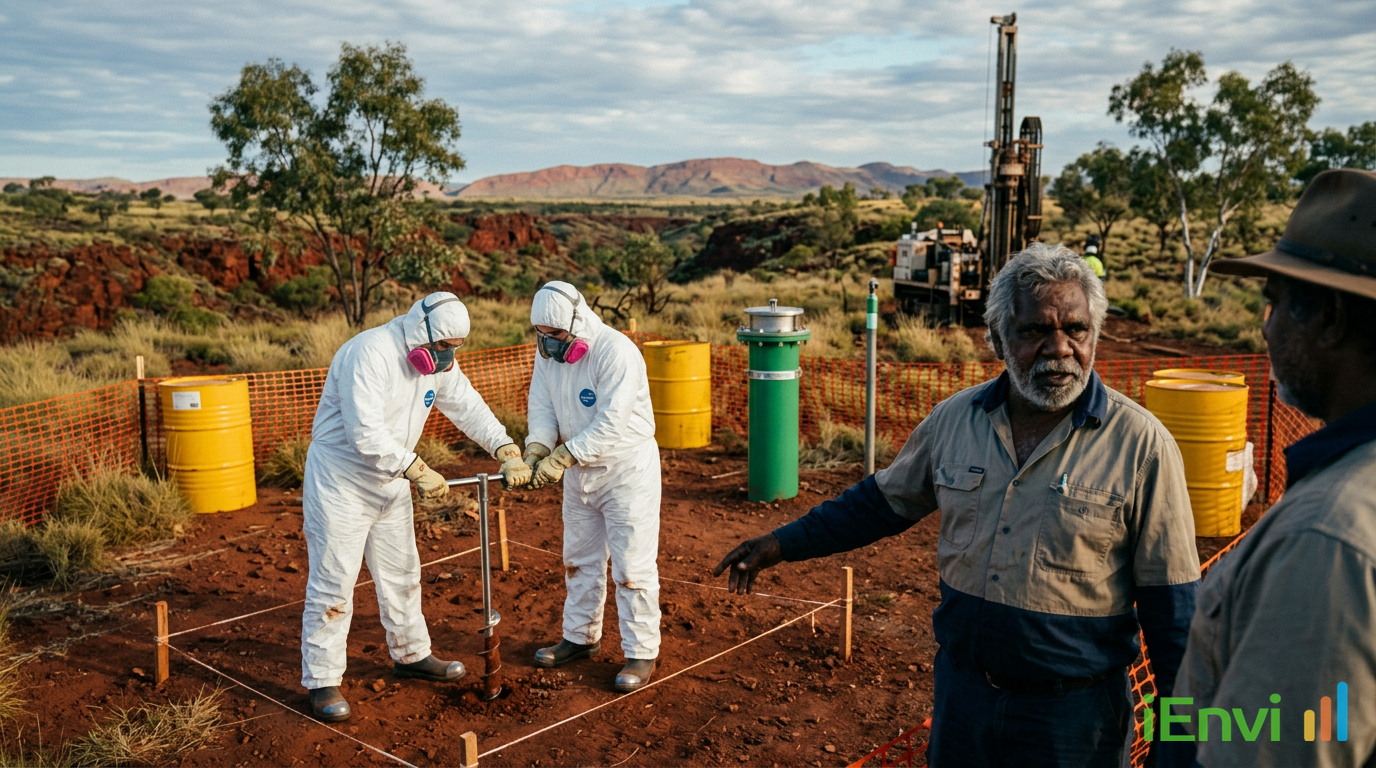
Traditional Owners from the Banjima nation have escalated the decades-long fight to remediate Wittenoom, Australia’s most notorious asbestos contamination site, to the United Nations Human Rights Council in Geneva. Alongside this international intervention, a $1.5 billion legal claim has been lodged against the Western Australian Government. Together, these actions represent a significant shift in how legacy contamination sites are managed in Australia, introducing international human rights frameworks and substantial financial liability into what has traditionally been a domestic regulatory matter.
For environmental professionals, this case demonstrates that legacy site management can no longer rely solely on containment strategies and long-term monitoring. The intersection of First Nations rights, international scrutiny and massive financial claims is reshaping the risk profile of unresolved contamination across the country.
Key details
Wittenoom, in the Pilbara region of Western Australia, was home to a blue asbestos (crocidolite) mining operation from 1943 to 1966. The town was officially degazetted by the WA Government, and its postcode was removed in 2007. Despite these administrative actions, millions of tonnes of asbestos tailings remain spread across the landscape, posing ongoing risks to human health and the environment.
The Banjima People are the recognised native title holders over the Wittenoom area. Their claim to the UN Human Rights Council argues that the failure to remediate the site constitutes a violation of their rights to health, culture and connection to country. The concurrent $1.5 billion legal claim targets the WA Government for its historical failure to adequately address the contamination.
The WA Contaminated Sites Act 2003 provides the domestic framework for classifying and managing impacted land, but the Banjima argue that this framework has proven insufficient for a site of this scale and significance. The elevation to an international forum bypasses what they describe as a stalled domestic process.
Australian context
Wittenoom is not an isolated case. Across Australia, hundreds of legacy contamination sites remain incompletely remediated, many on or near land with significant cultural heritage value to First Nations communities. The precedent set by this UN intervention could be applied to other sites where remediation has been delayed or deemed too costly.
The Native Title Act 1993 and various state Aboriginal heritage protection legislation already require consideration of cultural values in land management decisions. However, the Wittenoom case demonstrates that these domestic protections may be supplemented by international mechanisms when communities feel that local processes have failed them.
For the broader environmental consulting industry, this trend means that conceptual site models and liability assessments must now integrate cultural heritage and human rights considerations alongside technical contamination data. Regulatory bodies are likely to mandate faster, more comprehensive cleanup solutions to avoid similar international exposure in the future.
Practical implications
- Liable parties managing legacy contamination sites should reassess their risk exposure, particularly where First Nations communities hold native title or cultural connections to the affected land.
- Environmental consultants should integrate cultural heritage risk into their conceptual site models with the same rigour applied to groundwater impacts or ecological receptor assessments.
- State and federal regulators may face increased pressure to accelerate remediation timelines for high-profile legacy sites, particularly those with cultural significance.
- Property developers and infrastructure proponents acquiring or developing near legacy contamination sites should consider reputational and legal risks beyond standard contamination liability.
- The financial quantum of the $1.5 billion claim signals that remediation delays now carry substantial monetary risk, not just regulatory non-compliance penalties.
References and related sources
Original source: Women’s Agenda
Source published: 17 March 2026
Added to Enviro News: 17 March 2026
Read the primary source article at Women’s Agenda
Related legislation: Contaminated Sites Act 2003 (WA)
How iEnvi can help
iEnvi offers comprehensive contaminated land assessment and remediation services for complex legacy sites, including those with cultural heritage sensitivities. Our team also provides expert witness services for contamination-related legal proceedings. We work with landowners, government agencies and developers to develop practical remediation strategies that address both technical and stakeholder requirements.
This is an iEnvi Machete news summary. Prepared by iEnvi to summarise the source article for contaminated land, groundwater, remediation, approvals and site risk professionals.
Need advice on this topic? Speak to an iEnvi expert at info@ienvi.com.au or 1300 043 684, or contact us online.
Need advice on this issue? iEnvi provides practical, senior-led environmental consulting across contaminated land, remediation, ecology and environmental risk.
Contaminated land services Remediation services Groundwater services Asbestos in soil advice Talk to iEnvi