
The PFAS Testing Blind Spot: Why Standard Methods Miss 96% of Contaminants
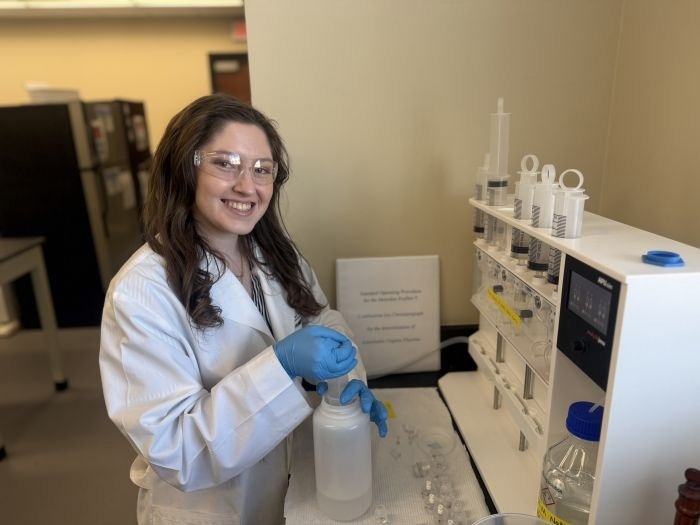
The environmental management landscape is undergoing a significant transition in how per- and polyfluoroalkyl substances (PFAS) are quantified and managed in soil and groundwater. The announcement of Sarah Ortbal from The University of Alabama as the recipient of the 2025 Metrohm Young Chemist Award highlights a major development in analytical chemistry that directly impacts established site assessment methodologies. Her research, which pairs traditional targeted PFAS analysis with Adsorbable Organic Fluorine (AOF) testing, demonstrates that standard targeted analytical methods miss up to 96 per cent of the total fluorinated organic load in water. Consequently, environmental site assessments that rely solely on standard suites operate with a major blind spot, potentially underestimating the true mass of fluorinated contaminants by a factor of 25.
For Australian environmental practitioners, land developers, legal counsel, and local councils, these findings present immediate liability risks. The presence of undetected organofluorine compounds, often referred to as PFAS precursors, represents a latent environmental and financial liability. These hidden compounds can degrade over time through natural biological and chemical pathways, transforming into highly regulated, persistent perfluoroalkyl acids (PFAAs) such as perfluorooctane sulfonate (PFOS) and perfluorooctanoic acid (PFOA). As a result, sites previously classified as clean or successfully managed under older, limited testing protocols may experience contaminant rebound, leading to unexpected regulatory actions, failed property transactions, and protracted legal disputes.
Quantifying the full extent of this organic fluorine reservoir is critical for developing accurate conceptual site models and ensuring that remediation strategies are permanent and legally defensible. As Australian environmental regulators continue to tighten guidelines for emerging contaminants, integrating non-target screening techniques like AOF into routine monitoring programmes is transitioning from an advanced scientific option to an essential risk-mitigation tool. This research provides the analytical validation needed to bridge the gap between compliance-driven targeted testing and true environmental risk management.
Technical Breakdown: Targeted LC-MS/MS vs. Combustion Ion Chromatography (CIC)
The technical core of Ms Ortbal’s research lies in the comparison between targeted liquid chromatography-tandem mass spectrometry (LC-MS/MS) and non-target Adsorbable Organic Fluorine (AOF) analysis using Combustion Ion Chromatography (CIC). Standard targeted analytical methods typically screen for a specific, predefined list of 28 to 33 PFAS compounds. While highly sensitive and precise for these select analytes, targeted methods are blind to thousands of other synthetic organofluorine compounds and precursors used in industrial processes and firefighting foams. By contrast, AOF analysis captures the aggregate mass of all organic fluorine compounds that adsorb onto activated carbon, offering a comprehensive measure of the total organofluorine burden in a liquid sample.
The research demonstrated that non-target AOF analysis can quantify up to 25 times more fluorinated organic compounds in water than standard targeted suites. Specifically, when analysing wastewater and impacted surface waters, standard target testing missed up to 96 per cent of the total organic fluorine present. This discrepancy represents the invisible fraction of contamination: complex precursor molecules, fluorinated polymers, and short-chain intermediates. The research utilised Combustion Ion Chromatography to pyrolyse the adsorbed organic fluorine at temperatures exceeding 900 degrees Celsius, converting the organic fluorine to hydrogen fluoride, which is then absorbed in an aqueous solution and quantified as fluoride ions. This process allows for an absolute mass balance calculation of organic fluorine down to microgram-per-litre (µg/L) detection limits.
Crucially, this research also solved a persistent challenge in validating PFAS remediation and destruction technologies. By tracking the loss of total organic fluorine via AOF testing, the research successfully verified the complete thermal and chemical destruction of PFAS. In the past, remediation performance was often evaluated based on the decrease of specific target compounds like PFOS. However, this approach frequently failed to account for partial degradation, where long-chain compounds were merely cleaved into shorter, non-targeted PFAS chains that remained in the environment. By demonstrating a true decrease in total AOF, the study confirmed that specific treatment processes break the exceptionally strong carbon-fluorine bonds completely, achieving mineralisation rather than mere transformation.

Australian context
In Australia, the management of contaminated land is governed by a rigorous regulatory framework that is increasingly focused on the complete characterisation of emerging contaminants. Under the National Environment Protection (Assessment of Site Contamination) Measure 1999 (NEPM 2013), specifically Schedule B2 (Guideline on Site Characterisation), practitioners are legally and professionally obligated to develop a comprehensive Conceptual Site Model (CSM). A CSM must account for all potential contaminant pathways, receptors, and source zones. The revelation that standard testing suites miss up to 96 per cent of the organofluorine mass means that traditional CSMs for PFAS-impacted sites may be fundamentally flawed, leaving practitioners and their clients exposed to unaccounted-for risks.
Furthermore, the PFAS National Environmental Management Plan (PFAS NEMP 3.0), which serves as the premier regulatory guidance across Australian states and territories, sets clear expectations for source zone characterisation and the hierarchy of clean-up options. PFAS NEMP 3.0 places a heavy emphasis on prioritising source removal and destruction over containment or dispersal, with on-site destruction technologies sitting at the top of the management hierarchy and long-term storage or landfill disposal positioned as least preferred. Verifying that a chosen treatment process genuinely destroys PFAS, rather than transforming long-chain compounds into shorter, non-targeted fragments, is central to meeting this expectation. Without AOF or equivalent total-fluorine measurements, practitioners cannot reliably demonstrate that destruction has occurred, leaving remediation sign-offs vulnerable to challenge by regulators, neighbouring landholders, or future purchasers. Incorporating non-target screening into validation sampling therefore aligns directly with the intent of PFAS NEMP 3.0 and strengthens the evidentiary basis for site closure across Australian jurisdictions.
References and related sources
- Primary source: www.azom.com
- https://www.azom.com/news.aspx?newsID=65287>
- PFAS National Environmental Management Plan (NEMP)
How iEnvi can help
iEnvi provides specialist consulting services relevant to this topic. Our team includes CEnvP Site Contamination Specialists with experience across contaminated land, groundwater, remediation, ecology, and regulatory compliance.
- iEnvi remediation services
- iEnvi groundwater services
- iEnvi expert services and independent review services
This is an iEnvi Machete news summary. Prepared by iEnvi to summarise the source article for contaminated land, groundwater, remediation, approvals and site risk professionals.
Published: 17 Jun 2026
Need advice on this topic? Speak to an iEnvi expert at info@ienvi.com.au or 1300 043 684, or contact us online.
Need advice on this issue? iEnvi provides practical, senior-led environmental consulting across contaminated land, remediation, ecology and environmental risk.
Team credentials Environmental management plans Contaminated land advice Remediation services Talk to iEnvi