
Overview
The Australian environmental remediation landscape has experienced a monumental shift with the announcement that global ecological transformation leader Veolia has finalised the acquisition of Enviropacific for 220 million Australian dollars. This transaction integrates one of Australia’s most prominent remediation specialists, with an annual turnover of 250 million dollars and a workforce of nearly 300 personnel, into Veolia’s international network. For property developers, infrastructure consortia, local councils, and environmental lawyers, this acquisition is not merely a corporate milestone; it signals a fundamental change in the commercial and regulatory dynamics of managing contaminated land across the country.
This move by Veolia targets the expanding market for treating per- and polyfluoroalkyl substances (PFAS) and complex hazardous waste streams. By acquiring Enviropacific, Veolia secures immediate control of critical local infrastructure, including advanced thermal treatment facilities, mobile and fixed soil washing plants, and specialised water treatment assets. This consolidation comes at a time when the regulatory baseline in Australia is shifting away from passive containment and long-term monitoring, pushing site owners and developers toward permanent, destructive remediation technologies to eliminate environmental liabilities.
For sector stakeholders, the consolidation carries significant operational implications. As major urban renewal projects and infrastructure works encounter increasingly complex contamination profiles, securing guaranteed access to licensed treatment facilities will become a primary project risk. The combination of Enviropacific’s established local presence and engineered assets with Veolia’s global technical resources and financial capacity is set to redefine procurement strategies, tender conditions, and liability management for contaminated sites across all Australian states.
Veolia Acquires Enviropacific in $220M Deal
The 220 million dollar acquisition highlights the rising commercial value of physical remediation assets in an increasingly restricted regulatory environment. Enviropacific has built a commanding market position by operating specialised facilities capable of processing complex waste streams, generating 250 million dollars in annual revenue. These assets include the SOLVE high-temperature thermal desorption facility in Victoria, which is licensed to accept and destroy a wide range of organic contaminants, alongside sophisticated mobile soil washing units. These soil washing systems use physical and chemical separation processes to isolate contaminants into a highly concentrated filter cake, allowing the vast majority of the treated soil matrix to be safely reused as clean fill on site.

PFAS Treatment Technologies and Soil Remediation Challenges
The primary technical driver behind this investment is the unique chemical behaviour of PFAS, which presents significant challenges for environmental practitioners. Unlike legacy organic contaminants such as organochlorine pesticides or polychlorinated biphenyls (PCBs), which are lipophilic and accumulate in fatty tissues, PFAS compounds are surfactant molecules that bind directly to proteins. In human biology, these synthetic chemicals attach preferentially to serum proteins, specifically albumin, in the bloodstream. Because they do not partition into lipid tissues, they remain highly mobile in the human body and the aquatic environment, resisting conventional biological degradation and standard physical filtration systems.
This protein-binding affinity has been a focus of clinical research in Australia. Recent clinical trials have demonstrated that because PFAS compounds are bound to serum proteins, the regular donation of blood or plasma is one of the only effective biological pathways to physically remove these substances from the human body. By systematically removing blood plasma, which is rich in albumin, these medical procedures physically extract the bound PFAS molecules, thereby lowering the total concentration of these persistent chemicals in the donor’s system. This biological reality mirrors the challenges faced in environmental engineering, where physical separation and destructive techniques are required to decouple PFAS from soil and water matrices.
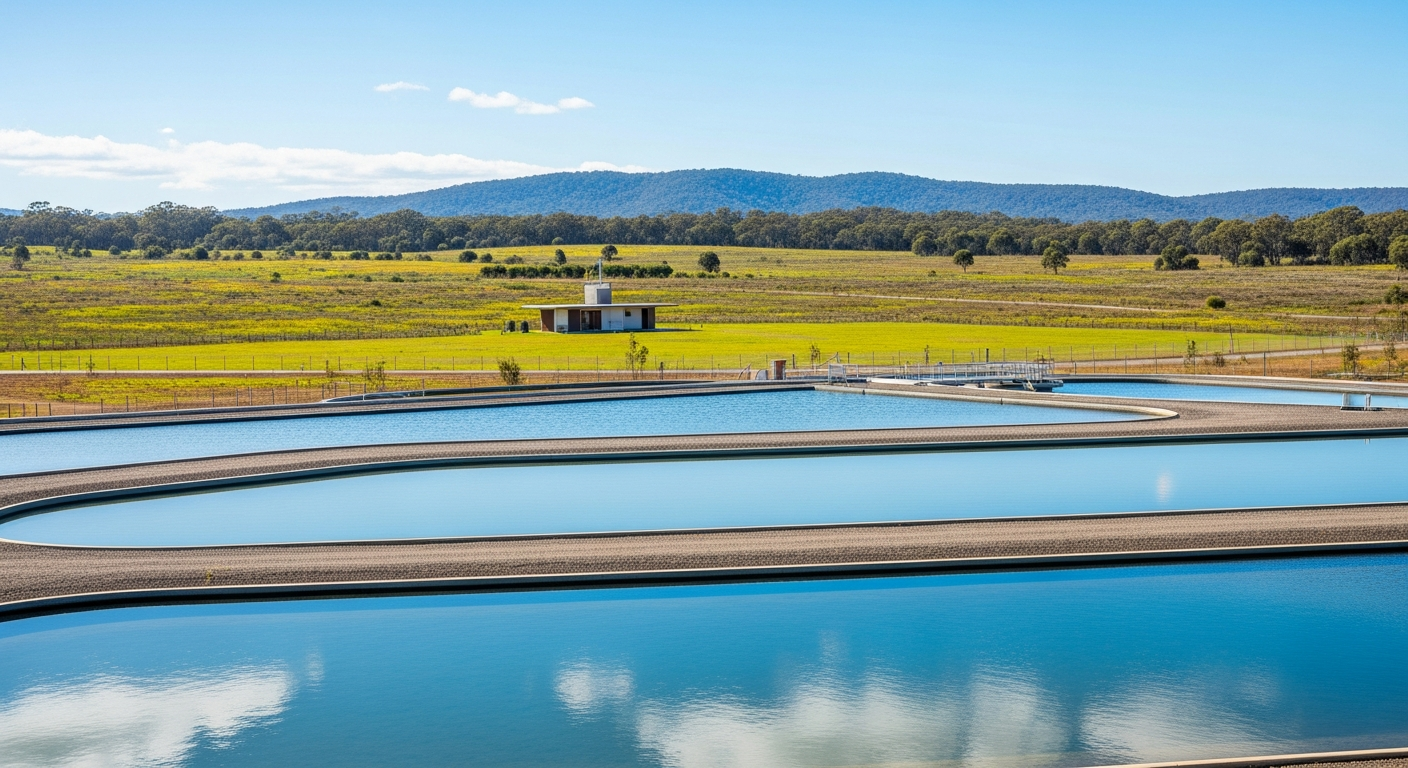
To break the carbon-fluorine bonds that characterise PFAS molecules, highly energetic industrial processes are required. Thermal desorption units typically heat contaminated soil to between 350 and 550 degrees Celsius to volatilise the compounds, with the off-gas then directed to a secondary combustion chamber, or afterburner, operating at temperatures of 1100 degrees Celsius or higher to achieve complete destruction of the fluorinated gases. Alternatively, advanced water treatment plants must employ a multi-stage process incorporating granular activated carbon (GAC), single-use selective ion exchange resins, and membrane filtration to strip these persistent contaminants from groundwater. The complexity and high energy requirements of these processes explain why established, licensed treatment assets command such high commercial valuations.
Tightening PFAS Regulations in Australia
The consolidation of Australia’s remediation sector under a global operator occurs against a backdrop of tightening regulatory frameworks at both federal and state levels. The impending release of the PFAS National Environmental Management Plan (NEMP) version 3.0, which progressed through public consultation in 2024, is set to lower investigation and action thresholds for soil, water, and building materials, whilst establishing far more stringent criteria for the beneficial reuse of treated materials. In parallel, the National Health and Medical Research Council (NHMRC) has been finalising updates to the Australian Drinking Water Guidelines (ADWG), with proposed revisions dramatically reducing the maximum acceptable concentrations for key PFAS compounds, including PFOA, PFOS, PFHxS, and PFBS, to levels far below those previously tolerated in reticulated water supplies.
References and related sources
- Primary source: www.marketscreener.com
- PFAS National Environmental Management Plan (NEMP)
- Australian Drinking Water Guidelines
How iEnvi can help
iEnvi provides specialist consulting services relevant to this topic. Our team includes CEnvP Site Contamination Specialists with experience across contaminated land, groundwater, remediation, ecology, and regulatory compliance.
- iEnvi remediation services
- iEnvi PFAS services
- iEnvi expert services and independent review services
This is an iEnvi Machete news summary. Prepared by iEnvi to summarise the source article for contaminated land, groundwater, remediation, approvals and site risk professionals.
Published: 17 Jun 2026
Need advice on this topic? Speak to an iEnvi expert at info@ienvi.com.au or 1300 043 684, or contact us online.
Need advice on this issue? iEnvi provides practical, senior-led environmental consulting across contaminated land, remediation, ecology and environmental risk.
Team credentials Soil remediation Environmental management plans Contaminated land advice Talk to iEnvi