
Overview
The Conservation Council of Western Australia (CCWA) has lodged a formal appeal against the Department of Water and Environmental Regulation (DWER) licence approval for Alcoa’s Wagerup Alumina Refinery, targeting licence number 6217/1983/15. The appeal follows the identification of a significant spike in mercury emissions at the facility, which reached 400 kg in 2025, representing close to double the levels recorded in 2022. Critically, this increase was not surfaced through proactive state-level compliance reporting. Instead, the discrepancy was identified by the CCWA through data published under the federal National Pollutant Inventory (NPI), a circumstance that sits at the heart of the legal challenge and raises pointed questions about the adequacy of current state and federal reporting alignment for bioaccumulative substances.
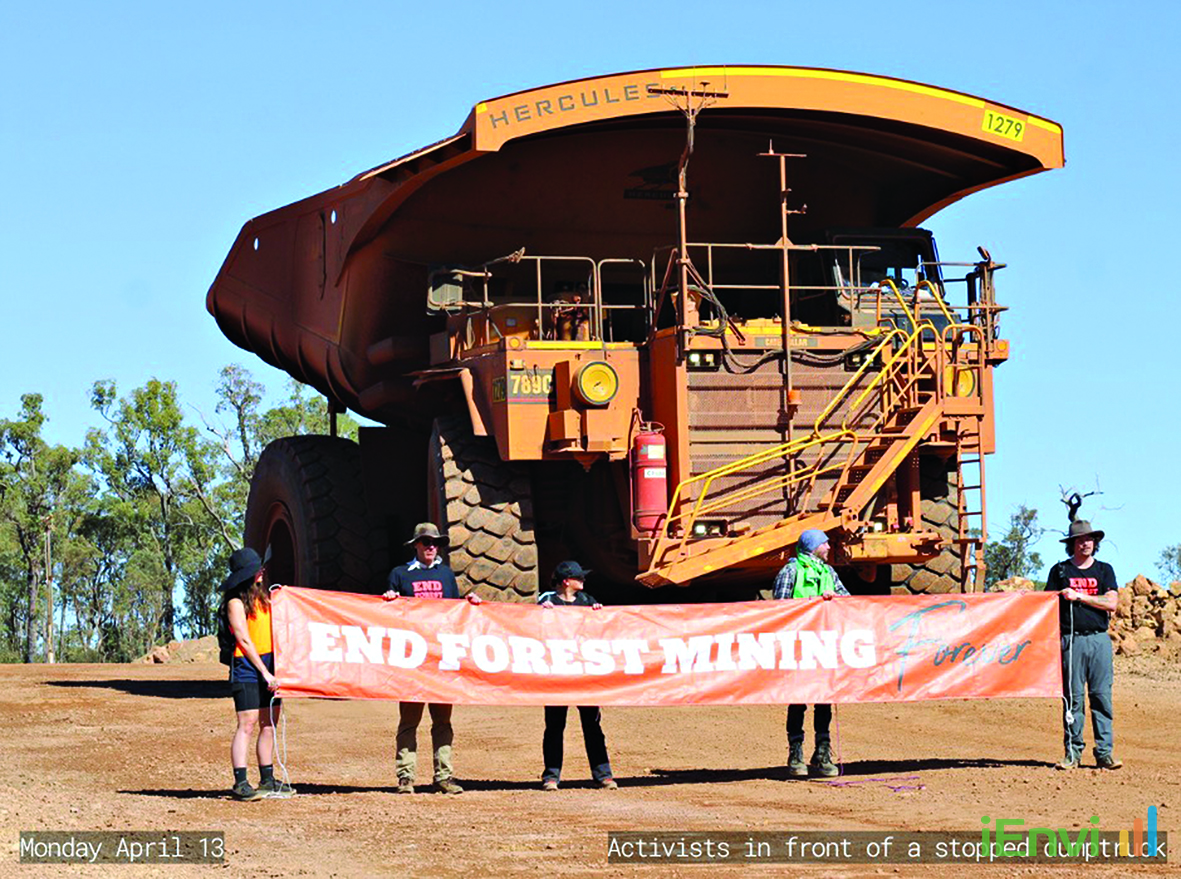
The appeal, reported on 16 April 2025, coincides with direct action at Alcoa’s Huntly mine site, where the Jarrahdale Forest Protectors temporarily halted operations on 13 April 2025. Alcoa has responded to the emissions figures by stating that the reported increase reflects changes in NPI reporting methodology, natural variation in the mercury content of bauxite ore, and reduced condenser performance, rather than any uncontrolled or novel release of mercury into the environment. Whether or not Alcoa’s technical explanation ultimately prevails before the regulator or any tribunal, the situation has already generated formal legal proceedings and significant reputational exposure for the company.
For environmental professionals, lawyers, developers, and industrial operators across Australia, this dispute is instructive well beyond the specifics of a single alumina refinery in Western Australia. It illustrates in concrete terms how third-party conservation groups are actively using federal emissions databases to scrutinise and challenge state-issued operating licences, and how gaps in proactive disclosure can rapidly erode the credibility of an otherwise technically defensible compliance position. The expectation that licence renewals for high-risk facilities must be underpinned by rigorous, site-specific ecological risk assessments, particularly for bioaccumulative neurotoxins like mercury, is now being tested through formal legal channels.
Key details of the Wagerup mercury emissions appeal
The central factual dispute in this appeal involves mercury emissions from the Wagerup Alumina Refinery rising to 400 kg during 2025, compared to levels recorded in 2022 that were approximately half that figure. Mercury is a well-characterised neurotoxin with a strong tendency to bioaccumulate through food chains, converting in aquatic and terrestrial environments to methylmercury, the organic form responsible for the most serious ecological and human health effects. The facility operates under DWER licence 6217/1983/15, and the appeal has been lodged pursuant to the appeals provisions of the Environmental Protection Act 1986 (WA).
Alcoa has put forward three technical explanations for the reported emissions increase. First, changes in NPI reporting methodology may account for some or all of the apparent numerical rise, meaning the physical emissions profile may not have changed as dramatically as the raw figures suggest. Second, natural variation in the mercury content of bauxite ore feedstock is cited as a contributing factor, given that mercury occurs naturally in bauxite deposits at varying concentrations and is volatilised during the high-temperature refining process. Third, Alcoa identifies decreased condenser performance as a mechanism that could reduce the capture efficiency of mercury during processing, resulting in higher reported atmospheric emissions even without any increase in ore throughput or refinery output. These are plausible technical explanations that any environmental consultant assessing this matter would need to evaluate against actual operational data and stack testing records.
The CCWA’s appeal does not rest solely on the emissions figures themselves. A significant component of the challenge targets the absence of ecological monitoring data for mercury bioaccumulation in threatened species within a 2 km radius of the refinery. This is a material gap in the licence justification, because standard risk assessment frameworks for bioaccumulative substances require demonstrable evidence that receiving environment monitoring is adequate to detect accumulation trends in relevant ecological receptors. Without site-specific bioaccumulation data for species within the refinery’s immediate zone of influence, the licence renewal lacks the evidentiary foundation needed to demonstrate that ongoing operations do not pose an unacceptable ecological risk.
The procedural dimension of this dispute is equally significant. The emissions spike was identified not through a proactive disclosure by Alcoa to DWER through standard state compliance reporting channels, but through publicly accessible NPI data. The NPI is a federal database administered under the National Environment Protection (National Pollutant Inventory) Measure 1998, which requires facilities above specified thresholds to report annual emissions of listed substances, including mercury, to the federal government. That data is then publicly searchable. The fact that a third-party conservation group identified a near-doubling of mercury emissions through a federal database, rather than through any proactive industry communication with the state regulator, is the procedural trigger for the legal challenge and represents the core reputational and regulatory vulnerability in this case.

Australian regulatory context for mercury emissions and NPI reporting obligations
Australia does not currently have a standalone national ambient air quality standard specifically for mercury, though mercury is listed as a scheduled substance under the NPI framework and subject to mandatory annual reporting by facilities that meet the relevant thresholds. The NPI reporting obligation requires facilities to estimate and disclose emissions to air, water, and land for a defined list of substances. For mercury, this includes all atmospheric releases from combustion, processing, and fugitive sources. The data is aggregated at the federal level and made publicly available, which is precisely the mechanism the CCWA used to identify the emissions trend at Wagerup.
At the state level in Western Australia, DWER administers operating licences under the Environmental Protection Act 1986 (WA). Licence conditions may specify emission limits, monitoring requirements, and reporting obligations, but the scope and frequency of required reporting varies between licences and is not always calibrated to align with NPI reporting cycles or thresholds. This creates a structural gap in which a facility can be technically compliant with its state licence conditions while exhibiting an emissions trend that would be concerning to a regulator or community stakeholder with access to the federal NPI database.
This case highlights that gap in practical terms. The CCWA’s ability to mount a formal legal challenge on the basis of NPI data, combined with the absence of site-specific ecological monitoring data in the licence justification, demonstrates that the current regulatory architecture creates real exposure for industrial operators who treat state licence compliance as the ceiling of their obligations rather than the floor. Facilities handling bioaccumulative substances such as mercury should treat NPI reporting not merely as a federal administrative requirement, but as a data source that third parties will scrutinise and that regulators will be expected to respond to when discrepancies emerge.
References and related sources
- Primary source: yourlocalexaminer.com.au
How iEnvi can help
iEnvi provides specialist consulting services relevant to this topic. Our team includes CEnvP Site Contamination Specialists with experience across contaminated land, groundwater, remediation, ecology, and regulatory compliance.
- iEnvi contaminated land investigation services
- iEnvi remediation and validation services
- iEnvi expert services and independent review services
This is an iEnvi Machete news summary. Prepared by iEnvi to summarise the source article for contaminated land, groundwater, remediation, approvals and site risk professionals.
Published: 19 Apr 2026
Need advice on this topic? Speak to an iEnvi expert at info@ienvi.com.au or 1300 043 684, or contact us online.
Need advice on this issue? iEnvi provides practical, senior-led environmental consulting across contaminated land, remediation, ecology and environmental risk.
Team credentials Ecological risk assessment Contaminated land services Remediation services Talk to iEnvi