
Overview
On 17 April 2026, Western Australian state-owned energy company Synergy formally referred its Tathra Renewable Energy Project for federal environmental assessment under the Environment Protection and Biodiversity Conservation Act 1999 (Cth) (EPBC Act). The project is located approximately 15 kilometres east of Eneabba in WA’s Mid West region and proposes a hybrid generation and storage facility comprising up to 1,000 megawatts (MW) of wind generation, 500MW of solar photovoltaic generation, and a 500MW Battery Energy Storage System (BESS). At that combined generation capacity, Tathra would rank among the largest renewable energy proposals ever submitted for federal assessment in Australia.
What distinguishes this referral from the growing queue of large-scale renewable submissions is not the project’s headline capacity. It is how Synergy has structured the development footprint to drastically limit impacts on Matters of National Environmental Significance (MNES) before the assessment process has even begun. Despite a total development envelope of 15,847 hectares, the proponent has designed the project to confine all physical disturbance to 1,595 hectares. Within that, total clearing of remnant native vegetation is proposed at no more than 3.44 hectares, with less than one hectare of moderate to high-quality foraging habitat affected. A 1,054-hectare strict clearing exclusion area has been established to protect known nesting trees for the endangered Carnaby’s Cockatoo (Zanda latirostris), a species listed as endangered under the EPBC Act.
For ecologists, environmental planners, project managers, and the developers and legal advisers who work alongside them, the Tathra referral is a tangible case study in how aggressive early-stage avoidance can reframe the regulatory narrative under the EPBC Act. Rather than arriving at the federal assessment stage with a large offset liability to negotiate, Synergy has positioned the project around a demonstrable record of avoidance, the first and highest step of the mitigation hierarchy. This approach has direct implications for how future large-scale renewable, transmission, and infrastructure projects should be scoped, surveyed, and designed in Australia.
Key details of the Tathra EPBC Act referral
The Tathra project development envelope of 15,847 hectares is not itself the disturbance footprint. The total disturbance footprint, encompassing all cleared and disturbed ground for turbine pads, access tracks, the solar array, BESS infrastructure, and associated civil works, is capped at 1,595 hectares. That distinction is critical: the 15,847-hectare envelope defines the area within which the project’s infrastructure will be arranged, while the 1,595-hectare figure defines the maximum ground actually broken. The ratio of disturbance to envelope, approximately 10 percent, is itself a product of deliberate spatial planning rather than coincidence.
The centrepiece of the avoidance strategy is the 1,054-hectare clearing exclusion area. This zone has been mapped directly over known nesting trees for the Carnaby’s Cockatoo and is treated as a hard no-go zone within the development envelope. The Carnaby’s Cockatoo is listed as endangered under the EPBC Act and is a recognised MNES trigger for federal assessment in WA’s wheatbelt and Mid West regions. By formally designating and committing to this exclusion area in the referral documentation, Synergy has provided the Commonwealth Department of Climate Change, Energy, the Environment and Water (DCCEEW) with a spatial and legal guarantee of avoidance that goes beyond a standard management commitment. The total clearing of remnant native vegetation across the entire project is proposed at no more than 3.44 hectares. Of that, less than one hectare falls within areas classified as moderate to high-quality foraging habitat for the cockatoo.
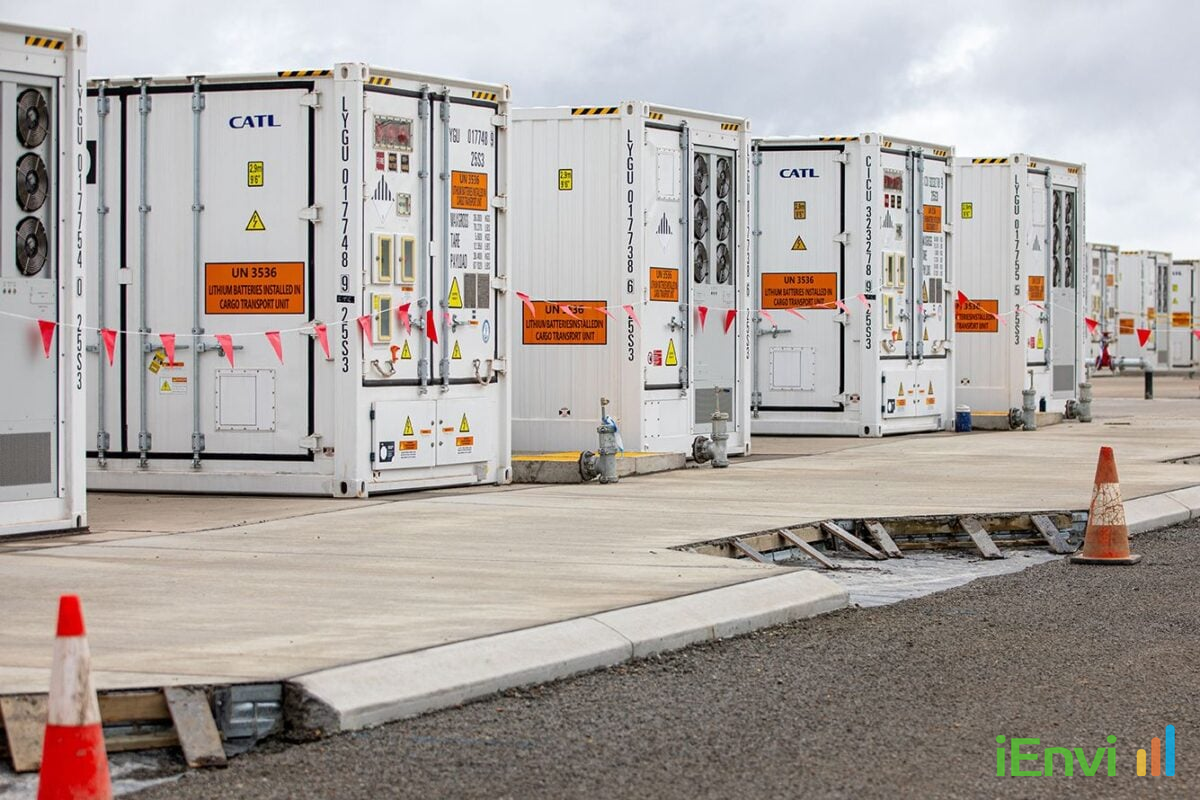
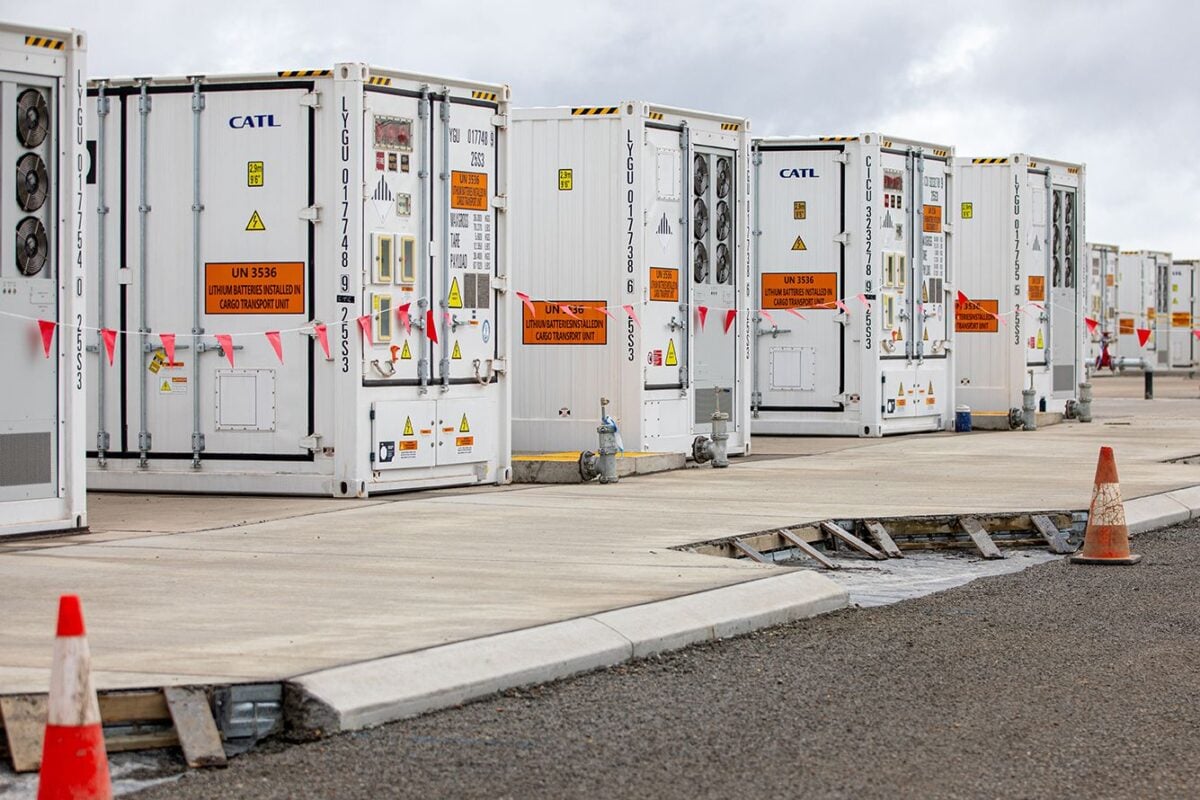
The project’s 500MW BESS component adds a further layer of complexity to the referral. Battery energy storage systems at this scale involve significant infrastructure, including battery modules, inverters, transformers, control buildings, and fire suppression systems, all of which require a cleared and graded footprint. The fact that the combined footprint for all project elements, including the BESS, remains within the 1,595-hectare disturbance cap suggests a high degree of spatial integration between the wind, solar, and storage components during the design phase. It also reflects the kind of early-stage civil and ecological co-design that allows infrastructure to be threaded around sensitive areas rather than retrofitted to avoid them after the layout has been locked in.
Under the EPBC Act, a referral triggers the delegate’s consideration of whether the proposed action is a controlled action, meaning whether it is likely to have a significant impact on one or more MNES. The listed MNES most directly engaged by this project include endangered species and ecological communities, particularly those associated with the Carnaby’s Cockatoo and the native vegetation communities of the Eneabba region, which include several threatened ecological communities under the EPBC Act. By limiting high-quality habitat clearing to below one hectare and formally excluding nesting areas from the development footprint, the proponent is building the factual foundation for an argument that the residual impact on MNES, after avoidance, is not significant. Whether the delegate accepts that characterisation will depend on the ecological assessment data, but the structural logic is sound and consistent with how the department has approached similar referrals.
Australian regulatory context: EPBC Act, the mitigation hierarchy, and biodiversity offset reform
The EPBC Act referral pathway is the primary mechanism by which large infrastructure projects in Australia trigger federal biodiversity scrutiny.
References and related sources
- Primary source: www.energy-storage.news
- EPBC Act
How iEnvi can help
iEnvi provides specialist consulting services relevant to this topic. Our team includes CEnvP Site Contamination Specialists with experience across contaminated land, groundwater, remediation, ecology, and regulatory compliance.
- iEnvi ecology services
- iEnvi contaminated land investigation services
- iEnvi remediation and validation services
- iEnvi expert services and independent review services
This is an iEnvi Machete news summary. Prepared by iEnvi to summarise the source article for contaminated land, groundwater, remediation, approvals and site risk professionals.
Published: 19 Apr 2026
Need advice on this topic? Speak to an iEnvi expert at info@ienvi.com.au or 1300 043 684, or contact us online.
Need advice on this issue? iEnvi provides practical, senior-led environmental consulting across contaminated land, remediation, ecology and environmental risk.
Team credentials Contaminated land services Remediation services Groundwater services Talk to iEnvi