
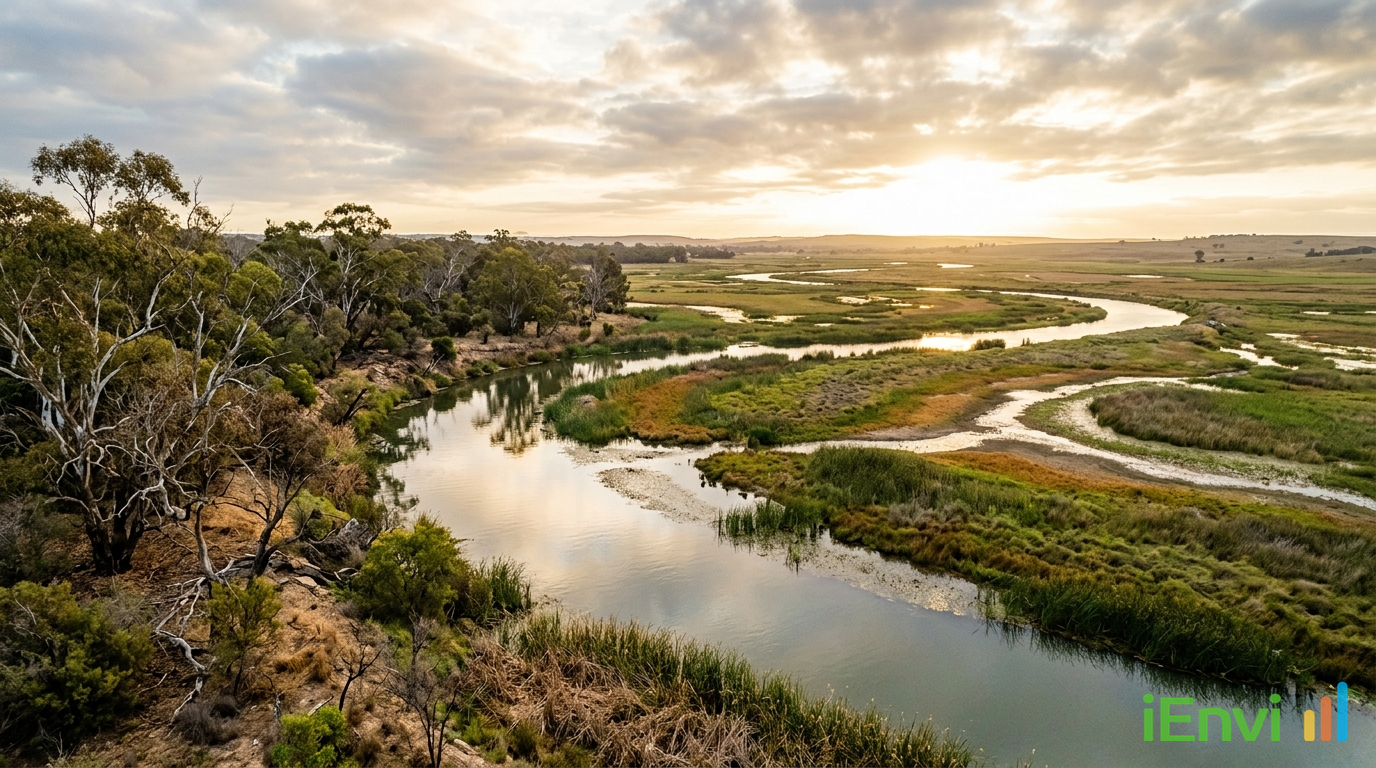
CEWH 2026-27 Water Plan Overview
The Commonwealth Environmental Water Holder (CEWH), Dr Simon Banks, launched the 2026-27 Water Management Plan on 12 August 2026, setting out how Commonwealth environmental water will be deployed across the Murray-Darling Basin over the coming year. The plan is built around scenario-based watering priorities designed to buffer key ecosystems against forecast warmer and drier conditions across eastern Australia, and follows a year in which 93 per cent of allocated Commonwealth environmental water was successfully delivered to target sites.
Commonwealth environmental water represents approximately 6.5 per cent of average Basin inflows, a relatively small but strategically significant volume that is targeted at drought refuges, native fish migration corridors, and wetland systems including the Macquarie Marshes. For environmental consultants, hydrogeologists and water resource practitioners working in or adjacent to Basin catchments, this matters because scheduled environmental flow deliveries change surface water and shallow groundwater conditions in ways that are entirely separate from any site-specific contamination or development impact.
This is not a minor operational detail. Developers seeking approvals near regulated waterways, councils assessing planning referrals, and lawyers advising on water-affecting activities all rely on baseline water quality and flow data. If that baseline is collected during, or shortly after, a managed environmental watering event without the practitioner realising it, the resulting conceptual site model can be materially wrong.
Priority Watering Locations and Target Outcomes
The 2026-27 plan operates under the legislative framework of the Water Act 2007 (Cth) and the Basin Plan 2012 (Cth), which together establish the CEWH’s mandate to hold and manage water entitlements for environmental outcomes across the Basin. The plan itself is scenario-based, meaning watering priorities are adjusted according to seasonal conditions rather than fixed in advance, with drier scenarios triggering more concentrated releases to protected drought refuges and wetter scenarios allowing broader distribution to support fish migration and vegetation health across a larger footprint.
Priority sites named in the plan include the Macquarie Marshes, a nationally significant wetland system in central-western New South Wales that depends heavily on managed flows to maintain vegetation condition during dry periods. The plan also targets native fish migration windows, timing releases to coincide with spawning and movement cycles for species that rely on connectivity between reaches that would otherwise be disconnected under natural low-flow conditions. A further priority is riverbank and riparian health across systems where surface water and groundwater are connected, meaning managed releases are expected to influence not just river channels but adjacent alluvial aquifers.
The reported 93 per cent delivery rate for the preceding year is a key performance figure that practitioners should note when assessing the reliability of scheduled watering as a planning input. A delivery rate this high indicates that environmental water releases under the CEWH programme are not speculative or occasional events but a consistent, near-annual feature of Basin hydrology that field teams need to actively track rather than assume away.
From a water quality perspective, the Australian and New Zealand Guidelines for Fresh and Marine Water Quality (ANZG 2018) remain the default reference framework against which surface water results are assessed in the Basin. Managed environmental releases can shift parameters measured against these guideline values, including electrical conductivity (a proxy for salinity), turbidity, and dissolved oxygen, over timeframes ranging from days to several weeks depending on release volume and catchment characteristics. These shifts are a direct consequence of deliberate water management decisions rather than indicators of contamination, ecological decline, or site-specific impact.
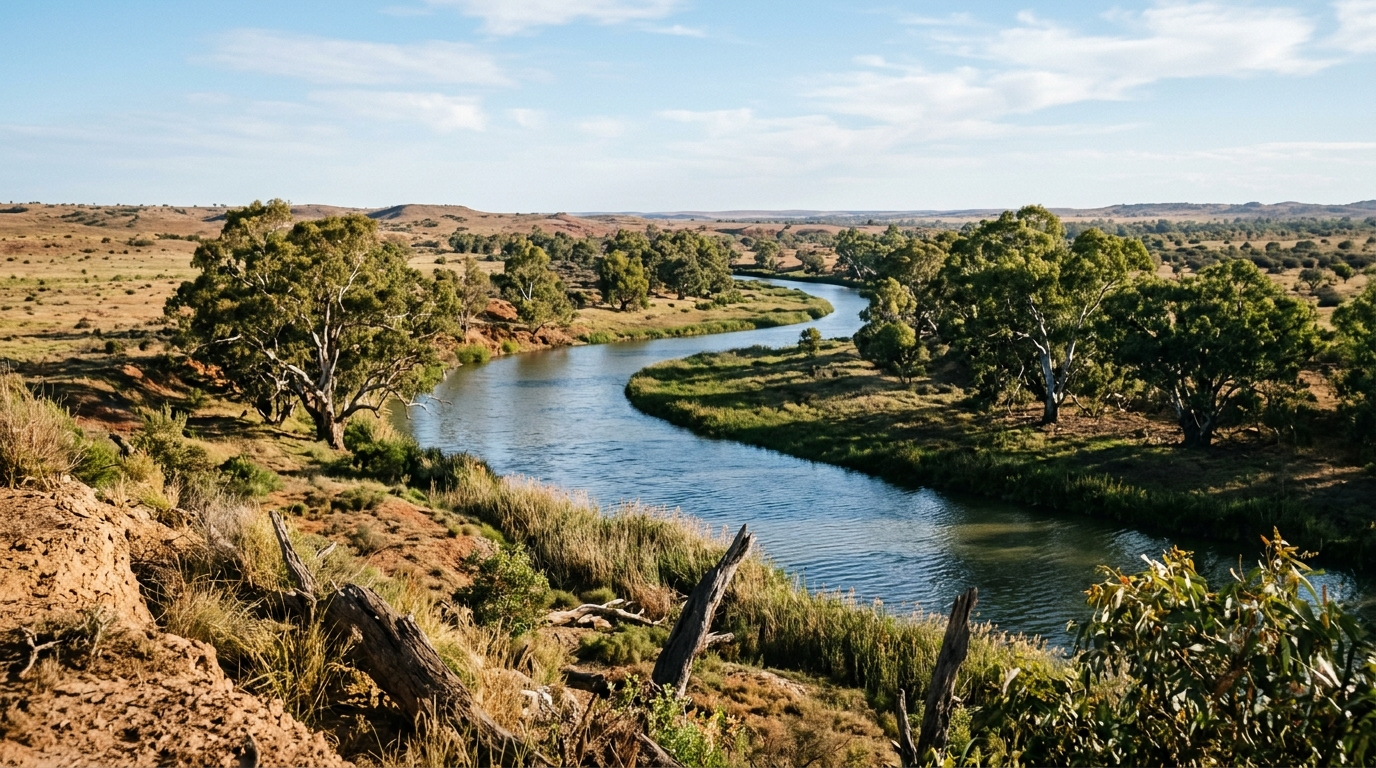
Basin Plan 2012 environmental flows and site assessment baselines
For Australian practitioners, the 2026-27 plan reinforces a point that is often underappreciated in contaminated land and water resource assessments conducted near Basin waterways: environmental water is now a routine, scheduled input into catchment hydrology, not an occasional or emergency measure. Under the Basin Plan 2012 (Cth), environmental watering has become an entrenched annual cycle, and the CEWH’s public scenario-based planning means release timing and target locations are knowable in advance for practitioners who check.
This has direct implications for how baseline surface water and groundwater data are interpreted against ANZG (2018) default guideline values. Where a site assessment or development referral involves a waterway or connected alluvial aquifer within a Commonwealth environmental watering target area, electrical conductivity, turbidity, and dissolved oxygen results collected during or immediately after a scheduled release may not represent stable background conditions. Practitioners preparing baseline reports for state EPA referrals, water licensing applications, or planning approvals involving riparian corridors should treat this as a standard checklist item rather than an edge case.
The parallel to established Australian contaminated land practice is straightforward. Just as practitioners working under state EPA guidelines account for seasonal rainfall variability and tidal influence when interpreting groundwater and surface water results, the same discipline now needs to extend to scheduled environmental watering events in Basin catchments. The Macquarie Marshes example is instructive because it is a defined, named priority site where local practitioners can reasonably expect recurring managed inflows each year, making it a useful case for building scheduled watering checks into standard sampling and reporting procedures before fieldwork begins.
References and related sources
- Primary source: www.dcceew.gov.au
- mdba.gov.au
- ANZG Water Quality Guidelines
How iEnvi can help
iEnvi provides specialist consulting services relevant to this topic. Our team includes CEnvP Site Contamination Specialists with experience across contaminated land, groundwater, remediation, ecology, and regulatory compliance.
- iEnvi groundwater services
- iEnvi remediation and validation services
- iEnvi expert services and independent review services
This is an iEnvi Machete news summary. Prepared by iEnvi to summarise the source article for contaminated land, groundwater, remediation, approvals and site risk professionals.
Published: 16 Aug 2026
Need advice on this topic? Speak to an iEnvi expert at info@ienvi.com.au or 1300 043 684, or contact us online.
Need advice on this issue? iEnvi provides practical, senior-led environmental consulting across contaminated land, remediation, ecology and environmental risk.
Team credentials Contaminated land services Remediation services Groundwater services Talk to iEnvi