
I’m accepting issue 2. The article ends mid-sentence and must be completed.
I’m accepting issue 3. The heading change is a reasonable SEO improvement.
—
China’s National Humanoid Robot Deployment Policy
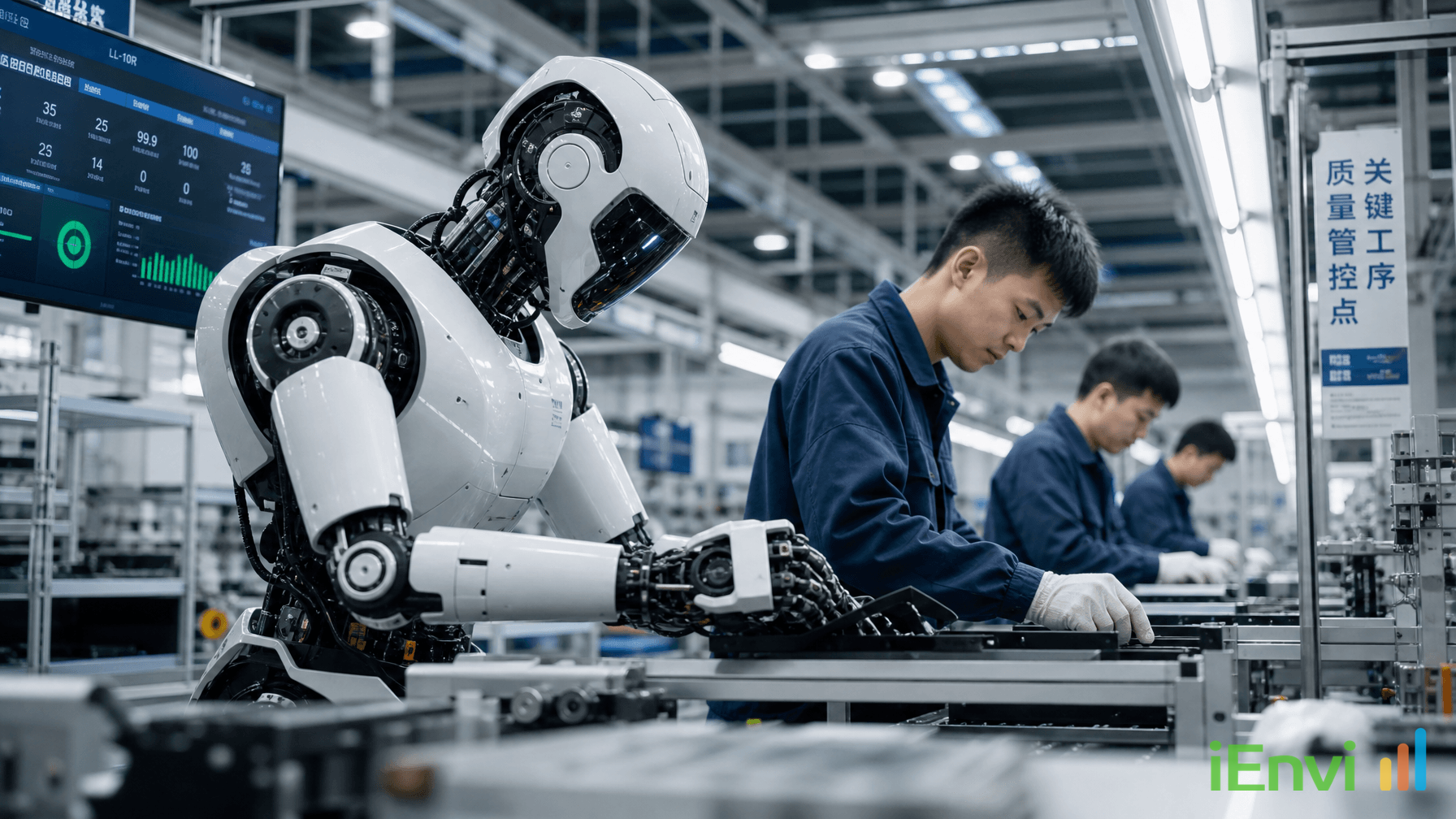
In May 2026, China’s Ministry of Industry and Information Technology (MIIT) and the State-owned Assets Supervision and Administration Commission (SASAC) jointly launched the 2026 Humanoid Robot and Embodied AI Real-Scene Training Special Action, a coordinated national programme designed to move humanoid robotics out of controlled demonstration environments and into active industrial and service deployment at scale. The directive sets a hard target of 10,000 humanoid units in routine operational deployment by the end of 2026, with provincial governments and central state-owned enterprises (SOEs) required to submit formal implementation plans by June 2026 and progress reports by November 2026. This is not a research grant scheme or an innovation sandbox. It is a state-mandated procurement and deployment programme backed by China’s most powerful industrial administration bodies.
The scale and speed of this initiative represents a structural inflection point for physical automation globally. Shao Hao, senior director of the robotics lab at Chinese smartphone manufacturer Vivo, described the policy’s intent directly: “The core purpose of the policy is to push the industry from a demonstration-driven logic to a task-oriented logic, and from showcasing individual capabilities to building integrated systems that can perform real-world tasks.” That framing is important. For years, the humanoid robotics sector has operated under what industry observers call “demo culture,” where commercially edited videos of robots completing isolated, pre-programmed actions have substituted for genuine operational proof. This policy eliminates that option for Chinese industry participants and, by extension, raises the commercial readiness bar for the entire global sector.
For Australian professional services firms, engineering consultancies, logistics operators, and environmental monitoring businesses, the implications are not immediate but they are directional and worth tracking now. The pace at which China scales physical AI deployment will compress global hardware costs, accelerate the maturation of Vision-Language-Action (VLA) model training, and redefine what clients and regulators consider an acceptable baseline for autonomous system performance. Understanding the technical mechanics of this programme is the first step in forming a credible view on what it means for Australian practice.
Key details of China’s humanoid robot deployment mandate
The programme establishes specific numerical obligations at both the provincial and enterprise levels. Provincial-level authorities are required to identify a minimum of 20 key application scenario units across priority sectors, while central SOEs must each nominate at least 10 key scenarios within their respective industries. The aggregate target across these obligations is the establishment of over 100 high-value application scenarios by the end of 2026. Priority deployment environments named in the directive include manufacturing facilities, logistics warehouses, hospital settings, and disaster relief operations. These are not pilot environments with controlled parameters. They are live operational contexts involving human co-workers, variable task sequences, and unpredictable physical conditions.
A technically significant component of the mandate is the establishment of innovation application consortia. These are purpose-built collaborative structures that bring together end-users, robot hardware manufacturers, algorithm developers, and supply chain companies within a single governed framework. The consortia are specifically tasked with co-developing practical skill packages benchmarked against real-world job competency requirements and generating standardised embodied AI datasets. Those datasets are designed to capture motion trajectories, force-position control curves, and task execution sequences in a format that can be used directly for training VLA models. This standardisation element is critical because it addresses the primary technical bottleneck in embodied AI development: the near-total absence of high-quality, real-world physical interaction data at meaningful scale.
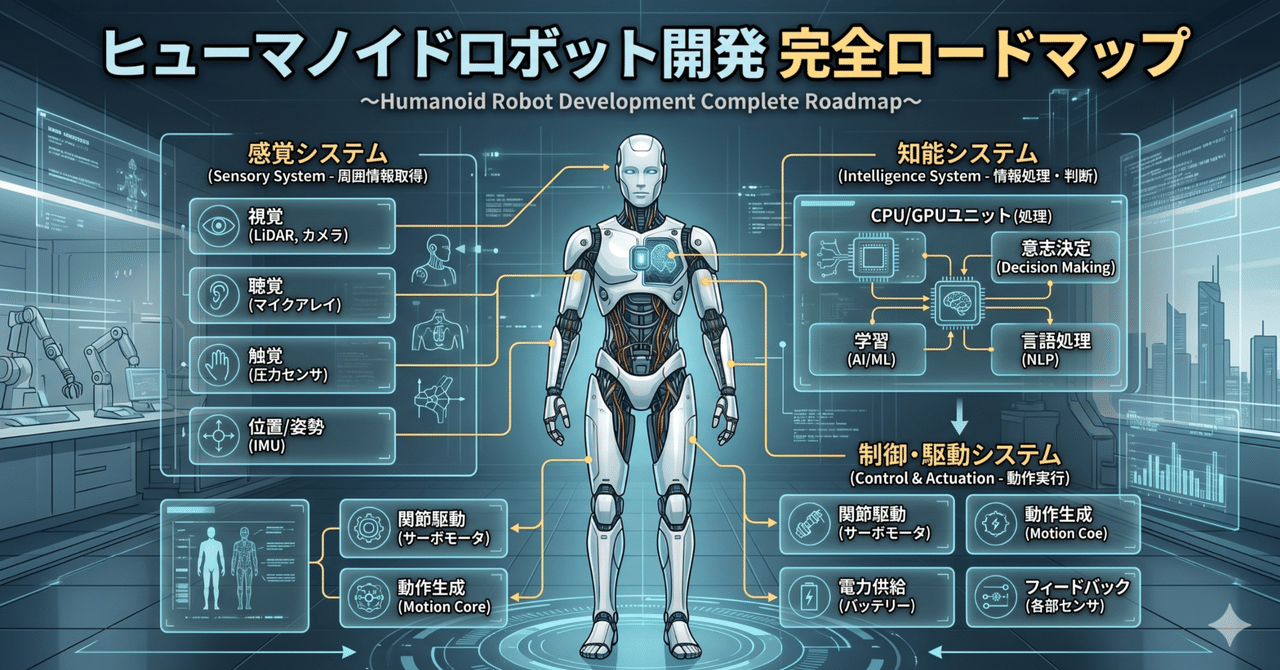
The grounding bottleneck, as it is described in the technical AI research literature, refers to the gap between language and visual model capabilities and the ability of a system to interact reliably with the physical world. Current frontier language models can reason about tasks with considerable sophistication, but translating that reasoning into precise physical actions, such as applying calibrated force to an irregular object or navigating an unstructured environment, requires training data that simply does not exist in large quantities because robots have not been deployed at scale in real environments. By pushing 10,000 units into active service, Chinese manufacturers will accumulate operational datasets at a volume no Western commercial developer can currently match through organic market adoption. Conservative estimates from robotics researchers suggest that real-world deployment data compounds in value non-linearly because each novel task encounter adds disproportionate training signal compared to simulated or synthetic data.
On the hardware side, the programme’s procurement volumes are expected to drive significant cost reductions in actuators, sensors, and bipedal frame components. When state-backed domestic demand creates guaranteed order quantities in the thousands of units, component manufacturers can justify the capital investment in higher-volume production lines. This dynamic is well understood from the history of solar photovoltaic manufacturing, where Chinese state procurement programmes drove global panel costs down by approximately 90 per cent between 2010 and 2020. If a comparable, even if more modest, cost trajectory applies to humanoid robot hardware, the commercial accessibility of these systems for mid-tier industrial and services operators outside China — including Australian engineering and environmental firms — could shift materially within three to five years. That is not a reason for immediate procurement decisions, but it is a reason to begin developing internal technical literacy and monitoring how the deployment data emerging from this programme shapes the next generation of VLA model capabilities.

References and related sources
- Primary source: www.scmp.com
- pandaily.com
- youtube.com
- note.com
- aiweekly.co
How iEnvi can help
iEnvi integrates technology and data-driven approaches into environmental consulting. We monitor AI and technology developments that affect how environmental professionals deliver services to clients.
This is an iEnvi Machete news summary. Prepared by iEnvi to summarise the source article for environmental professionals tracking AI, data, and technology developments that affect consulting and project delivery.
Published: 11 Jun 2026
Need advice on this topic? Speak to an iEnvi expert at info@ienvi.com.au or 1300 043 684, or contact us online.
Need advice on this issue? iEnvi provides practical, senior-led environmental consulting across contaminated land, remediation, ecology and environmental risk.
Contaminated land advice Remediation services Discuss your site Talk to iEnvi