
Overview
The Australian Government’s total investment in H5 bird flu (High Pathogenicity Avian Influenza) preparedness and response now exceeds $270 million. Minister for the Environment and Water Murray Watt and Minister for Agriculture, Fisheries and Forestry Julie Collins confirmed the figure in a joint media release issued on One Health Day, 3 November 2026. The funding sits within more than $2 billion in extra biosecurity funding provided by the Commonwealth. It includes $67.1 million through the Department of Climate Change, Energy, the Environment and Water (DCCEEW) for protective biodiversity interventions, habitat resilience and biosecurity upgrades at wildlife facilities across the country.
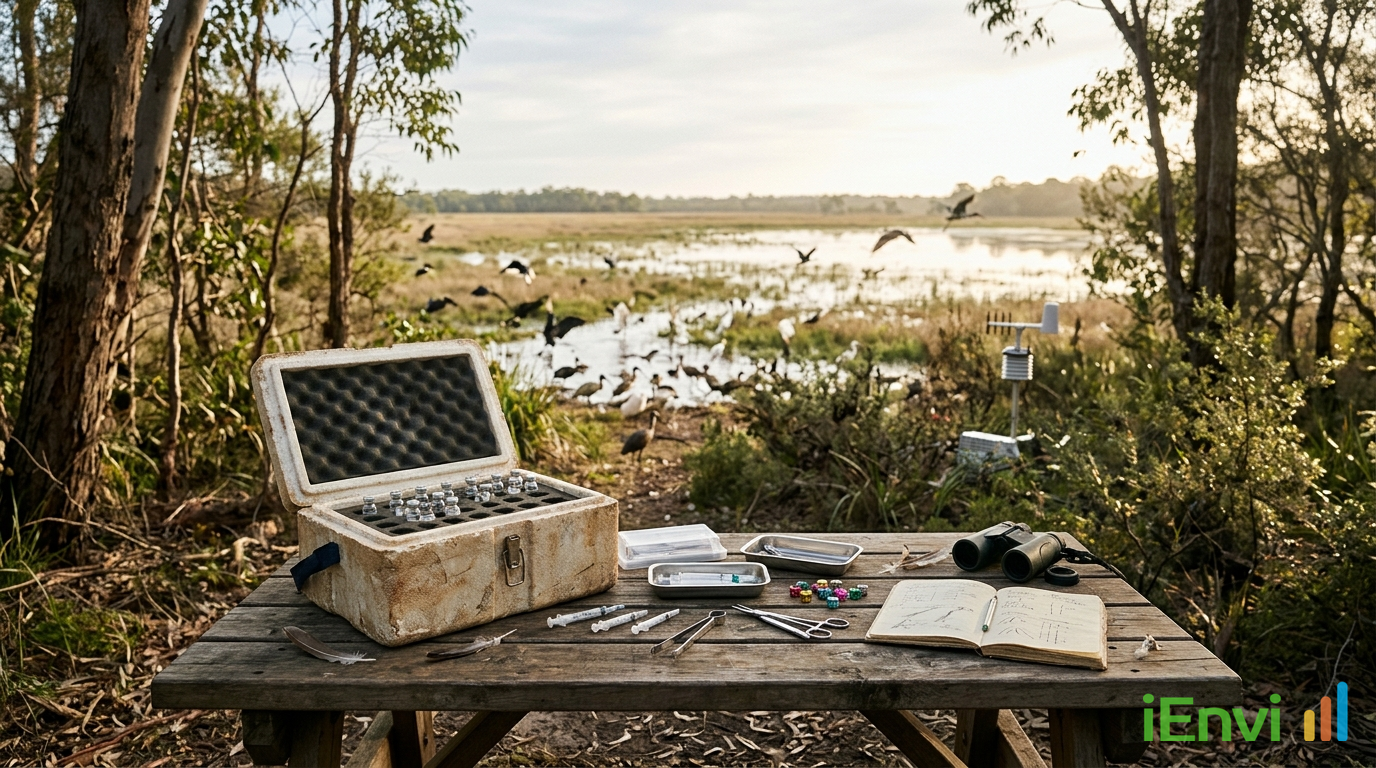
The centrepiece for conservation is a targeted vaccination programme. More than 13,000 birds have been identified for H5 vaccination, including the threatened orange-bellied parrot and black cockatoos, and more than 3,000 vaccines have been given nationally. The Government says the programme is understood to be the largest of its kind in the world. As of early November 2026, national figures showed Australia had recorded 737 confirmed H5 bird flu events in wildlife. There have been no detections in poultry or the wider agricultural production system, and authorities advise that the risk to human health remains low.
For developers, councils, in-house counsel and environmental consultants, the announcement confirms that avian disease is a live and funded national concern, not a remote agricultural issue. Projects that involve threatened bird species, wetland habitat, fauna handling or biodiversity offset obligations now operate in a setting where disease pressure on listed birds is formally recognised and resourced by the Commonwealth. In our view, that may affect how ecological risk is described in approvals, how field work is run and how long-term offset commitments are secured.
Key details
The Commonwealth’s H5 bird flu commitment exceeds $270 million, of which $67.1 million is allocated through DCCEEW to biodiversity protection. According to the joint media release, the DCCEEW funding is directed at three areas: accelerating protective biodiversity interventions, building habitat resilience, and upgrading biosecurity at wildlife facilities. The remainder of the H5 investment covers broader preparedness and response across the agriculture, environment and health portfolios, consistent with the One Health approach that links wildlife, agricultural and human health in national planning.
The release describes the vaccination programme as targeted, with threatened species among the priorities. With more than 13,000 birds identified and more than 3,000 vaccines given, the programme is at an early stage. The release reports vaccines given rather than birds fully vaccinated, so the number of birds with complete protection may be lower than the headline figure. Named priority species include the orange-bellied parrot, which is listed as Critically Endangered under the Environment Protection and Biodiversity Conservation Act 1999 (EPBC Act), and black cockatoos. Several black cockatoo taxa, including Carnaby’s and Baudin’s cockatoos, are listed as threatened under the EPBC Act.
The figure of 737 confirmed wildlife events needs to be read carefully. Under the definition used in national surveillance reporting, an event is a location where one or more animals were found dead or affected. It is not a count of deaths, and a single event can involve one bird or many. Practitioners citing the national situation in reports should use the term “events” and keep confirmed detections separate from wildlife investigations that are still under way. The current status for H5 bird flu (H5N1 clade 2.3.4.4b) is published on the Australian Government’s national bird flu website and by state wildlife agencies, and should be checked at the date of any report or advice.
The release confirms that H5 bird flu has not been detected in poultry or the agricultural production system. Authorities continue to assess the human health risk as low. Members of the public and field staff who find sick or dead wild birds should report them to the Emergency Animal Disease Watch Hotline on 1800 675 888 rather than handling or moving the carcasses.
Australian context
H5 bird flu in wildlife engages both the EPBC Act and the Biosecurity Act 2015 (Cth), and the two regimes operate side by side. The EPBC Act governs Matters of National Environmental Significance (MNES), including listed threatened species, key threatening processes, recovery plans and threat abatement plans. The Biosecurity Act 2015 and its supporting regulations provide the Commonwealth framework for emergency response, containment and animal disease management. On the ground, state laws do much of the work. The NSW Biosecurity Act 2015 imposes a general biosecurity duty and the Queensland Biosecurity Act 2014 a general biosecurity obligation on people dealing with biosecurity matter, while Victoria and South Australia manage notifiable animal disease through the Livestock Disease Control Act 1994 (Vic) and the Livestock Act 1997 (SA) respectively.
Under section 139 of the EPBC Act, the Minister must not act inconsistently with a recovery plan or threat abatement plan when deciding whether to approve an action that affects a listed threatened species. Where a recovery plan for a species such as the orange-bellied parrot addresses disease, that content is directly relevant to approval decisions. In practice, a species already facing new disease pressure is likely to have less capacity to absorb additional impacts from habitat clearing, disturbance or hydrological change. Significant impact assessments under the EPBC Act should therefore describe current disease pressure on the affected population, not just habitat condition and historical records.
References and related sources
- Primary source: minister.dcceew.gov.au
- EPBC Act
How iEnvi can help
iEnvi provides specialist consulting services relevant to this topic. Our team includes CEnvP Site Contamination Specialists with experience across contaminated land, groundwater, remediation, ecology, and regulatory compliance.
- iEnvi ecology services
- iEnvi contaminated land investigation services
- iEnvi remediation and validation services
- iEnvi expert services and independent review services
This is an iEnvi Machete news summary. Prepared by iEnvi to summarise the source article for contaminated land, groundwater, remediation, approvals and site risk professionals.
Published: 09 Nov 2026
Need advice on this topic? Speak to an iEnvi expert at info@ienvi.com.au or 1300 043 684, or contact us online.
Need advice on this issue? iEnvi provides practical, senior-led environmental consulting across contaminated land, remediation, ecology and environmental risk.
Team credentials Contaminated land services Remediation services Groundwater services Talk to iEnvi