

Overview
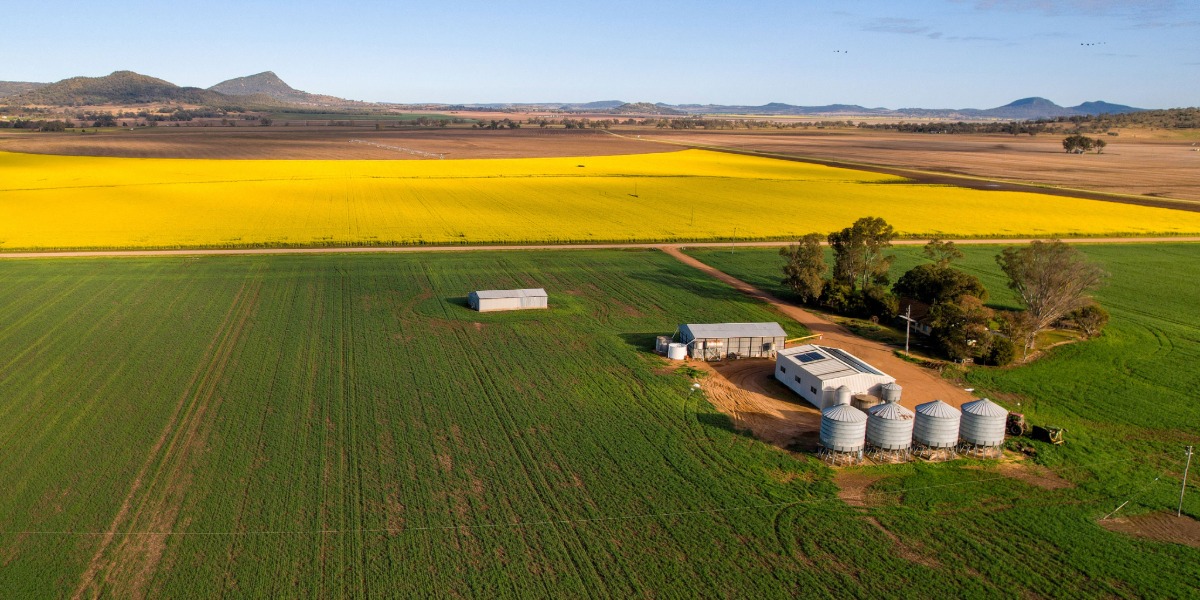
On Wednesday 4 November 2026, NSW Farmers launched FarmCheck, a members-only compliance tool that helps primary producers work out their obligations under the Commonwealth Environment Protection and Biodiversity Conservation Act 1999 (EPBC Act). The tool was launched during an on-farm visit at Illabo, near Junee in southern NSW. The visit was hosted by NSW Farmers EPBC Taskforce member Murray Norman and his family. Representatives of NSW Farmers, the newly operational National Environmental Protection Agency (National EPA) and NSW Local Land Services (LLS) attended.
FarmCheck responds to a long-standing problem in rural land management. A landholder can comply fully with NSW native vegetation rules and still be unsure whether they have complied with Commonwealth environmental law. The NSW and Commonwealth regimes run in parallel and use different legal tests. A clearing approval or Code notification under NSW law says nothing about whether the same action needs approval under the EPBC Act. NSW Farmers has also recently passed policy supporting a stronger bilateral agreement between the NSW and Australian governments to reduce duplication and recognise existing state assessments.
For environmental consultants, property lawyers, councils and rural developers, the launch is a useful prompt to revisit how federal matters are handled in rural land transactions, subdivisions and works approvals. The presence of the National EPA at a farm-level launch event shows that the Commonwealth regulator is engaging directly with land management and vegetation clearing. That has practical consequences for anyone relying on a state-only assessment to justify disturbance of native vegetation.
Key details
FarmCheck takes users through six steps. The tool prompts landholders to identify their proposed activities, gather property records, check NSW requirements, review Commonwealth mapping and protected species information, assess potential impacts and record their decision. The final step matters most from a legal standpoint. A dated, written decision record showing why a referral was or was not considered necessary is the kind of evidence a landholder will need if the Commonwealth later questions an action.
The legal trigger sits in Part 3 of the EPBC Act. Part 3 prohibits taking an action that has, will have or is likely to have a significant impact on a Matter of National Environmental Significance (MNES) without approval, unless an exemption applies. MNES include listed threatened species and ecological communities, listed migratory species, Ramsar wetlands, World and National Heritage places, Commonwealth marine areas, the Great Barrier Reef Marine Park, nuclear actions and water resources affected by coal seam gas and large coal mining development. A proponent who considers an action may be a controlled action refers it to the Commonwealth under s 68 in Part 7 of the Act. A decision under s 75 that an action is not a controlled action provides legal certainty for the action as described in the referral.
The NSW framework applies different tests. Clearing of native vegetation on rural land is regulated by Part 5A of the Local Land Services Act 2013 (NSW) and the Land Management (Native Vegetation) Code 2018. Threatened species and ecological communities listed at state level are protected under the Biodiversity Conservation Act 2016 (NSW), which also sets biodiversity offset triggers. Neither a Part 5A authorisation nor clearing under the Code discharges the federal obligation. The same ecological community can also be listed under both the BC Act and the EPBC Act with different condition criteria, so meeting one test does not settle the other.
The continuing use exemption in s 43B of the EPBC Act is frequently misapplied. It covers the lawful continuation of a use of land that was occurring immediately before the Act commenced on 16 July 2000. Enlargement, expansion or intensification of that use is generally not treated as a continuation, and an activity is not exempt simply because it has occurred on the property at some point. EPBC reform legislation is changing how the exemption applies to clearing, so the current statutory wording should be confirmed before any reliance on it.
Australian context
White Box-Yellow Box-Blakely’s Red Gum Grassy Woodland and Derived Native Grassland, commonly called Box Gum Grassy Woodland, is the classic example of dual-jurisdiction exposure in NSW. The community is listed as critically endangered under the EPBC Act and occurs across the tablelands and slopes, including the Riverina country around Illabo and Junee. The derived native grassland form is easily missed in paddocks that look improved or have lost most of their tree cover. Whether a patch meets the federal listing depends on condition thresholds that include patch size, native understorey composition and tree density. That determination requires a field survey by a suitably qualified ecologist, not a desktop guess from aerial imagery.
The standard starting point for any Commonwealth screening is the Protected Matters Search Tool, which reports MNES that may occur within a nominated area. The output is a list of possibilities, not a finding of presence. It needs to be ground-truthed with vegetation mapping, condition assessment and targeted species survey where the habitat warrants it. State mapping, including the Native Vegetation Regulatory Map used under Part 5A, is a separate dataset prepared for a separate purpose. A parcel categorised as exempt or regulated land on the NSW map can still support a federally listed community.
Bilateral agreements are the mechanism intended to reduce duplication between state and Commonwealth assessment. NSW Farmers is pushing for a stronger agreement that recognises existing state assessments and gives farmers more confidence that work done to meet NSW requirements will be accepted at the Commonwealth level. Until such an agreement is in place, the two regimes have to be addressed separately.
For consultants and advisers, the practical message from the FarmCheck launch is that federal screening should sit alongside the NSW assessment from the outset, not be added once state approvals are in hand. Where a rural property supports native vegetation that could form part of a listed community or provide habitat for listed species, a Protected Matters search, field verification by a qualified ecologist and a written record of the referral decision give landholders, purchasers and lenders a defensible position if the Commonwealth later asks how the decision was made.
References and related sources
- Primary source: www.beefcentral.com
- netimes.com.au
- nswfarmers.org.au
- sheppnews.com.au
- denipt.com.au
- EPBC Act
How iEnvi can help
iEnvi provides specialist consulting services relevant to this topic. Our team includes CEnvP Site Contamination Specialists with experience across contaminated land, groundwater, remediation, ecology, and regulatory compliance.
- iEnvi due diligence services
- iEnvi remediation and validation services
- iEnvi expert services and independent review services
This is an iEnvi Machete news summary. Prepared by iEnvi to summarise the source article for contaminated land, groundwater, remediation, approvals and site risk professionals.
Published: 08 Nov 2026
Need advice on this topic? Speak to an iEnvi expert at info@ienvi.com.au or 1300 043 684, or contact us online.
Need advice on this issue? iEnvi provides practical, senior-led environmental consulting across contaminated land, remediation, ecology and environmental risk.
Team credentials Contaminated land services Remediation services Groundwater services Talk to iEnvi