
Overview
On 28 May 2024, the Australian Commonwealth Government commenced what Attorney-General Mark Dreyfus described as “the largest legal claim ever brought by the Commonwealth” when it filed proceedings in the Federal Court of Australia against 3M Company and its local subsidiary, 3M Australia Pty Ltd. The action seeks more than A$2 billion in damages to recover costs the Commonwealth has incurred, and expects to continue incurring, in investigating, managing, and remediating per- and poly-fluoroalkyl substances (PFAS) contamination at 28 Defence bases across Australia. The scale of this litigation is without precedent in Australian environmental law and signals a fundamental shift in how PFAS liability is being framed at the highest levels of government.
The Commonwealth’s claim centres on allegations that 3M withheld critical environmental laboratory testing data, mischaracterised its aqueous film-forming foam (AFFF) products as biodegradable and safe for disposal, and failed to adequately disclose the severe environmental persistence and bioaccumulative risks associated with its fluorochemical formulations. AFFF, which contains PFOS (perfluorooctane sulfonate) and PFOA (perfluorooctanoic acid) among other PFAS compounds, was used extensively at Defence bases for firefighting training and emergency response over several decades. The contamination footprint generated by those activities is now one of the most complex and costly environmental legacies in Australia’s history.
For environmental professionals advising developers, investors, councils, and in-house legal teams, this litigation reframes PFAS from a regulatory compliance challenge into a demonstrably quantifiable financial liability. The A$2 billion claim, combined with Defence’s already-expended A$1.3 billion response budget, establishes a concrete cost benchmark for large-scale PFAS contamination that will influence how site assessments, remediation feasibility studies, and transaction due diligence reports are scoped and costed for years to come.
Key details of the Commonwealth’s A$2 billion PFAS claim against 3M
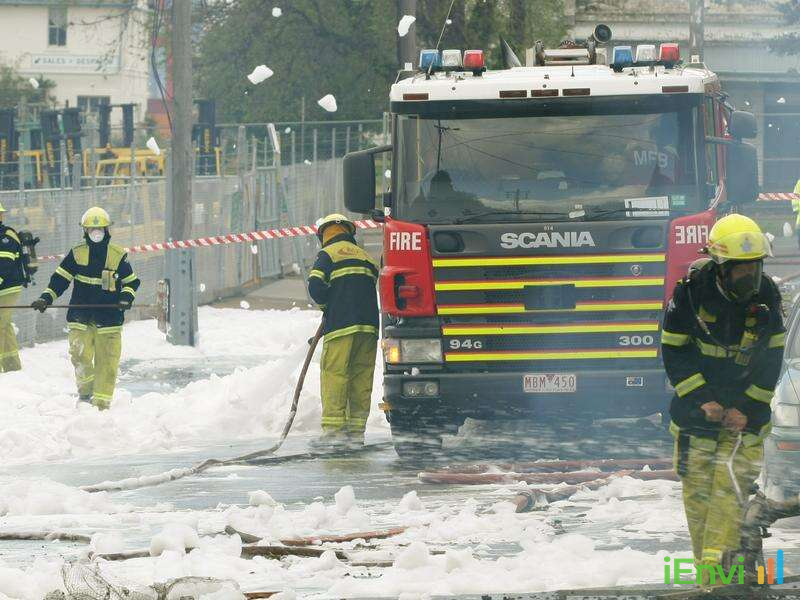
The Commonwealth’s statement of claim against 3M and 3M Australia Pty Ltd was filed in the Federal Court of Australia on 28 May 2024. The damages sought exceed A$2 billion, encompassing both historical expenditure and projected future costs associated with remediating PFAS contamination at 28 Defence bases. The Department of Defence has confirmed it has already spent more than A$1.3 billion on its PFAS response programme to date. This expenditure has funded the treatment of over 200,000 tonnes of contaminated soil and the construction and operation of seven water treatment plants positioned near Defence sites to intercept and manage migrating PFAS groundwater plumes before they reach sensitive receptors including municipal drinking water supplies and waterways.
The Commonwealth’s allegations go directly to product stewardship and disclosure obligations. The government alleges that 3M possessed environmental laboratory testing data that demonstrated the persistence and toxicity of its fluorochemical products but withheld that information from regulators and customers. Furthermore, the government alleges that 3M actively characterised its AFFF products as biodegradable and safe for disposal, characterisations the Commonwealth contends were materially false and contributed directly to the widespread and largely uncontrolled application of AFFF at Defence installations across the country. These alleged misrepresentations, if proven, would have significant implications for how courts assess manufacturer liability for legacy contamination in future cases involving other industrial chemicals.
3M has signalled it will contest the action, noting publicly that it ceased sales of PFOS and PFOA-containing products in Australia approximately two decades ago. That defence position is factually consistent with the broader global timeline: 3M voluntarily phased out PFOS production globally between 2000 and 2002 following scrutiny from the United States Environmental Protection Agency. However, cessation of sales does not extinguish liability for contamination caused by products already in the field, and Australian courts will need to assess the evidentiary record on what 3M knew, and when, about the environmental fate and persistence of its fluorochemical compounds. The litigation is expected to be protracted, technically complex, and heavily reliant on expert scientific evidence.
From a regulatory standpoint, the investigation and remediation works referenced in the claim must be assessed against the current in-force framework. That framework includes PFAS NEMP 3.0, published in March 2025, which supersedes NEMP 2.0 and establishes updated investigation and health-based guidance values for PFAS in soil, groundwater, and surface water. The ANZG 2018 (Australian and New Zealand Guidelines for Fresh and Marine Water Quality) provides the relevant ecological protection guideline values for freshwater and marine environments. The updated Australian Drinking Water Guidelines (ADWG), revised as of June 2025, set the relevant health-based guideline values for PFAS in potable water supplies. Any site assessment or legal expert evidence that relies on superseded versions of these documents will be subject to challenge in both regulatory and litigation contexts.
Australian context: PFAS contamination frameworks, Defence sites, and national regulatory alignment
Australia has one of the most developed PFAS regulatory frameworks in the Asia-Pacific region, shaped almost entirely by the contamination footprint created by AFFF use at Defence bases and civilian airports. The PFAS National Environmental Management Plan, now in its third iteration (NEMP 3.0, March 2025), is the primary guidance document for PFAS site investigation and risk assessment in Australia.
References and related sources
- Primary source: www.sbs.com.au
- kyfreepress.com.au
- straitstimes.com
- sbs.com.au
- freemalaysiatoday.com
- PFAS National Environmental Management Plan (NEMP)
- Australian Drinking Water Guidelines
How iEnvi can help
iEnvi provides specialist consulting services relevant to this topic. Our team includes CEnvP Site Contamination Specialists with experience across contaminated land, groundwater, remediation, ecology, and regulatory compliance.
- iEnvi site assessment services
- iEnvi remediation and validation services
- iEnvi expert services and independent review services
This is an iEnvi Machete news summary. Prepared by iEnvi to summarise the source article for contaminated land, groundwater, remediation, approvals and site risk professionals.
Published: 28 May 2026
Need advice on this topic? Speak to an iEnvi expert at info@ienvi.com.au or 1300 043 684, or contact us online.
Need advice on this issue? iEnvi provides practical, senior-led environmental consulting across contaminated land, remediation, ecology and environmental risk.
Team credentials Environmental management plans Contaminated land advice Remediation services Talk to iEnvi