
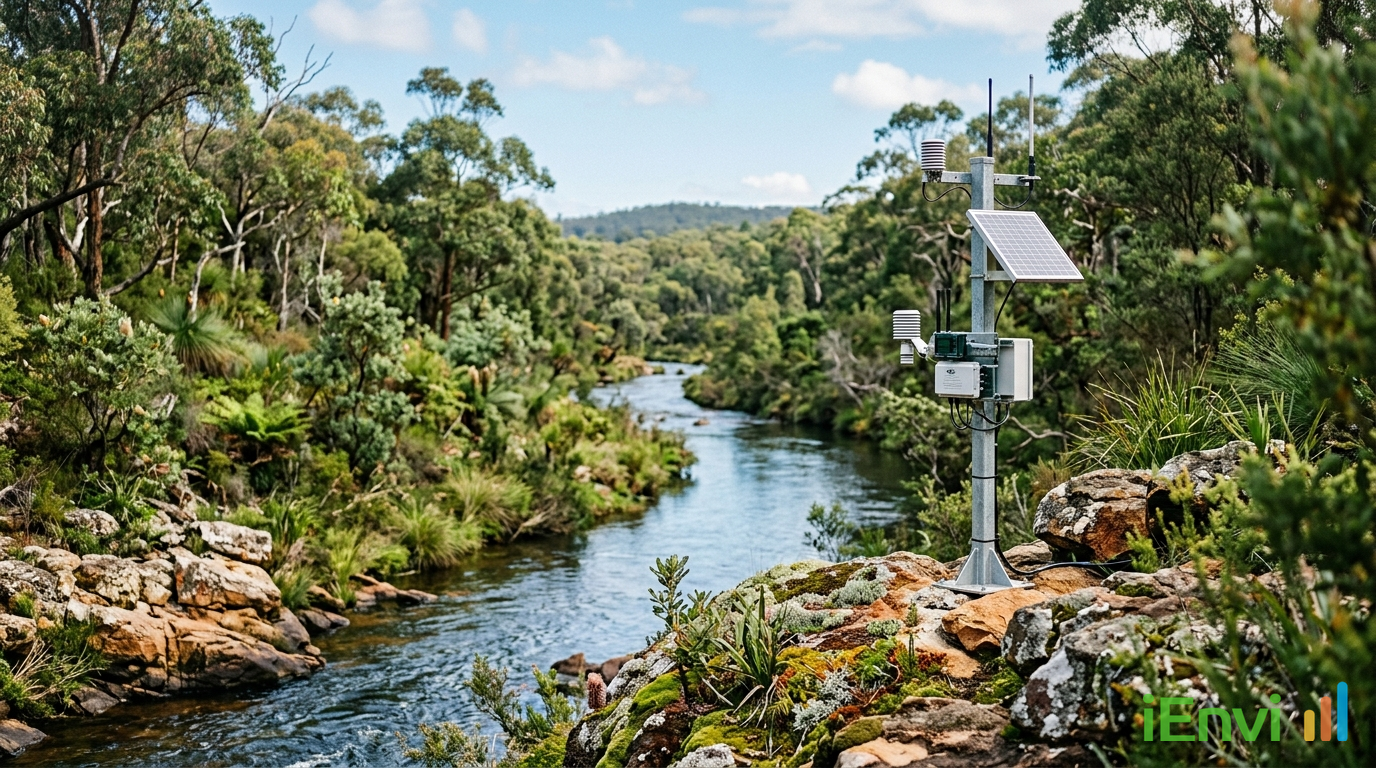
Federal Government confirms $110.6 million for NESP Phase 3, reshaping Australia’s environmental evidence base through to 2034
NESP Phase 3 Funding and Environmental Policy Context
The Federal Government has confirmed a $110.6 million investment in Phase 3 of the National Environmental Science Program (NESP), with funding allocated across seven years from 2027 to 2034 as part of the 2026-27 Budget. The announcement, published by the Department of Climate Change, Energy, the Environment and Water (DCCEEW) on 25 May 2026, marks a long-term commitment to the scientific infrastructure underpinning Australia’s environmental regulatory system. NESP is the primary mechanism through which the Commonwealth funds independent environmental and climate science, and its outputs directly inform policy thresholds, assessment methodologies, and legislative standards.
The timing of this confirmation is strategically important. Phase 3 coincides with two of the most consequential shifts in Australian environmental governance in a generation: the establishment of the new National EPA, expected to commence operations on 1 July 2026, and the ongoing rollout of the EPBC Act reform package, including the development of legally binding National Environmental Standards. The science produced under NESP Phase 3 will not sit in academic journals alone. It will populate the evidentiary foundation that regulators, assessors, and project proponents are required to reference when demonstrating compliance with incoming nature law reforms.
For environmental professionals working across ecological assessments, biodiversity offsets, climate adaptation, and long-term restoration programmes, this announcement signals a period of updates to assessment methodologies and program design. A core design feature of Phase 3 is the genuine integration of Indigenous knowledge and formal partnerships with Indigenous land and sea managers. DCCEEW is currently refining the detailed program scope, with guidelines anticipated later in 2026. Practitioners and project proponents who wait for those guidelines before adjusting their workflows will find themselves behind schedule on projects where program design decisions are being made now.
Key details of the NESP Phase 3 funding and program design
The $110.6 million investment is spread across a seven-year period from 2027 to 2034, providing an average annual allocation of approximately $15.8 million per year. This multi-year commitment is a deliberate feature of the program’s design. Complex ecological and climate adaptation research requires sustained funding cycles that extend well beyond standard budget appropriations. The seven-year horizon aligns NESP Phase 3 with the anticipated implementation timelines for National Environmental Standards and the establishment of the National EPA’s operational frameworks.
NESP has historically operated through research hubs hosted at Australian universities and research institutions, each focused on a defined environmental domain such as marine and coastal environments, threatened species recovery, clean air and urban landscapes, and earth systems. While the final scope of Phase 3 hubs is subject to the program design process currently underway at DCCEEW, the program’s strategic alignment with the EPBC Act reform package means that research priorities will be shaped by the evidence gaps identified during the Nature Positive Plan consultation process. National Environmental Standards, once enacted, will require defensible, peer-reviewed scientific baselines for biodiversity condition, species habitat extent, and ecosystem function. NESP Phase 3 is the mechanism through which many of those baselines will be established or updated.
The integration of Indigenous knowledge is described by DCCEEW as a core pillar of Phase 3, representing a substantive shift from earlier phases where Indigenous engagement was often structured as consultation rather than genuine co-design. The program is moving toward formal partnerships with Indigenous land and sea managers as knowledge holders and research participants. This has direct implications for how ecological assessments reference land management history and landscape condition, particularly in regions where Indigenous Protected Areas, Indigenous Land Use Agreements, and ranger programmes are active. Practitioners should expect that future guidelines issued under the National Environmental Standards may reference culturally informed land management practices as part of the evidence framework for offset calculations and restoration outcomes.
DCCEEW has indicated that detailed program guidelines will be released later in 2026. Until those guidelines are finalised, the program scope remains in active development. However, the budget confirmation itself is significant because it establishes the funding envelope and seven-year timeframe as fixed parameters, removing the uncertainty that has historically made it difficult for research institutions and environmental consultancies to plan long-term project pipelines around NESP outputs.
Australian regulatory context: NESP Phase 3 and the EPBC Act reform package
NESP Phase 3 does not operate in isolation. It is directly linked to the legislative and regulatory architecture currently being constructed around the reformed EPBC Act and the incoming National EPA. The EPBC Act, which has governed Commonwealth environmental assessment and approval since 1999, is undergoing its most substantial structural reform following the 2020 Samuel Review. That review identified that the Act lacked a credible, independently governed science function and that assessment decisions were not consistently grounded in the best available evidence. NESP Phase 3 is partly a response to that finding, providing a long-term, funded mechanism for generating the independent science that the reformed framework will require.
The National Environmental Standards, once legislated, will establish enforceable thresholds for matters of national environmental significance, requiring proponents to demonstrate compliance against defined environmental baseline data. The credibility of those baselines depends on the quality and independence of the underlying science. NESP Phase 3 is the primary Commonwealth vehicle for producing and maintaining that science across domains including threatened species, marine environments, and climate adaptation, making it a foundational input to EPBC Act reform compliance across the project assessment and approval pipeline.
References and related sources
- Primary source: www.dcceew.gov.au
- EPBC Act
How iEnvi can help
iEnvi provides specialist consulting services relevant to this topic. Our team includes CEnvP Site Contamination Specialists with experience across contaminated land, groundwater, remediation, ecology, and regulatory compliance.
- iEnvi contaminated land investigation services
- iEnvi remediation and validation services
- iEnvi expert services and independent review services
This is an iEnvi Machete news summary. Prepared by iEnvi to summarise the source article for contaminated land, groundwater, remediation, approvals and site risk professionals.
Published: 25 May 2026
Need advice on this topic? Speak to an iEnvi expert at info@ienvi.com.au or 1300 043 684, or contact us online.
Need advice on this issue? iEnvi provides practical, senior-led environmental consulting across contaminated land, remediation, ecology and environmental risk.
Team credentials Contaminated land services Remediation services Groundwater services Talk to iEnvi