
Overview
New research from CSIRO has delivered a critical finding for the remediation industry: thermal treatment of PFAS-contaminated soil at standard thermal desorption temperatures does not destroy PFAS compounds. Instead, it volatilises them into the gas phase, where they form a complex mixture of potentially harmful intermediary compounds. True mineralisation, meaning the complete breakdown of PFAS into simple inorganic products, requires temperatures approaching 1000 degrees Celsius. This research has immediate implications for how environmental professionals assess, specify, and validate thermal remediation technologies for PFAS-affected sites across Australia.
Key details
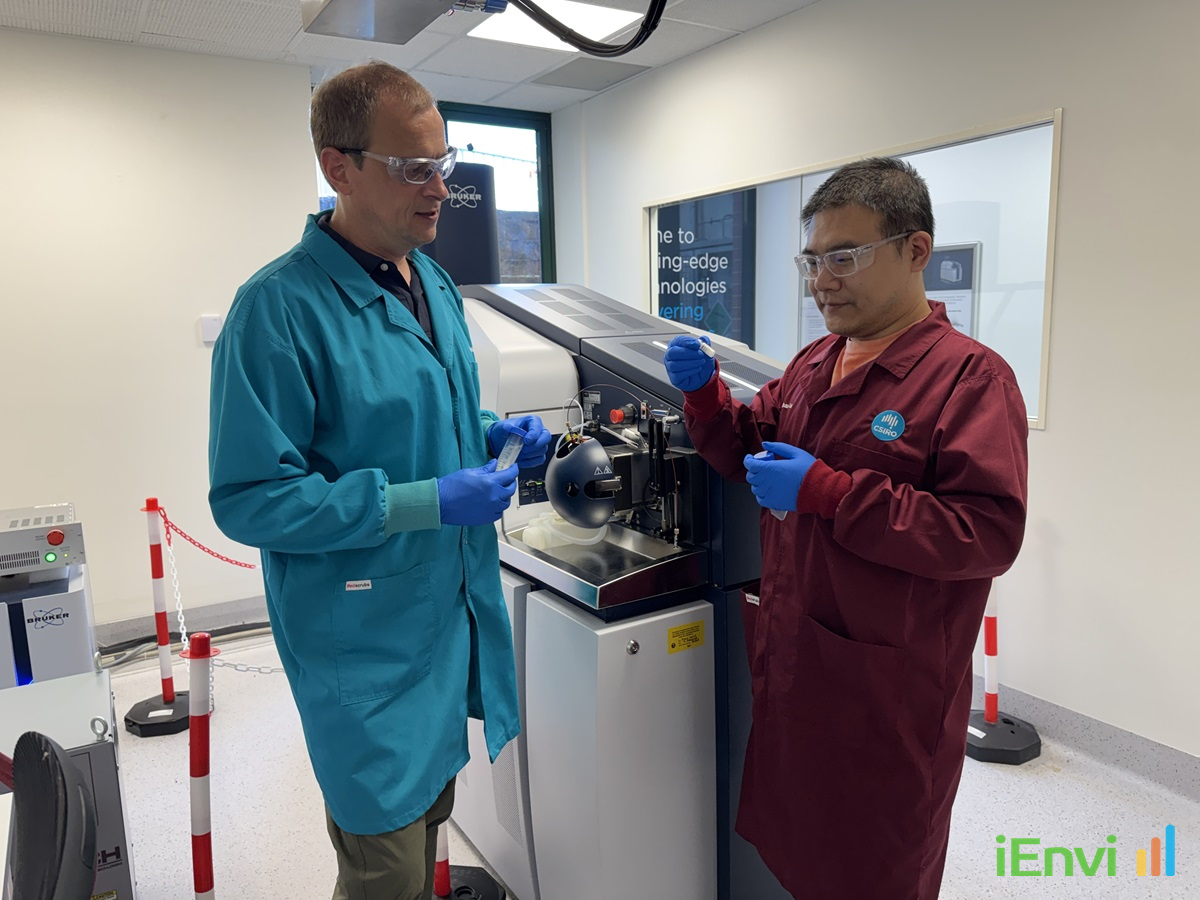
The CSIRO research team, led by Principal Research Scientist Dr Jens Blotevogel, used an Ion Cyclotron Resonance Mass Spectrometer to analyse the gaseous byproducts generated during high-temperature treatment of PFAS-contaminated materials. Their findings were stark:
- 200 to 700 degrees Celsius: At these temperatures, which encompass the operating range of most conventional thermal desorption units, PFAS compounds do not mineralise. Instead, they transform into tens to hundreds of temporary and strongly bonded intermediary compounds in the gas phase. These intermediary products are themselves fluorinated organic compounds and may pose environmental and health risks.
- Destruction versus transfer: Operations claiming “99.99 per cent PFAS removal” from soil at standard thermal desorption temperatures may be accurately reporting removal from the solid matrix, but this removal occurs through volatilisation, not destruction. The PFAS mass is transferred to the gas phase rather than being eliminated.
- 1000 degrees Celsius threshold: Complete destruction (mineralisation) of PFAS compounds, breaking them down to carbon dioxide, water, and hydrogen fluoride, only occurs at temperatures approaching 1000 degrees Celsius. Below this threshold, incomplete destruction generates a complex suite of fluorinated byproducts.
- Emission control implications: If PFAS is being volatilised rather than destroyed, the off-gas treatment systems on thermal desorption units become critically important. Standard baghouse filters and activated carbon adsorption beds may not be adequate to capture the full spectrum of fluorinated intermediary compounds generated during incomplete thermal treatment.
Australian context
This research has significant regulatory and practical implications within Australia’s PFAS management framework:
- PFAS NEMP 3.0: The PFAS National Environmental Management Plan (NEMP 3.0) provides guidance on assessing and selecting remediation technologies for PFAS-affected sites. The CSIRO findings suggest that remediation technology assessments under the NEMP must more rigorously evaluate whether proposed thermal treatments achieve actual destruction or merely transfer contaminant mass between environmental media.
- State environmental legislation: Under the NSW Protection of the Environment Operations Act 1997 and the Victorian Environment Protection Act 2017, the general environmental duty requires operators to prevent pollution and environmental harm. If thermal treatment facilities are releasing fluorinated intermediary compounds to atmosphere, this may constitute a breach of these obligations.
- Remedial Action Plans (RAPs): Environmental consultants preparing RAPs that propose thermal desorption for PFAS-contaminated soil must now critically evaluate the operating temperature and emission control capabilities of the nominated treatment facility. Regulators are likely to demand greater scrutiny of these details.
- Mass balance accounting: The research highlights the need for comprehensive mass balance studies during thermal treatment operations. Simply measuring PFAS reduction in the treated soil is insufficient. The fate of PFAS mass in off-gas streams, scrubber water, and other secondary waste streams must be quantified to demonstrate genuine destruction rather than redistribution.
- Stack emission testing: Regulators can be expected to require more rigorous stack emission testing for thermal treatment facilities handling PFAS waste, including analysis for a broader suite of fluorinated compounds beyond the standard PFAS analyte lists.
Practical implications
Environmental consultants, remediation contractors, and site auditors should consider the following in light of this research:
- Technology selection: When evaluating thermal treatment options for PFAS-contaminated materials, confirm the operating temperature and whether the facility can achieve and sustain temperatures approaching 1000 degrees Celsius. Standard low-temperature thermal desorption units (typically operating at 300 to 550 degrees Celsius) should not be relied upon for PFAS destruction.
- Vendor claims scrutiny: Critically assess vendor claims of PFAS destruction efficiency. Demand evidence of mineralisation (not just removal from the solid matrix) supported by mass balance data including off-gas analysis.
- Emission monitoring: For sites where thermal treatment is already under way, recommend expanded emission monitoring to characterise the full spectrum of fluorinated compounds in stack emissions and scrubber discharge.
- Regulatory preparedness: Anticipate that state regulators will update their guidance and enforcement posture in response to this CSIRO research. Early adoption of more rigorous assessment and monitoring practices will position consultants and their clients favourably.
- Alternative technologies: Consider non-thermal destruction technologies, such as supercritical water oxidation, electrochemical treatment, or mechanochemical destruction, as alternatives or complements to high-temperature thermal treatment for PFAS waste streams.
References and related sources
Original source: CSIRO
Source published: 20 March 2026
Added to Enviro News: 20 March 2026
Read the primary source article
Join the discussion on LinkedIn
Related references:
- PFAS National Environmental Management Plan (NEMP 3.0)
- Protection of the Environment Operations Act 1997 (NSW)
- Environment Protection Act 2017 (Vic)
How iEnvi can help
iEnvi has deep expertise in PFAS site investigation, risk assessment, and remediation technology evaluation. Our contaminated land specialists can help you assess whether current or proposed thermal treatment approaches genuinely achieve PFAS destruction, and our remediation team can advise on alternative destruction technologies and develop robust Remedial Action Plans that meet evolving regulatory expectations. For sites facing regulatory scrutiny or legal proceedings related to PFAS contamination, iEnvi’s expert witness services provide independent, technically rigorous opinion and reporting.
This is an iEnvi Machete news summary. Prepared by iEnvi to summarise the source article for contaminated land, groundwater, remediation, approvals and site risk professionals.
Need advice on this topic? Speak to an iEnvi expert at info@ienvi.com.au or 1300 043 684, or contact us online.
Need advice on this issue? iEnvi provides practical, senior-led environmental consulting across contaminated land, remediation, ecology and environmental risk.
Environmental management plans Contaminated land advice Remediation services Groundwater services Talk to iEnvi