
Impact of the 2nd National Ecosystem Account on Environmental Planning
On 23 April 2026, the Department of Climate Change, Energy, the Environment and Water (DCCEEW), working in collaboration with the Australian Bureau of Statistics (ABS) and CSIRO, published Australia’s 2nd National Ecosystem Account. The document represents the most comprehensive government-backed attempt yet to translate the physical condition of Australia’s natural environment into formal economic terms. It assigns hard dollar values to the ecosystem services that support productive industries, coastal communities, and long-term national prosperity, including carbon storage, water provision, storm surge protection, and pastoral feed supply.
The release matters because it directly addresses a persistent gap in environmental decision-making: the inability to place credible, defensible economic figures on what nature actually provides. Developers, corporate boards, and government agencies have long acknowledged that ecosystems generate value, but without standardised government-endorsed valuations, that acknowledgement rarely translated into financial planning or investment decisions. The 2nd National Ecosystem Account changes the evidentiary baseline. Environmental professionals now have access to sovereign-level data capable of supporting ecological restoration business cases, biodiversity offset valuations, natural capital disclosures, and environmental impact assessments with a rigour that was previously unavailable.
The timing of the publication is deliberate. The data will directly inform the State of the Environment (SoE) 2026 report, which is mandated under the Environment Protection and Biodiversity Conservation Act 1999 (EPBC Act). It also arrives as Australia’s Nature Repair Market begins to mature and as mandatory climate-related financial disclosures progressively take effect for large Australian corporations. For environmental consultants, ecologists, ESG practitioners, and the corporate clients they advise, the account provides the quantitative scaffolding needed to express environmental outcomes as measurable asset creation rather than a line item in a compliance budget.
Key Details from the 2nd National Ecosystem Account
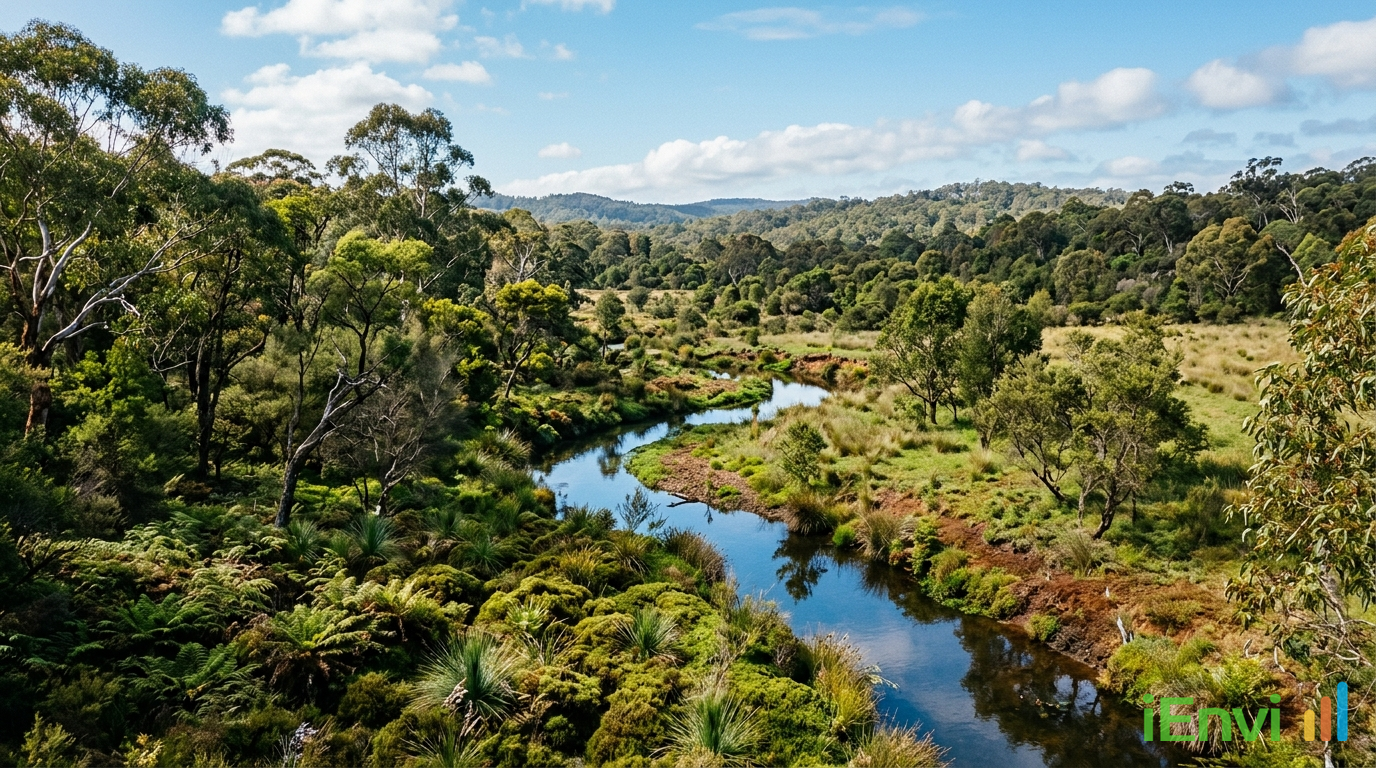
The most striking figure in the 2nd National Ecosystem Account relates to carbon storage. In the 2021 to 2022 reporting period, Australian ecosystems stored 34.6 million kilotonnes of carbon across grasslands, native forests, savannas, and mangroves. DCCEEW assigned a formal economic value of $59.5 billion to this stored carbon. This is not a modelled projection or a voluntary market estimate; it is a government-calculated figure derived from physical stock data and applied valuation methodology developed in accordance with the United Nations System of Environmental-Economic Accounting Ecosystem Accounting (SEEA EA) framework. The SEEA EA is the international statistical standard that forms the basis of national ecosystem accounting, and Australia’s adoption of it ensures that these figures are internationally comparable and methodologically defensible.
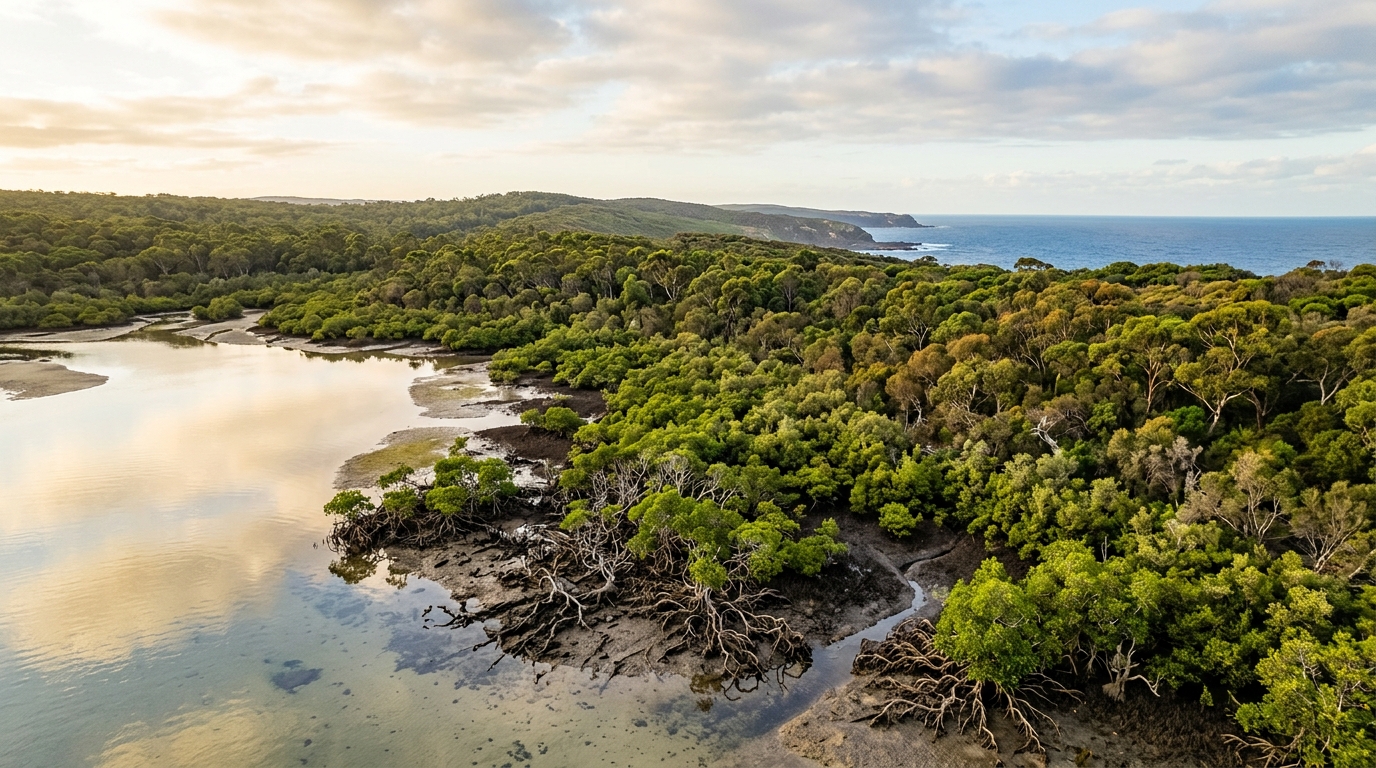
Beyond carbon, the accounts quantify ecosystem services across several other dimensions with equal specificity. Natural storm and tidal surge protection services currently defend 104,000 dwellings and 207,000 residents from 1-in-100-year coastal inundation events. This figure has direct relevance to coastal planning, insurance underwriting, and infrastructure investment decisions, particularly given the trajectory of sea level rise projections for the Australian coastline. The physical risk mitigation value of intact coastal ecosystems, particularly mangroves and saltmarshes, is now supported by a federal dataset rather than project-specific modelling alone.
Water provision data from the 2022 to 2023 reporting period shows that Australian ecosystems contributed 10.8 million megalitres of surface water for household and material use, a service valued at $864 million. This figure captures the contribution of vegetated catchments, wetlands, and riparian corridors to the national water supply and is directly relevant to land use planning decisions that involve clearing or fragmenting native vegetation. The accounts also record that ecosystems supplied 120.2 million tonnes of natural feed for sheep and cattle during the same reporting period, a figure that contextualises the agricultural sector’s dependence on functioning grasslands and savannas that receive no formal valuation under conventional financial accounting.
The methodology supporting the accounts draws on physical data collected across multiple federal and state datasets and applies condition-adjusted valuations to ecosystem extent maps. The accounts use both asset-based and flow-based valuation approaches, measuring both the stock of natural capital and the annual flow of services it generates. This dual approach is significant because it mirrors the structure of financial accounting, making the outputs directly legible to treasury departments, corporate finance teams, and sustainability auditors who are accustomed to balance sheet and income statement formats rather than ecological survey reports.
Australian Regulatory and Policy Context for Natural Capital Valuation
Australia’s adoption of the SEEA EA framework for national ecosystem accounting places it within a growing cohort of nations formalising natural capital measurement at the sovereign level. Domestically, the accounts sit within a thickening policy environment. The EPBC Act mandates periodic State of the Environment reporting, and the 2026 report will be the first to draw on a second iteration of national ecosystem accounts, allowing trend analysis and comparison across reporting periods. This trajectory matters because trend data is what regulators and courts rely on when evaluating cumulative impact and the adequacy of offset arrangements.
The Nature Repair Market, established under the Nature Repair Market Act 2023, creates a voluntary biodiversity certificate scheme through which landholders can generate tradeable credits by undertaking activities that protect or restore native flora and fauna. The 2nd National Ecosystem Account strengthens the analytical foundation for this market by providing government-endorsed baseline valuations against which restoration outcomes can be measured. For project proponents and biodiversity consultants developing nature repair projects, the account’s condition and extent data offer a credible reference point for establishing additionality and demonstrating ecological uplift in a format that aligns with both regulatory requirements and investor expectations.
References and related sources
- Primary source: www.dcceew.gov.au
How iEnvi can help
iEnvi provides specialist consulting services relevant to this topic. Our team includes CEnvP Site Contamination Specialists with experience across contaminated land, groundwater, remediation, ecology, and regulatory compliance.
- iEnvi remediation services
- iEnvi contaminated land investigation services
- iEnvi expert services and independent review services
This is an iEnvi Machete news summary. Prepared by iEnvi to summarise the source article for contaminated land, groundwater, remediation, approvals and site risk professionals.
Published: 24 Apr 2026
Need advice on this topic? Speak to an iEnvi expert at hello@ienvi.com.au or 1300 043 684, or contact us online.
Need advice on this issue? iEnvi provides practical, senior-led environmental consulting across contaminated land, remediation, ecology and environmental risk.
Contaminated land services Remediation services Groundwater services Ecological assessment Talk to iEnvi