

AELERT Launches Regional AI Compliance Survey
On 22 April 2026, the Australasian Environmental Law Enforcement and Regulators neTwork (AELERT) announced a coordinated initiative to systematically map how artificial intelligence is being deployed across environmental regulatory agencies in Australia, New Zealand, and the Pacific. The initiative involves partnering with European regulatory counterparts through the 2026 IMPEL Survey, operating under the ARTIC Project (ARTificial Intelligence for Compliance). The survey targets active regulatory agencies and asks them to disclose how automated tools are currently being applied across Environmental Compliance Assurance (ECA) functions, including intelligence triage, automated decision support, casework management, evidence handling, and operational planning.
AELERT stated that AI is “already influencing inspections, investigations, prosecutions and judgments in ways we barely notice,” and that the absence of shared governance, legal, and ethical frameworks across jurisdictions represents a growing gap in regulatory infrastructure. The survey is designed to close that gap by establishing a baseline understanding of where and how these tools are operating, before advancing toward standardised approaches to AI governance in environmental enforcement.
For environmental consultants, property developers, solicitors advising on contaminated land transactions, and councils managing ongoing regulatory obligations, this development is not abstract. It signals that the scrutiny applied to compliance documentation, monitoring data, and site assessment reports is changing in a fundamental way. The move toward automated intelligence triage means that data quality requirements are effectively becoming more stringent, even where the formal regulatory thresholds and standards themselves have not changed.
AELERT ARTIC Project survey and AI in environmental compliance assurance
The ARTIC Project (ARTificial Intelligence for Compliance) is a joint initiative between AELERT and the European Network for the Implementation and Enforcement of Environmental Law (IMPEL). The 2026 IMPEL Survey under this project is the primary mechanism through which regulators across the Australasian and Pacific regions are being asked to report on their current AI capabilities and deployment strategies. The survey covers a defined set of ECA functions, and its scope is notably broad. It encompasses not only back-end data processing but also front-line activities such as inspection planning and evidence management during prosecutions.
AELERT has identified several specific enforcement activities where AI tools are being applied or actively considered. These include intelligence triage (the automated sorting and prioritisation of compliance intelligence from multiple data streams), automated decision support (systems that assist officers in determining whether a site or operator warrants further investigation), casework management (AI tools that track the status and history of enforcement actions), and operational planning (algorithmic support for scheduling inspections and allocating regulatory resources). The inclusion of prosecution support and the explicit mention of AI influencing judgements indicates that the technology is not limited to pre-enforcement screening but extends into formal legal proceedings.
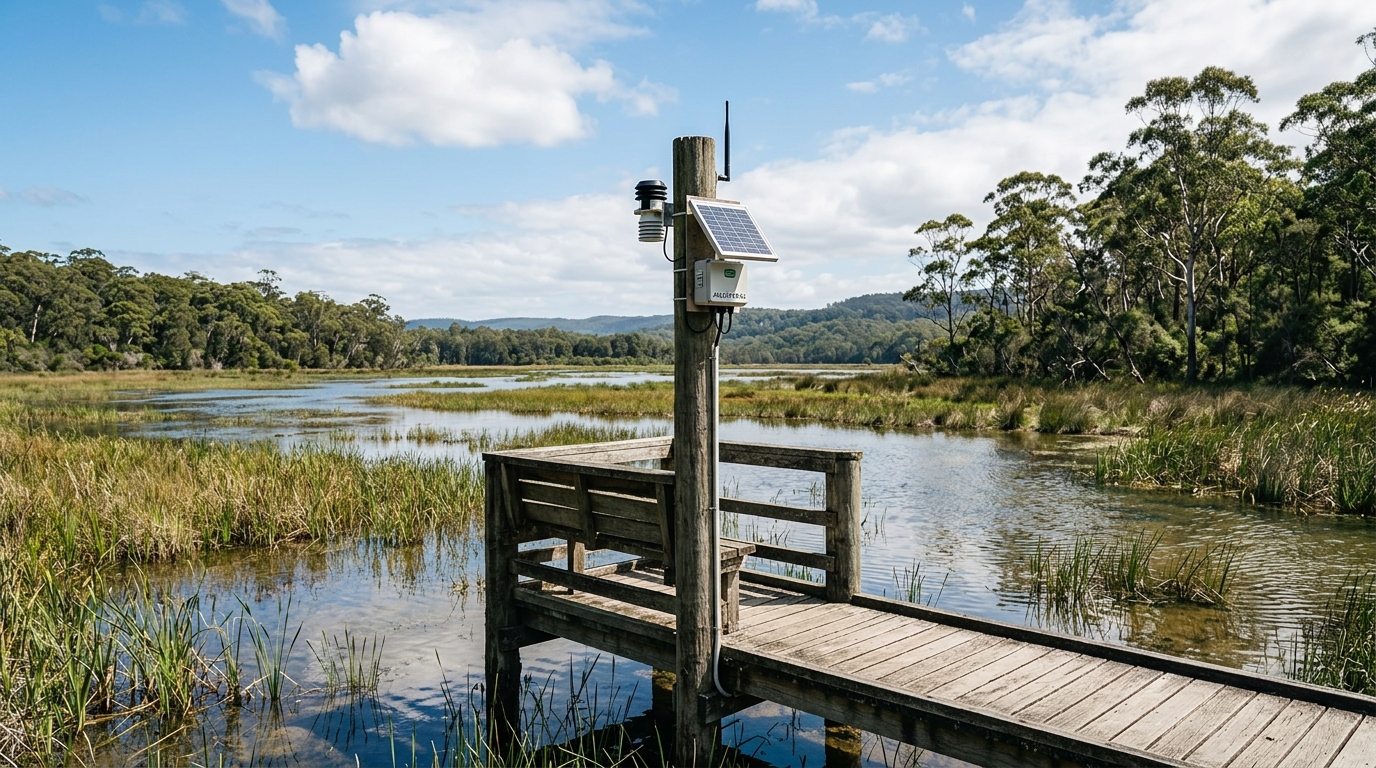
One of the most operationally significant areas flagged in the AELERT announcement is advanced monitoring and detection. Regulatory agencies are building or acquiring platforms capable of ingesting large volumes of environmental monitoring data and identifying patterns that fall outside expected parameters. In practice, this means groundwater concentration trends, waste tracking records, discharge monitoring logs, and emissions data can be cross-referenced across sites, operators, and time periods far more rapidly than is possible through manual review. An automated system can identify a pattern across ten years of quarterly groundwater monitoring results in a matter of seconds, including subtle upward trends in analyte concentrations that might not trigger a reporting threshold in any individual sampling round but that collectively indicate a compliance concern.
The AELERT initiative also reflects a broader international alignment trend. IMPEL member networks span more than 50 European jurisdictions, and the decision to partner on a joint survey brings Australasian regulatory AI governance into alignment with European frameworks. This matters because it introduces the prospect that Australian regulators will adopt governance standards, data handling protocols, and enforcement methodologies that are broadly consistent with those being developed in the European Union, where AI regulation is significantly more advanced. The EU AI Act, which came into force in 2024, classifies certain AI systems used in law enforcement contexts as high-risk, triggering specific transparency, accuracy, and auditability requirements. While that legislation does not directly bind Australian regulators, its influence on the IMPEL framework is likely to shape the governance expectations that flow through to AELERT members.
Australian context: AI in state EPA enforcement, ECA frameworks, and environmental law obligations
Australia does not yet have a single national framework governing the use of AI in environmental enforcement. Regulatory functions in environmental protection are divided between the Commonwealth (primarily through the Environment Protection and Biodiversity Conservation Act 1999 and the National Environment Protection Council) and state and territory EPAs operating under their own legislation, such as the Environment Protection Act 2017 (Victoria), the Protection of the Environment Operations Act 1997 (New South Wales), and the Environmental Protection Act 1994 (Queensland).
References and related sources
How iEnvi can help
iEnvi provides specialist consulting services relevant to this topic. Our team includes CEnvP Site Contamination Specialists with experience across contaminated land, groundwater, remediation, ecology, and regulatory compliance.
- iEnvi groundwater services
- iEnvi remediation and validation services
- iEnvi expert services and independent review services
This is an iEnvi Machete news summary. Prepared by iEnvi to summarise the source article for contaminated land, groundwater, remediation, approvals and site risk professionals.
Published: 24 Apr 2026
Need advice on this topic? Speak to an iEnvi expert at hello@ienvi.com.au or 1300 043 684, or contact us online.
Need advice on this issue? iEnvi provides practical, senior-led environmental consulting across contaminated land, remediation, ecology and environmental risk.
Contaminated land services Remediation services Groundwater services Ecology consulting Talk to iEnvi