
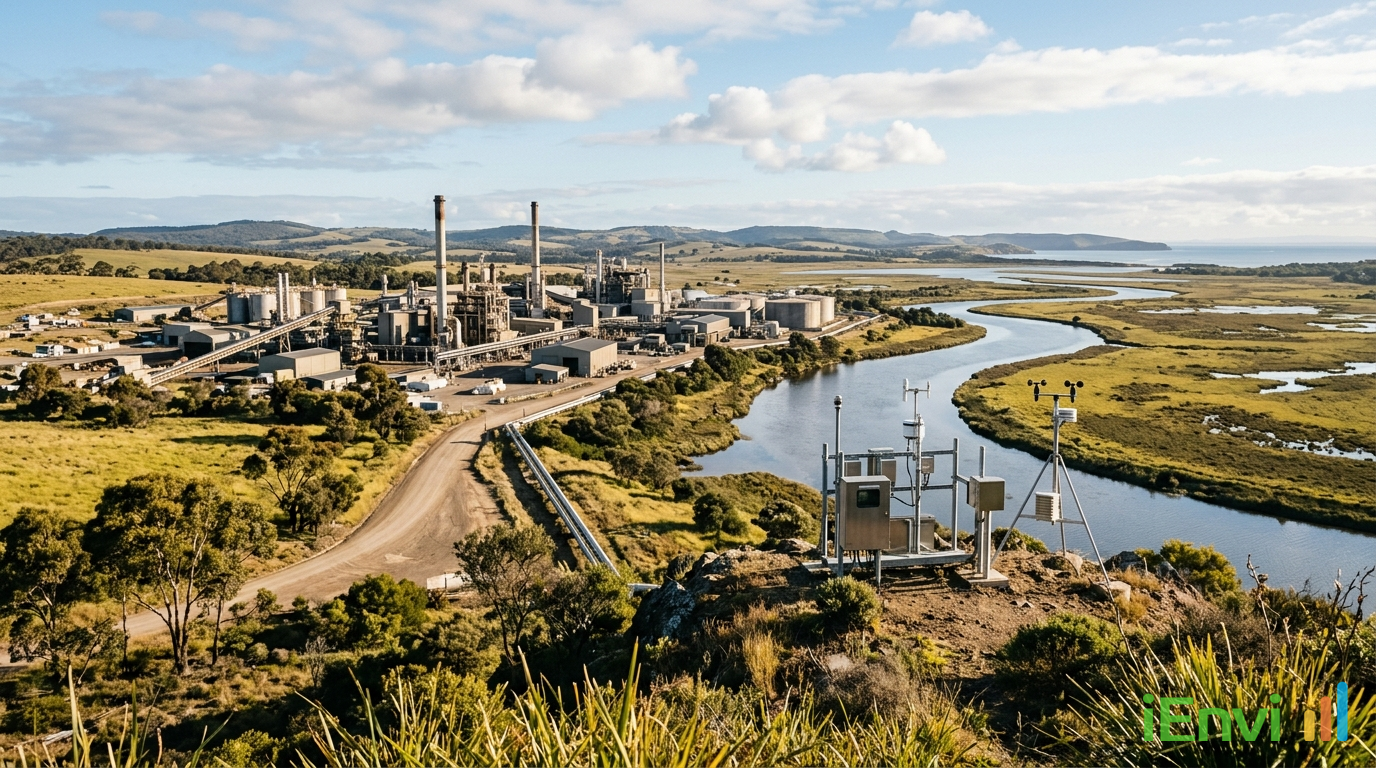
Understanding the 2024–25 National Pollutant Inventory Data Release
The Department of Climate Change, Energy, the Environment and Water (DCCEEW) published the National Pollutant Inventory (NPI) data for the 2024–25 reporting year on 1 April 2026. The dataset catalogues the emissions and waste transfers of 93 toxic substances from more than 4,000 industrial facilities across Australia, covering pollutants released to air, land, and water. The NPI remains one of the most comprehensive publicly accessible environmental datasets in the country, and this annual release is a key date in the environmental compliance calendar for practitioners, facility operators, developers, and regulators alike.
For environmental consultants working across contaminated land, groundwater assessment, and air quality disciplines, the 2024–25 NPI data represents the most current verified baseline for regional pollutant loads available in Australia. Whether the task involves establishing background concentrations for a preliminary site investigation, identifying potential off-site sources of soil or groundwater contamination, or evaluating cumulative pollutant burdens during an environmental impact assessment (EIA) process, this dataset provides location-specific, facility-level emissions figures that carry a degree of regulatory authority not available from modelled or estimated sources.
The timing of this release intersects with a significant shift in Australia’s corporate reporting landscape. Mandatory sustainability reporting is now operative for Group 1 entities from 1 January 2025, with Group 2 entities phasing in from 1 July 2026 and Group 3 from 1 July 2027. The NPI functions as a transparent, publicly accessible cross-reference tool, allowing auditors, financial regulators, and community stakeholders to verify the emissions and waste transfer claims made in corporate sustainability disclosures. The gap between what a facility reports to the NPI and what it reports in its sustainability statements is now a material compliance risk.
Key details
The NPI operates under the National Environment Protection (National Pollutant Inventory) Measure 1998 (NPI NEPM), with the current consolidated version reflecting the November 2008 variation. Under this framework, facilities that meet or exceed the reporting thresholds for any of the 93 listed substances are obligated to quantify and report their emissions to air, land, and water, as well as all transfers of waste off-site. The reporting thresholds vary by substance and are set out in the NPI NEPM schedules. Facilities that trigger these thresholds must submit data annually to DCCEEW, which then compiles, quality-assures, and publishes the aggregated dataset. The 2024–25 release covers more than 4,000 reporting facilities nationwide, making it the most geographically and industrially comprehensive snapshot of Australia’s industrial pollutant profile currently available.
The 93 substances tracked under the NPI span a wide range of chemical classes and physical forms. They include criteria air pollutants such as nitrogen oxides (NOx), sulfur dioxide (SO2), particulate matter (PM10 and PM2.5), and carbon monoxide (CO), as well as volatile organic compounds (VOCs), heavy metals including lead, arsenic, mercury, and cadmium, and a range of organic chemicals with known human health and ecological toxicity profiles. Each substance is reported as a mass quantity, typically in kilograms or tonnes per annum, and is attributed to a specific facility with geographic coordinates. This spatial resolution is what makes the dataset operationally useful for site-specific investigations, rather than serving only as a national-level policy tool.
Waste transfer reporting under the NPI is a frequently overlooked component of the dataset. Facilities must report not only direct emissions to environmental media but also the quantities of listed substances transferred off-site in waste streams destined for disposal, treatment, recycling, or energy recovery. This dimension of the NPI creates a record of pollutant mass flows through the waste management supply chain. For practitioners assessing receiving environments near waste treatment facilities, landfills, or industrial precincts, the waste transfer data in the 2024–25 release provides a basis for evaluating whether historical or ongoing off-site transfers may have contributed to localised contamination. Practitioners investigating sites adjacent to long-established industrial zones where waste handling practices predated modern regulatory controls will find this data directly applicable.
The dataset also supports trend analysis across reporting years. Because the NPI has been collected annually since the late 1990s, the 2024–25 figures can be compared against prior years to identify whether emissions from a specific facility or industrial sector are increasing, stable, or declining. For practitioners preparing environmental noise and air quality baselines for new developments near existing industrial operations, this longitudinal record is a credible source for demonstrating whether a facility’s emissions profile is within historical norms or has shifted materially. Changes in reported volumes between years can also trigger regulatory scrutiny, which is an important consideration for operators reviewing their own compliance trajectories ahead of submission deadlines.
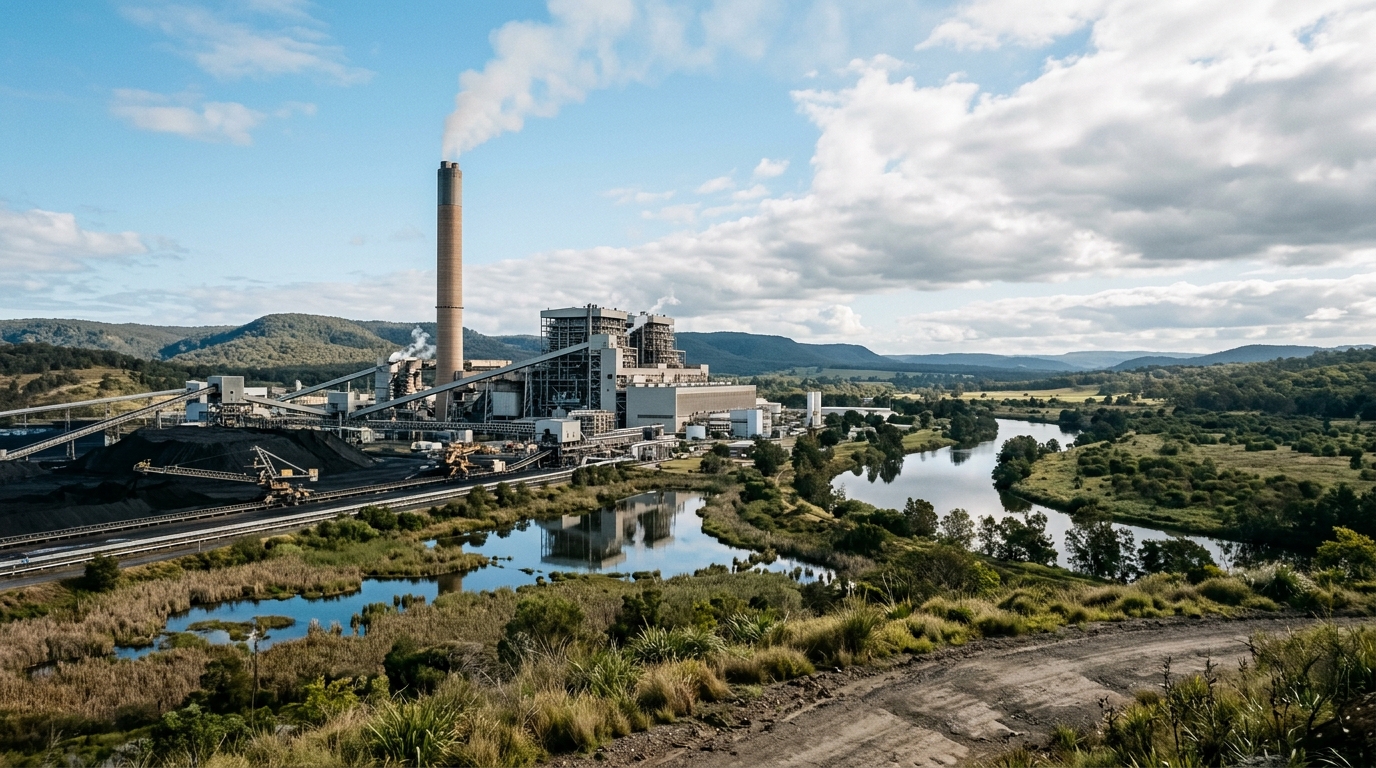
Australian context: NPI data within the national contaminated land and air quality regulatory framework
Australia’s regulatory framework for contaminated land assessment relies on a layered system of national guidance and state-level statutory instruments. At the national level, the National Environment Protection (Assessment of Site Contamination) Measure 1999 (ASC NEPM), as amended in 2013, establishes the methodology and health investigation levels (HILs) and ecological investigation levels (EILs) used in site assessments across jurisdictions. The NPI sits alongside this framework as a complementary tool, providing facility-level emissions data that can inform source attribution, background concentration analysis, and cumulative impact assessments. Where a site investigation identifies elevated concentrations of a listed NPI substance, practitioners can interrogate the NPI dataset to determine whether nearby reporting facilities have disclosed emissions of that substance, the quantities involved, and how those figures have changed over time. This cross-referencing capability strengthens the evidentiary basis for contamination assessments and supports more defensible conclusions in reports submitted to state environment protection authorities.
References and related sources
- Primary source: www.dcceew.gov.au
How iEnvi can help
iEnvi provides specialist consulting services relevant to this topic. Our team includes CEnvP Site Contamination Specialists with experience across contaminated land, groundwater, remediation, ecology, and regulatory compliance.
- iEnvi contaminated land services
- iEnvi remediation and validation services
- iEnvi expert services and independent review services
This is an iEnvi Machete news summary. Prepared by iEnvi to summarise the source article for contaminated land, groundwater, remediation, approvals and site risk professionals.
Published: 06 Apr 2026
Need advice on this topic? Speak to an iEnvi expert at info@ienvi.com.au or 1300 043 684, or contact us online.
Need advice on this issue? iEnvi provides practical, senior-led environmental consulting across contaminated land, remediation, ecology and environmental risk.
PSI services Team credentials Contaminated land services Remediation services Talk to iEnvi