

AAHMS Proposes National PFAS Biomonitoring Framework
The Australian Academy of Health and Medical Sciences (AAHMS) has formally called on the Federal Government to establish a national human biomonitoring (HBM) programme, submitting its recommendation to the Senate Select Committee on PFAS. The submission proposes the systematic measurement of per- and polyfluoroalkyl substance (PFAS) body burden across the Australian population, and recommends the immediate rollout of an interim programme targeting pregnant women while the broader national framework is developed. The Academy’s position highlights growing recognition that endocrine-disrupting “forever chemicals” are not merely an environmental contamination problem but a measurable public health burden requiring population-level tracking.
For environmental professionals working in contaminated land assessment, toxicology, and human health risk assessment, this development carries direct and material consequences. The current regulatory and professional practice framework in Australia relies heavily on conservative exposure modelling to estimate PFAS body burden in populations potentially affected by legacy contamination. Empirical human biomonitoring data would fundamentally change the evidentiary basis on which risk is characterised, regulatory thresholds are enforced, and site-specific remediation targets are derived. This is not an incremental refinement of existing methodology. It is a structural shift in how the intersection between environmental contamination and human health is understood and governed.
The AAHMS submission arrives at a moment of significant regulatory activity in Australia. The PFAS National Environmental Management Plan (NEMP) 3.0 was published in March 2025, and revised Australian Drinking Water Guidelines (ADWG) addressing PFAS were released in June 2025. A national biomonitoring dataset, once established, would provide the empirical foundation that future iterations of both instruments currently lack. For property developers managing legacy PFAS liabilities, local governments overseeing potentially affected communities, and legal practitioners advising on contamination-related disputes, the establishment of this programme signals a tightening of the connection between environmental contamination records and measurable community health outcomes.
Key details of the AAHMS biomonitoring proposal and PFAS health evidence
The AAHMS proposal centres on the establishment of a structured national human biomonitoring programme capable of tracking PFAS concentrations in biological matrices, primarily blood serum, across representative Australian population groups. The Academy has specifically recommended an interim programme focused on pregnant women as a priority cohort, reflecting the established biological vulnerability of this group to PFAS exposure. PFAS compounds are known to cross the placental barrier and are detectable in cord blood and breast milk, meaning foetal and neonatal exposure occurs independently of direct environmental contact. The prioritisation of this cohort is scientifically defensible and consistent with international biomonitoring programmes, including the United States National Health and Nutrition Examination Survey (NHANES), which has tracked PFAS serum concentrations since 1999.
PFAS are a class of more than 12,000 synthetic chemical compounds characterised by the strength of the carbon-fluorine bond, which renders them resistant to environmental degradation, metabolic breakdown, and conventional water treatment processes. Key compounds of regulatory concern in Australia include perfluorooctane sulfonic acid (PFOS), perfluorooctanoic acid (PFOA), and perfluorohexane sulfonic acid (PFHxS). The PFAS NEMP 3.0 sets investigation thresholds for these compounds in soil and water across residential, commercial, and industrial land use scenarios. The June 2025 ADWG revisions similarly establish drinking water guideline values for PFAS compounds based on health-based guidance values derived from toxicological literature. However, both instruments are calibrated against modelled exposure scenarios rather than observed population blood serum concentrations, which is precisely the evidentiary gap the AAHMS biomonitoring proposal seeks to close.
The endocrine-disrupting properties of PFAS are central to the Academy’s concern. Epidemiological studies have associated chronic PFAS exposure with altered thyroid hormone function, suppressed immune response, elevated cholesterol, reduced vaccine efficacy in children, and increased risk of certain cancers including kidney and testicular cancer. The International Agency for Research on Cancer (IARC) classified PFOA as a Group 1 human carcinogen and PFOS as a Group 2B possible carcinogen in 2023, a reclassification that has informed the direction of regulatory review in multiple jurisdictions. In Australia, the health-based guidance values underpinning current drinking water and soil guidelines draw on this accumulating toxicological evidence, but without a national biomonitoring baseline, it is not possible to determine whether Australians living near legacy PFAS sites are experiencing body burdens that exceed those values.
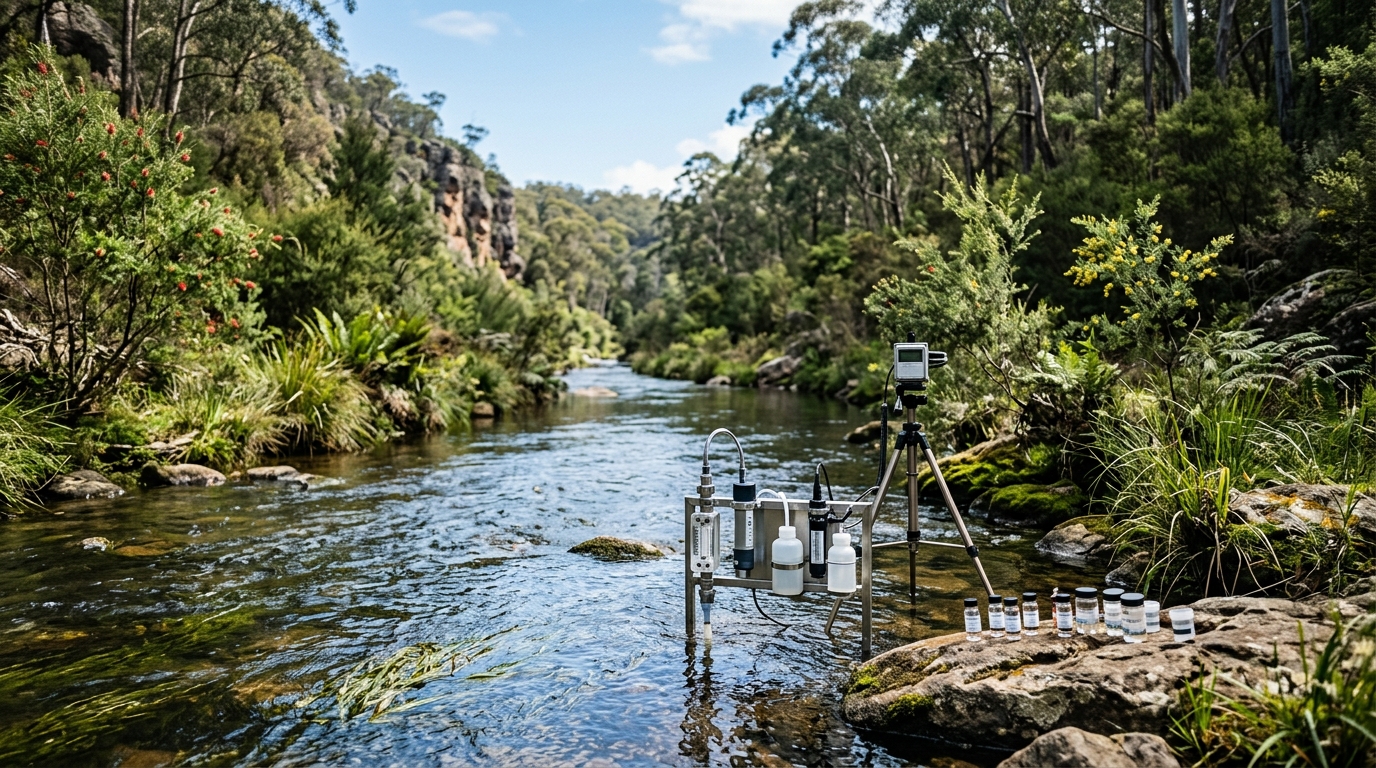
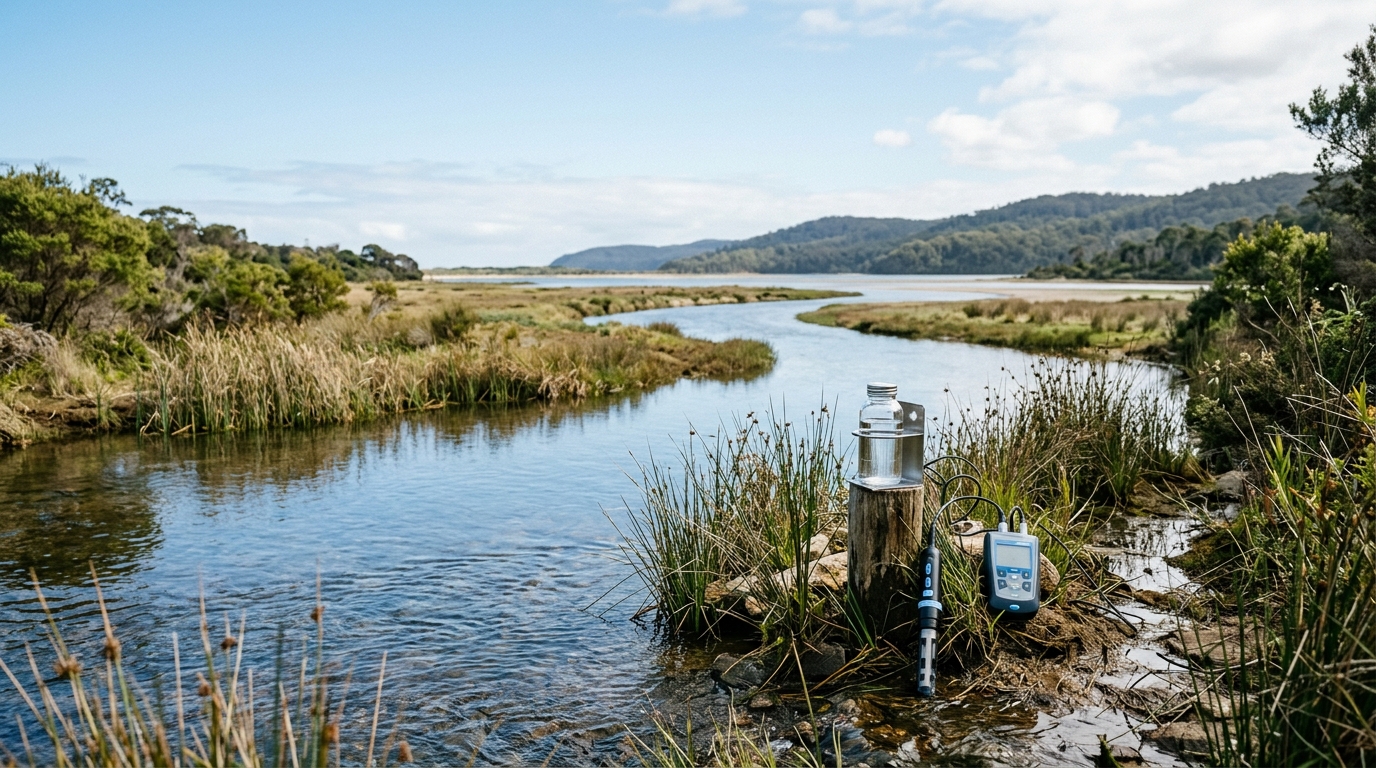
The practical measurement methodology for a national HBM programme would most likely involve venous blood collection with serum separation, followed by high-performance liquid chromatography coupled with tandem mass spectrometry (HPLC-MS/MS), which is capable of quantifying individual PFAS compounds at concentrations in the low nanogram per millilitre (ng/mL) or parts per trillion range. Urine-based biomonitoring may supplement serum sampling for certain shorter-chain PFAS compounds with faster elimination half-lives. Quality assurance would require certified reference materials and inter-laboratory proficiency testing, both of which are available through international programmes but would need to be standardised for domestic application.
References and related sources
- Primary source: aahms.org
- PFAS National Environmental Management Plan (NEMP)
How iEnvi can help
iEnvi provides specialist consulting services relevant to this topic. Our team includes CEnvP Site Contamination Specialists with experience across contaminated land, groundwater, remediation, ecology, and regulatory compliance.
- iEnvi contaminated land services
- iEnvi remediation services
- iEnvi expert services and independent review services
This is an iEnvi Machete news summary. Prepared by iEnvi to summarise the source article for contaminated land, groundwater, remediation, approvals and site risk professionals.
Published: 06 Apr 2026
Need advice on this topic? Speak to an iEnvi expert at info@ienvi.com.au or 1300 043 684, or contact us online.
Need advice on this issue? iEnvi provides practical, senior-led environmental consulting across contaminated land, remediation, ecology and environmental risk.
Team credentials Contamination risk assessment Environmental management plans Contaminated land advice Talk to iEnvi