
Overview
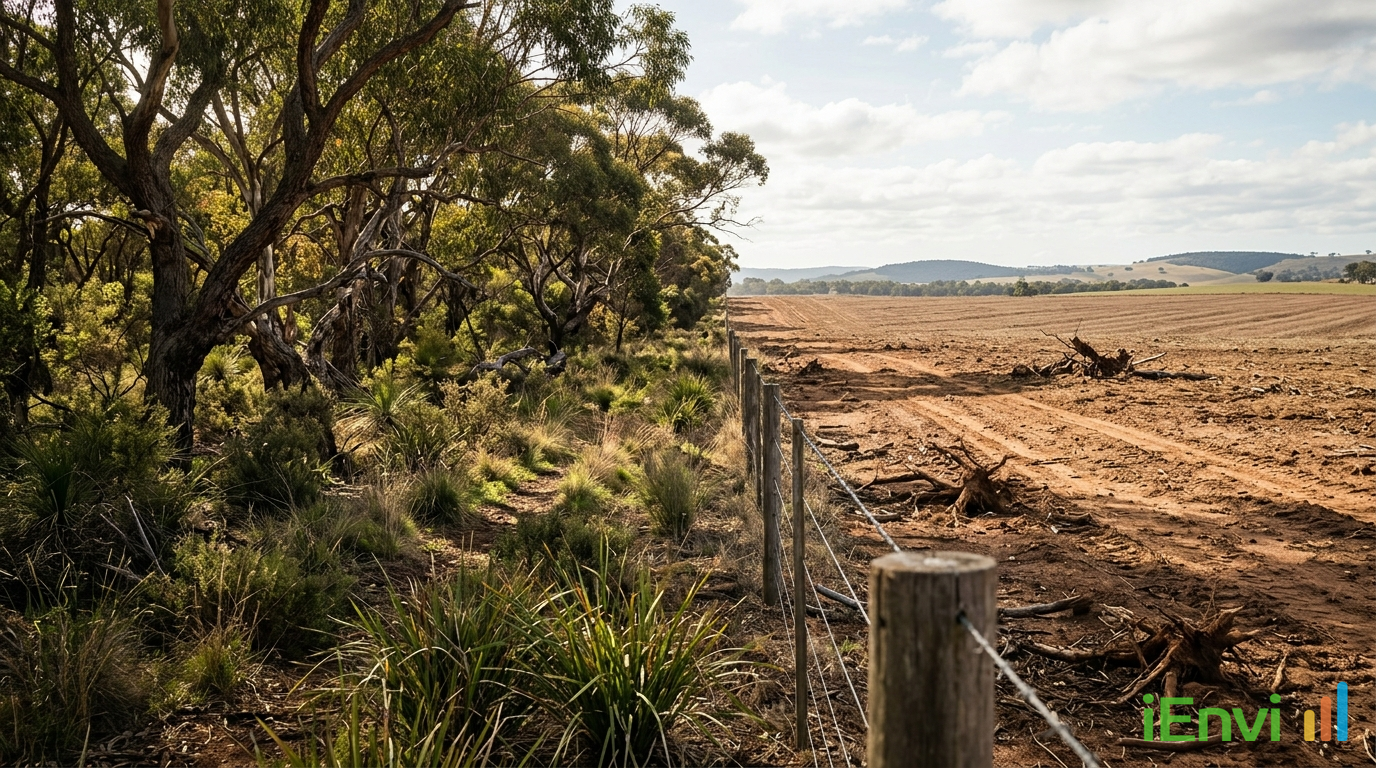
The Department of Climate Change, Energy, the Environment and Water (DCCEEW) issued updated guidance on 21 April 2026 detailing material changes to agricultural action exemptions under the Environment Protection and Biodiversity Conservation Act 1999 (EPBC Act). These changes follow the passage of the Environment Protection Reform Act 2025 (Cth), which received Royal Assent on 1 December 2025 and took immediate effect. The reforms substantially narrow the Section 43B “continuation of use” exemption, which has historically allowed rural land managers to carry out vegetation clearing and related activities without triggering federal environmental assessment obligations. The guidance is not aspirational policy, it is an operative restatement of law that applies to all current and future rural land management activities across Australia.
For ecological consultants, agribusiness operators, rural developers, and their legal advisers, this is one of the most consequential shifts in federal environmental compliance in recent years. Activities that have been treated as routine, including clearing regrowth vegetation, managing drainage lines, or undertaking works near watercourses, may no longer attract automatic exemption from federal oversight. Land managers who cannot establish that vegetation has been cleared within the past 15 years, or who are operating within the Great Barrier Reef catchment area near watercourses, wetlands, or drainage lines, face substantially altered compliance obligations. The burden of proof now sits firmly with the landholder, and the evidentiary standard required to justify non-referral to DCCEEW has increased considerably.
Environmental professionals are now central to this compliance pathway. Historical clearing assessments, spatial mapping against defined buffer distances, and detailed ecological surveys to assess impacts on Matters of National Environmental Significance (MNES) are all likely to become standard deliverables for rural and agricultural projects. Practitioners who understand the mechanics of the amended Section 43B exemption, the self-assessment framework, and the referral trigger thresholds will be in high demand from clients who are navigating these requirements for the first time.
Key details of the EPBC Act Section 43B reforms and the 15-year vegetation threshold
The core change introduced by the Environment Protection Reform Act 2025 is a 15-year vegetation clearing threshold applied to the Section 43B continuation of use exemption. As of 2 December 2025, a land manager cannot claim the Section 43B exemption to clear vegetation that has not been cleared for at least 15 years, unless the activity constitutes a forestry operation. In practical terms, this means that any vegetation which has been left undisturbed since approximately December 2010 or earlier is no longer automatically exempt from federal environmental assessment requirements under the EPBC Act. The exemption does not disappear for younger regrowth cleared within that 15-year window, but for mature regrowth and remnant vegetation beyond that threshold, the landholder must now undertake a self-assessment process.
The second significant change applies geographically to the Great Barrier Reef catchment area. Within this catchment, the Section 43B exemption has been entirely removed for vegetation clearing within 50 metres of a watercourse, wetland, or drainage line. It is important to understand the precise legal effect of this removal. It does not constitute an outright prohibition on clearing in these areas. Rather, losing the exemption means the landholder must self-assess whether the proposed activity is likely to have a significant impact on an MNES. Only if that self-assessment concludes that a significant impact is likely does the activity require formal referral to DCCEEW for assessment and approval under the EPBC Act. Landholders who can demonstrate through a rigorous self-assessment that no significant impact on MNES will result are not automatically required to refer, but the standard of documentation supporting that conclusion must now be defensible enough to withstand regulatory scrutiny.
The DCCEEW guidance also reflects a reported tightening of the language used to describe the threshold for assessing impacts on MNES. The assessment standard has reportedly shifted from impacts that are “likely” to occur, to impacts that “will” occur. This is a legally material distinction. A “likely” threshold captures a lower probability of harm, while a “will occur” standard implies a higher degree of certainty before the referral obligation is triggered. Practitioners must verify this precise language against the amended Act text directly, as the distinction carries significant consequences for self-assessment decisions and the level of evidentiary justification required to support a determination not to refer an action. If the “will occur” standard is confirmed, it represents a narrowing of the referral trigger, which paradoxically may reduce the number of self-assessments resulting in formal referrals, but raises the quality of ecological evidence required to reach that conclusion defensibly.
MNES under the EPBC Act include listed threatened species and ecological communities, migratory species, Ramsar wetlands, the Great Barrier Reef Marine Park, Commonwealth marine areas, and nuclear actions. Any rural or agricultural activity that cannot be exempt under Section 43B and that poses a significant impact on one or more of these matters requires a formal referral to the Minister for the Environment. Referral decisions can result in controlled action determinations, requiring full environmental impact assessment, which may take months and involve conditions that fundamentally alter the scope or design of the proposed works.
Australian regulatory context: EPBC Act reform, state
References and related sources
- Primary source: www.dcceew.gov.au
- EPBC Act
How iEnvi can help
iEnvi provides specialist consulting services relevant to this topic. Our team includes CEnvP Site Contamination Specialists with experience across contaminated land, groundwater, remediation, ecology, and regulatory compliance.
- iEnvi contaminated land investigation services
- iEnvi remediation and validation services
- iEnvi expert services and independent review services
This is an iEnvi Machete news summary. Prepared by iEnvi to summarise the source article for contaminated land, groundwater, remediation, approvals and site risk professionals.
Published: 25 Apr 2026
Need advice on this topic? Speak to an iEnvi expert at hello@ienvi.com.au or 1300 043 684, or contact us online.
Need advice on this issue? iEnvi provides practical, senior-led environmental consulting across contaminated land, remediation, ecology and environmental risk.
Contaminated land services Remediation services Groundwater services Ecological assessment Talk to iEnvi