
Groundwater Planning Failures and Construction Costs in NSW
Groundwater mismanagement during basement construction is emerging as one of the costliest planning failures in Australian urban development. Reporting from The Urban Developer published on 24 April 2026 draws on warnings from Reditus Consulting principal hydrogeologist Lee Douglass and representatives from Dincel Structural Walling, both of whom have observed the consequences of hydrogeology being treated as a late-stage construction problem rather than a fundamental design input. The pattern is consistent across New South Wales and Queensland: projects that skip or rush early groundwater assessment are encountering massive cost variations, structural risks to neighbouring properties, and regulatory complications that could have been avoided with targeted early-stage specialist engagement.
The commercial stakes are considerable. A development in the Botany Sands area of Monterey received a preliminary water treatment quote of $900,000 based on a report predicting 1.5 gigalitres of contaminated groundwater inflow during basement construction. After commissioning a specialist hydrogeological review, the developer reduced treatment costs by more than $500,000 and shortened the construction programme. That single example highlights the direct financial return on early hydrogeological investment. The problem is not confined to Sydney. A Gold Coast project required its dewatering system to be upsized by 500 per cent after groundwater conditions proved far more complex than initially assumed, a variation that would have been preventable with rigorous site-specific characterisation from the outset.
For environmental consultants, hydrogeologists, developers, project lawyers, and local councils, this reporting reinforces a straightforward but frequently ignored principle: groundwater assessment is not a regulatory formality to be satisfied at the last minute. It is a quantifiable risk mitigation measure that protects project budgets, construction timelines, neighbouring infrastructure, and regulatory compliance. The cases cited in this reporting provide compelling, commercially framed evidence that practitioners can use when advising developer clients who are reluctant to invest in early-stage environmental and hydrogeological work.
Key details from the reported cases and technical findings
The Botany Sands case study is the most detailed example cited in the reporting. The Monterey development sits within the Botany Sands aquifer system, a shallow, highly permeable, sand-dominated aquifer that underlies much of the eastern suburbs of Sydney. Aquifers of this type are characterised by relatively high hydraulic conductivity, meaning that dewatering bores can generate a wide cone of depression that extends substantially beyond the physical footprint of the excavation. The preliminary report for this project predicted 1.5 gigalitres of contaminated groundwater inflow over the course of the basement construction works. At the quoted treatment rate, this translated to a $900,000 water treatment cost. When specialist hydrogeological review was applied, both the predicted inflow volume and the treatment system design were revised, reducing the overall cost by more than $500,000 and compressing the construction schedule. The source material does not specify the revised inflow prediction, but the cost reduction of over 55 per cent suggests a substantial downward revision in either volume, contaminant loading, or required treatment technology, or some combination of all three.
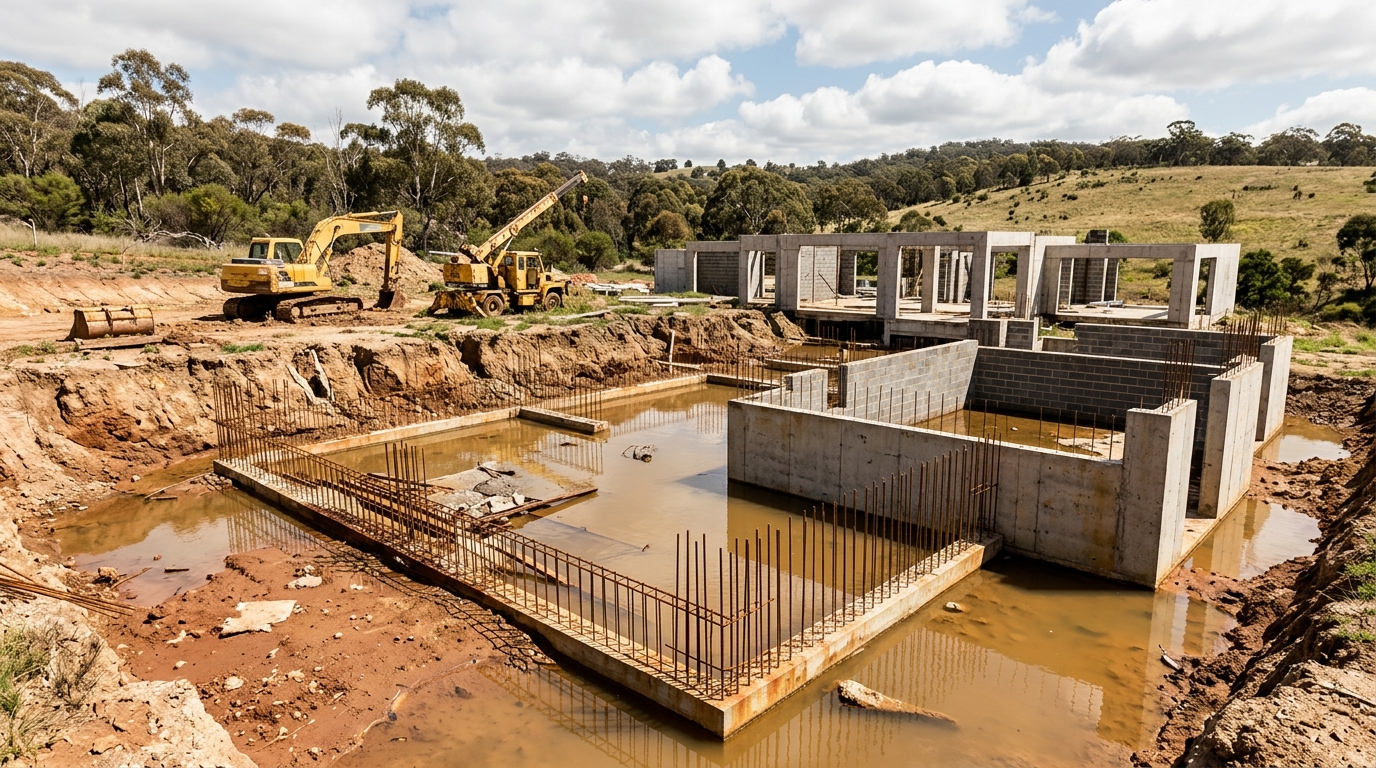
The Gold Coast case is equally instructive for what it reveals about the consequences of relying on generic or inadequate hydraulic data. The site in question required a 500 per cent upsize of its dewatering system after actual groundwater conditions exceeded what the initial system was designed to handle. A dewatering system that is undersized for site conditions cannot maintain a dry excavation, which in turn threatens slope stability, delays concrete pours, and can compromise the structural integrity of the base slab. The 500 per cent upsize figure indicates that the original system design was based on hydraulic conductivity values or water table assumptions that bore no meaningful relationship to site reality. This is a predictable outcome when generic regional data is used in place of site-specific pump testing and aquifer characterisation.
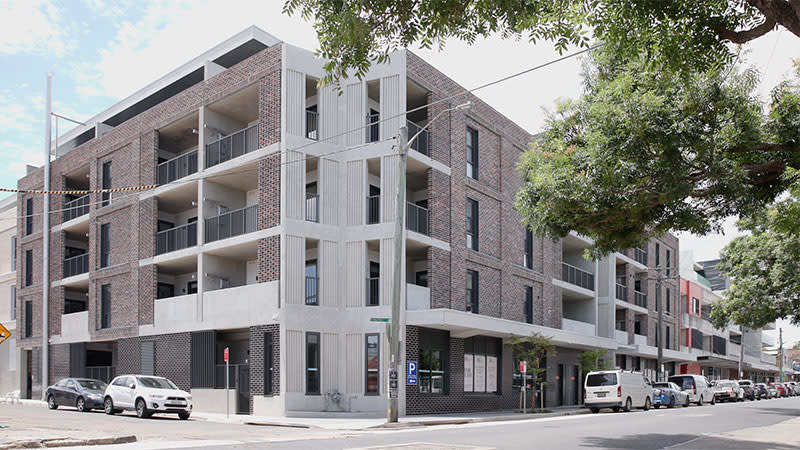
The most serious structural consequence cited in the reporting is the contribution of inadequate dewatering management to the Mascot Towers incident. Mascot Towers, a residential apartment complex in Sydney, became the subject of national attention after cracking was observed in its primary structure and carpark. The reporting from The Urban Developer identifies inadequate dewatering management at a neighbouring construction site as a contributing factor to the structural failure. The mechanism is well understood in geotechnical and hydrogeological practice: when groundwater is drawn down in unconsolidated sediments, the reduction in pore water pressure increases effective stress within the soil matrix. This causes consolidation and settlement. Where that settlement is non-uniform across the footprint of an adjacent structure, the result is differential settlement, manifesting as cracking in walls, floors, and structural elements. Double Bay heritage buildings are also cited in the reporting as having experienced differential settlement attributable to poorly managed groundwater drawdown during nearby basement excavation works.
Under the NSW Water Management Act 2000, construction and operation of dewatering bores requires a Water Supply Work Approval. The approval process requires assessment of third-party impacts, which formally obligates applicants to model and demonstrate the lateral extent of the drawdown cone and its potential effects on neighbouring structures, groundwater-dependent vegetation, and existing water users. Where dewatering works interact with a waterway or floodplain, a Controlled Activity Approval may also be required under the same legislation. These regulatory obligations mean that inadequate early-stage hydrogeological assessment carries not only financial and structural risk, but material legal exposure for developers and their project teams.
References and related sources
- Primary source: www.theurbandeveloper.com
- https://www.theurbandeveloper.com/articles/developers-paying-high-price-for-poor
How iEnvi can help
iEnvi provides specialist consulting services relevant to this topic. Our team includes CEnvP Site Contamination Specialists with experience across contaminated land, groundwater, remediation, ecology, and regulatory compliance.
- iEnvi groundwater services
- iEnvi remediation and validation services
- iEnvi expert services and independent review services
This is an iEnvi Machete news summary. Prepared by iEnvi to summarise the source article for contaminated land, groundwater, remediation, approvals and site risk professionals.
Published: 24 Apr 2026
Need advice on this topic? Speak to an iEnvi expert at hello@ienvi.com.au or 1300 043 684, or contact us online.
Need advice on this issue? iEnvi provides practical, senior-led environmental consulting across contaminated land, remediation, ecology and environmental risk.
Contaminated land services Remediation services Groundwater services Ecology consulting Talk to iEnvi