
EPA Tasmania Approves Massy-Greene Mill Expansion
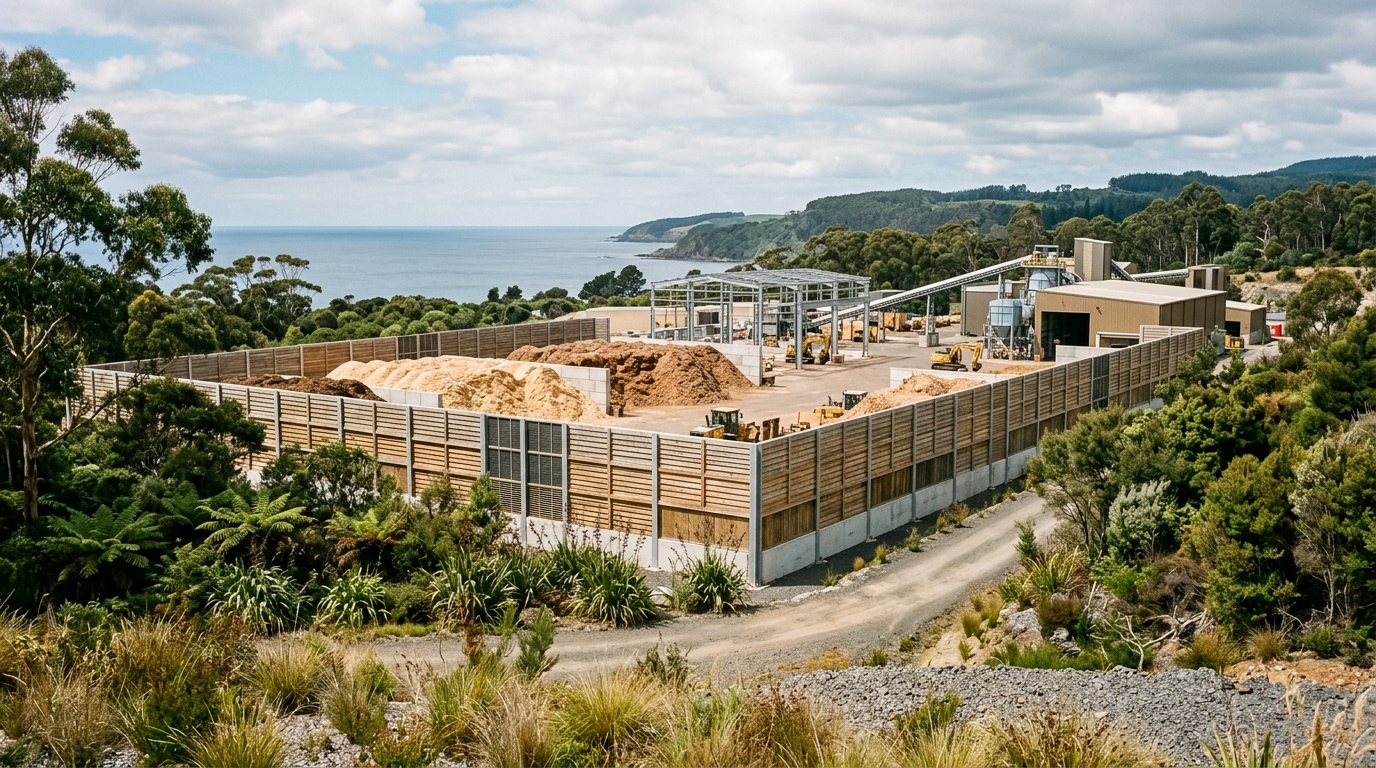
The Board of the Environment Protection Authority (EPA) Tasmania has approved a significant development proposal at the Massy-Greene Woodchip Mill site in South Burnie. The approval permits the construction and operation of a new 70,000 cubic metre wood optimisation hub, which includes a new sawmill and pallet manufacturing facility. While the expansion represents a major industrial upgrade for the region, the regulator has attached a critical condition that carries far-reaching consequences for legacy industrial operators across Australia. Rather than simply setting noise limits for the new infrastructure, the EPA has mandated a comprehensive, progressive Noise Reduction Plan for the entire site.
This regulatory intervention signals a major shift in how environmental authorities view legacy industrial operations undergoing expansion. For environmental consultants, property developers, local councils, and legal practitioners, this decision demonstrates that historical operating conditions are no longer secure when a site undergoes redevelopment. Instead of allowing legacy noise, dust, or stormwater footprints to persist alongside new works, regulators are actively using development applications as a mechanism to retrospectively pull entire brownfield operations up to contemporary environmental standards. This approach effectively compresses the overall environmental footprint of legacy facilities over time, shifting the financial and operational risk profile of industrial upgrades.
The determination by the EPA Board highlights the increasing focus on cumulative environmental impacts in regional and semi-industrial areas. Historically, industrial sites could rely on existing lawful use rights to maintain older, noisier equipment and processes, provided they did not exceed their original approval parameters. However, the introduction of a new wood optimisation hub at the South Burnie site has served as a regulatory catalyst. By requiring a comprehensive, site-wide acoustic reassessment, the regulator has established a precedent where the permission to expand is directly used to secure the environmental rehabilitation of legacy plant operations.
Technical Requirements and Noise Reduction Mandates
The assessment and subsequent approval of the wood optimisation hub at South Burnie were conducted under the statutory framework of the Environmental Management and Pollution Control Act 1994 (Tasmania). Specifically, the Board of the EPA Tasmania exercised its powers under Part 5 of the Act, which governs the environmental assessment of activities of regional or state significance. The expansion project involves the integration of a 70,000 cubic metre wood processing hub within an existing, long-standing woodchip mill footprint. The technical challenge presented by this combination of legacy and modern operations lay in managing cumulative acoustic impacts on surrounding sensitive receptors.
Rather than applying standard, static noise limits to the new components of the plant, the EPA Board imposed conditions requiring the operator to develop and execute a targeted Noise Reduction Plan. The technical objective of this plan is to actively reduce the existing ambient noise levels generated by the legacy mill operations, thereby accommodating the acoustic output of the new sawmill and pallet facility without increasing the overall noise footprint of the site. In practice, this requires the operator to conduct detailed acoustic modelling, identify specific legacy noise sources, such as older debarkers, chippers, and heavy vehicle transit paths, and systematically apply modern acoustic engineering controls to those older assets.
The regulatory mechanism employed here does not merely cap emissions at historical levels; it functions as a dynamic, retrospective tool. The progressive reduction targets mean the operator must demonstrate ongoing compliance with a declining decibel threshold over a specified timeframe. This approach ensures that the total noise emission profile of the expanded site eventually conforms to modern regulatory guidelines, rather than allowing legacy noise levels to be permanently locked in. This methodology sets a precedent for how cumulative impacts are assessed and managed under the Environmental Management and Pollution Control Act 1994, showing that expansion approvals are highly contingent on the rehabilitation of historical operational practices.
The technical implications of this decision extend beyond noise control to encompass broader site emissions. During the assessment process, regulators scrutinised the interaction between new process dust, stormwater runoff, and legacy contaminants. While the primary condition focuses on acoustic performance, the integration of a new 70,000 cubic metre facility requires comprehensive upgrades to the site’s overall environmental management systems. This includes upgrading stormwater retention basins and dust suppression systems to handle the increased throughput, illustrating that physical expansion triggers a comprehensive review of all legacy discharge pathways.
Australian context
The regulatory approach taken by EPA Tasmania aligns closely with broader legislative trends across other Australian jurisdictions. In Victoria, under the Environment Protection Act 2017, the General Environmental Duty (GED) requires any person conducting an activity that poses a risk of harm to human health or the environment to minimise those risks so far as reasonably practicable. When an operator proposes a major modification to an existing site in Victoria, the EPA utilises the development licence and operating licence processes to audit legacy emissions and enforce contemporary standards. Similarly, in New South Wales, the Protection of the Environment Operations Act 1997 provides the EPA with the authority to attach strict, progressive pollution reduction programmes to Environment Protection Licences when legacy facilities seek to expand or modify operations.
References and related sources
- Primary source: epa.tas.gov.au
How iEnvi can help
iEnvi provides specialist consulting services relevant to this topic. Our team includes CEnvP Site Contamination Specialists with experience across contaminated land, groundwater, remediation, ecology, and regulatory compliance.
- iEnvi contaminated land investigation services
- iEnvi remediation and validation services
- iEnvi expert services and independent review services
This is an iEnvi Machete news summary. Prepared by iEnvi to summarise the source article for contaminated land, groundwater, remediation, approvals and site risk professionals.
Published: 21 May 2026
Need advice on this topic? Speak to an iEnvi expert at info@ienvi.com.au or 1300 043 684, or contact us online.
Need advice on this issue? iEnvi provides practical, senior-led environmental consulting across contaminated land, remediation, ecology and environmental risk.
Team credentials Contaminated land services Remediation services Groundwater services Talk to iEnvi