
Overview
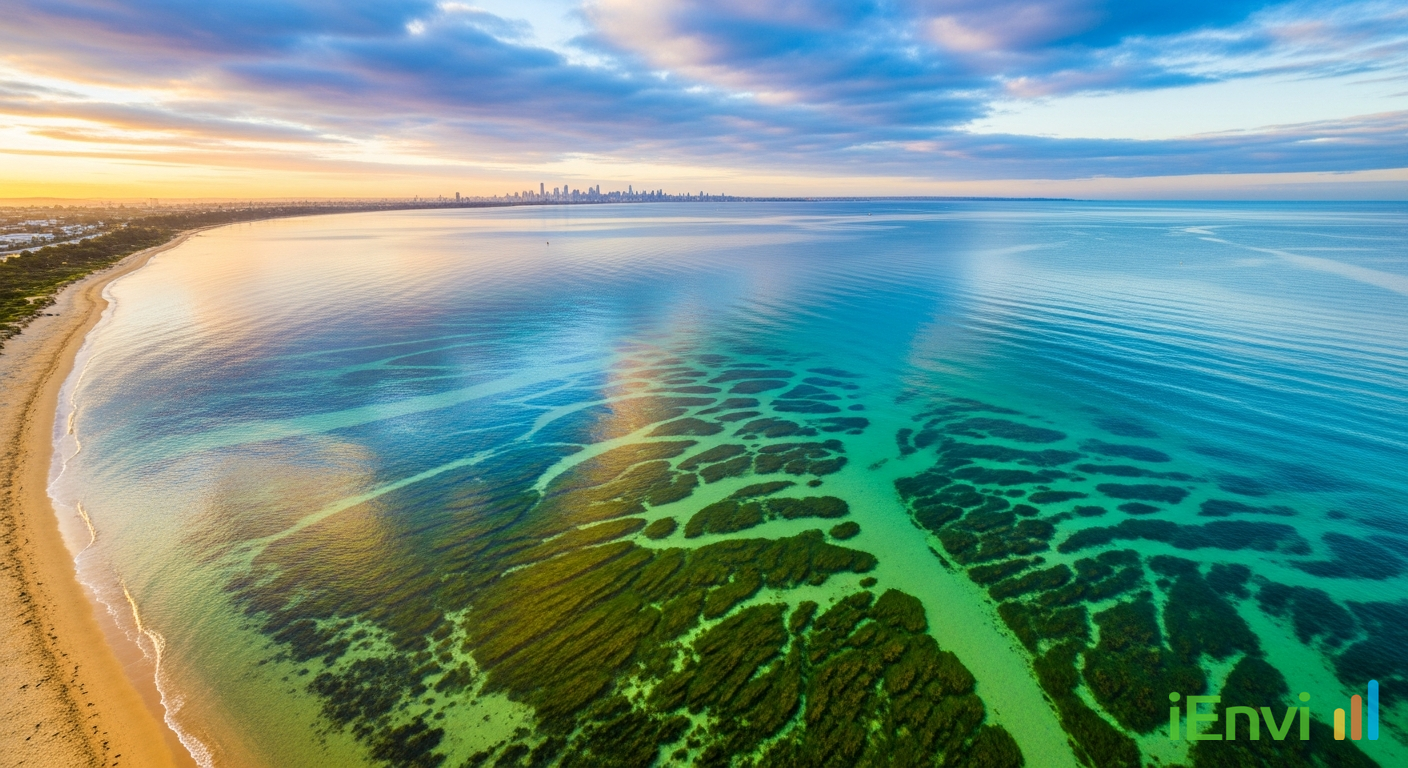
EPA Victoria has published the results of its 40-year coastal water monitoring programme, confirming that water quality across Port Phillip Bay is at its best since systematic testing began in 1985. The findings, released in June 2026, represent one of the longest continuous marine water quality datasets in Australian environmental monitoring history and carry substantial weight for environmental practitioners, coastal developers, infrastructure owners, and regulators working within Victoria’s catchment and marine environments.
The headline result is a 78% reduction in ammonia concentrations in offshore waters adjacent to the Western Treatment Plant at Werribee since 1990. The Western Treatment Plant processes approximately half of Melbourne’s sewage and has been subject to successive rounds of engineering upgrades and process improvements over the four-decade monitoring period. Alongside the ammonia data, the programme recorded a 45% reduction in suspended sediments across the bay since 1985, and phosphate concentrations have fallen by between 30% and 42% depending on the specific monitoring location. These are not marginal improvements. They represent structural, measurable shifts in receiving water quality achieved against a backdrop of significant regional population growth in Melbourne’s western and south-eastern corridors.
For environmental practitioners, the significance of this dataset extends well beyond a compliance milestone for Melbourne Water. It provides a verified, long-run empirical record demonstrating how sustained infrastructure investment and successive regulatory intervention can materially improve coastal water quality over decadal timescales. That kind of evidence base is directly relevant to anyone preparing Environment Effects Statements, catchment risk assessments, Environmental Management Plans, or expert evidence in coastal and estuarine settings in Victoria and beyond.
Key details from the EPA Victoria 40-year monitoring programme
The monitoring programme was established in 1985 and has tracked a suite of water quality indicators across multiple stations within Port Phillip Bay over four continuous decades. The three key metrics reported in the June 2026 findings are ammonia concentrations, suspended sediment loads, and phosphate concentrations. Each of these parameters acts as a proxy indicator for different categories of environmental stress: ammonia is a direct measure of sewage-derived nutrient loading and is toxic to aquatic organisms at elevated concentrations; suspended sediments affect light penetration and benthic habitat quality; and phosphate is a primary limiting nutrient that drives eutrophication and algal bloom risk in coastal embayments.
The 78% reduction in ammonia offshore of the Western Treatment Plant is measured from a 1990 baseline, which is notable because 1990 predates several major infrastructure upgrades at the plant. The Western Treatment Plant processes roughly half of Melbourne’s total sewage volume, making it the dominant point source influencing the western arm of Port Phillip Bay. The scale of ammonia reduction at this location reflects both engineering advances in treatment technology and the progressive tightening of discharge licence conditions over the period. Under Victoria’s current regulatory architecture, the Environment Protection Act 2017 (Vic) imposes a General Environmental Duty (GED) on all duty holders, requiring them to minimise risks of harm to human health and the environment so far as reasonably practicable. The treatment plant upgrades that drove the ammonia reduction are a tangible example of that duty being met at scale over time.
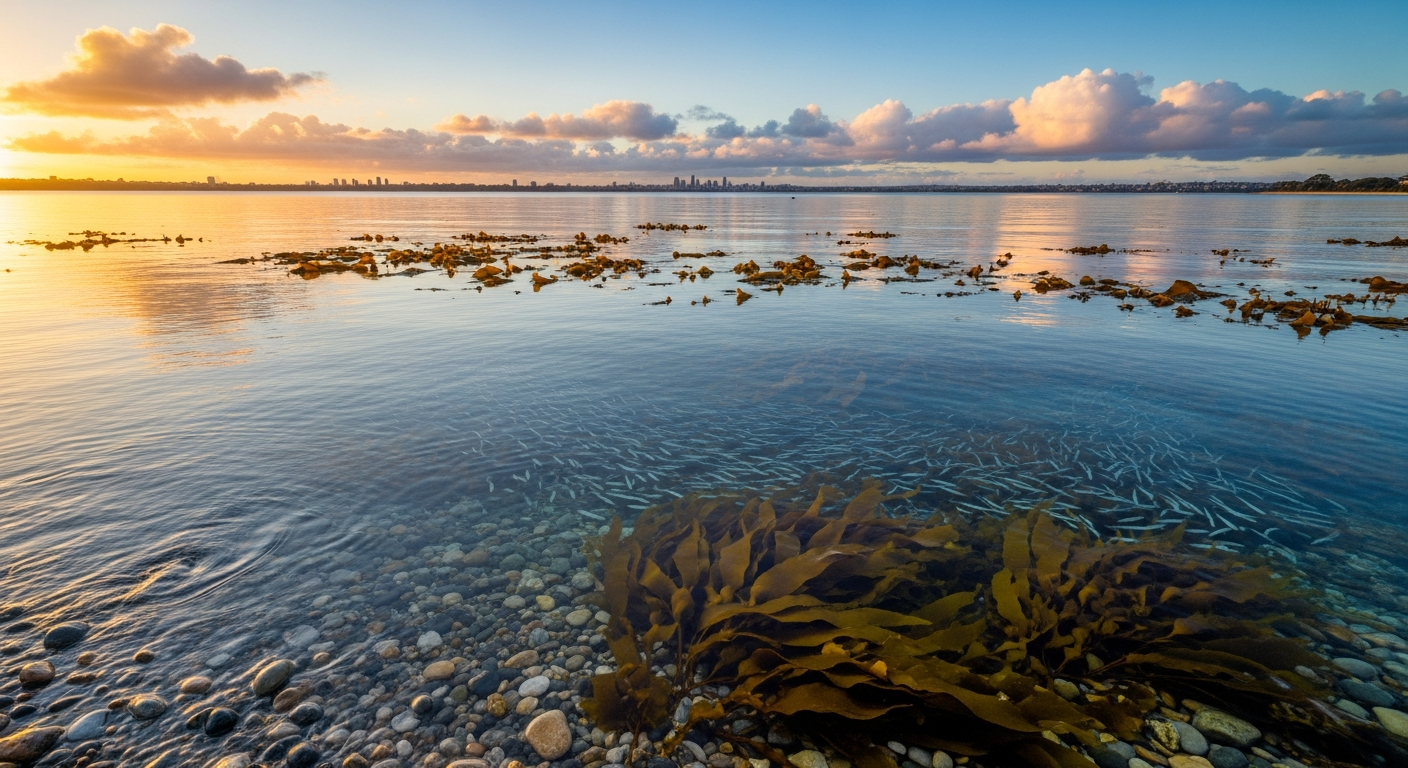
The 45% reduction in suspended sediments across the bay since 1985 is significant for reasons that go beyond nutrient chemistry. Suspended sediments directly attenuate light penetration in the water column, limiting the depth at which photosynthesis can occur in benthic and submerged aquatic vegetation communities. Seagrass meadows in Port Phillip Bay, particularly communities of Heterozostera tasmanica and Zostera nigricaulis, are sensitive to reductions in photosynthetically active radiation. The documented improvement in sediment loads therefore carries a direct ecological corollary for seagrass habitat extent and condition, which in turn supports fisheries productivity and biodiversity outcomes across the bay.
Phosphate reductions of 30% to 42% across monitoring locations represent a meaningful decrease in one of the two principal limiting nutrients driving eutrophication in temperate coastal embayments (nitrogen, of which ammonia is a component, being the other). In Port Phillip Bay, which is a relatively enclosed embayment with limited tidal flushing, nutrient accumulation carries genuine risks of bloom formation, including blooms of cyanobacteria and other potentially toxic phytoplankton species. The combination of reduced phosphate and dramatically lower ammonia loading represents a compounded reduction in eutrophication risk that modelling and field monitoring both support as ecologically meaningful.
Australian context: relevance to water quality regulation and environmental practice nationally
The primary national framework against which water quality outcomes in Port Phillip Bay are assessed is the Australian and New Zealand Guidelines for Fresh and Marine Water Quality (ANZG 2018), which superseded the ANZECC/ARMCANZ 2000 guidelines. The ANZG 2018 framework establishes default guideline values (DGVs) for a wide range of physicochemical and biological parameters, including ammonia, total phosphorus, and turbidity (as a proxy for suspended sediments) in marine and estuarine environments. Importantly, the ANZG 2018 guidelines explicitly encourage practitioners to derive site-specific or local guideline values where sufficient high-quality monitoring data exists to support that derivation.
References and related sources
- Primary source: www.epa.vic.gov.au
- wyndhamtv.com.au
- epa.vic.gov.au
- https://wyndhamtv.com.au/werribee-treatment-plant-ammonia-levels-drop-78-per-cen
- NEPM Assessment of Site Contamination
- ANZG Water Quality Guidelines
- EPA Victoria
How iEnvi can help
iEnvi provides specialist consulting services relevant to this topic. Our team includes CEnvP Site Contamination Specialists with experience across contaminated land, groundwater, remediation, ecology, and regulatory compliance.
- iEnvi ecology services
- iEnvi contaminated land investigation services
- iEnvi remediation and validation services
- iEnvi expert services and independent review services
This is an iEnvi Machete news summary. Prepared by iEnvi to summarise the source article for contaminated land, groundwater, remediation, approvals and site risk professionals.
Published: 12 Jun 2026
Need advice on this topic? Speak to an iEnvi expert at info@ienvi.com.au or 1300 043 684, or contact us online.